TLDR
Trump declared full US naval control of the Strait of Hormuz, but vessel data tell a different story. Tanker crossings have collapsed to roughly a quarter of pre-war levels, oil flows have dropped from 20 million to 2.7 million barrels per day, and Iran has set six firm preconditions before any reopening.
The claim and the waterway it concerns
On 28 July 2026, Donald Trump told Fox News that the Strait of Hormuz belongs, in practical terms, to the United States Navy. Shipping registry data say something quieter and considerably more complicated.
The strait is a corridor 21 nautical miles wide at its tightest point, threading between Iran and Oman. Before the conflict that began with the US-Israeli military campaign against Iran on 28 February 2026, it carried roughly one-fifth of the world's seaborne oil. What passes through it now is a fraction of that.
What Trump said
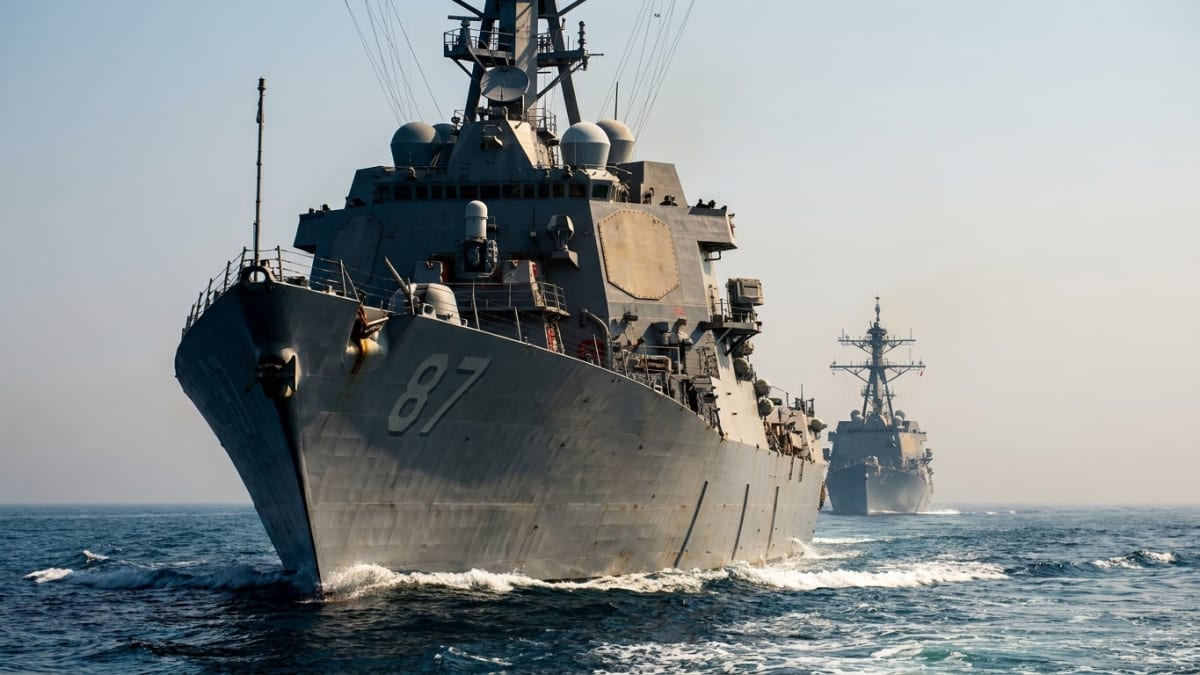
The White House released a transcript of Trump's appearance in which his assertion of control was unambiguous. "We have a blockade up there right now, and only ships that we want to get through get through. Iran doesn't control the Strait. We control the Strait," Trump said.[1] Trump acknowledged that Iran retained the capacity to lay mines, while insisting the Navy held the corridor itself.
Trump also demanded Iran pay war damages, framing American naval presence as both a strategic achievement and a precondition for any negotiated settlement. The White House release characterised the posture as maximum pressure maintained through military and economic leverage.
What the vessel data show
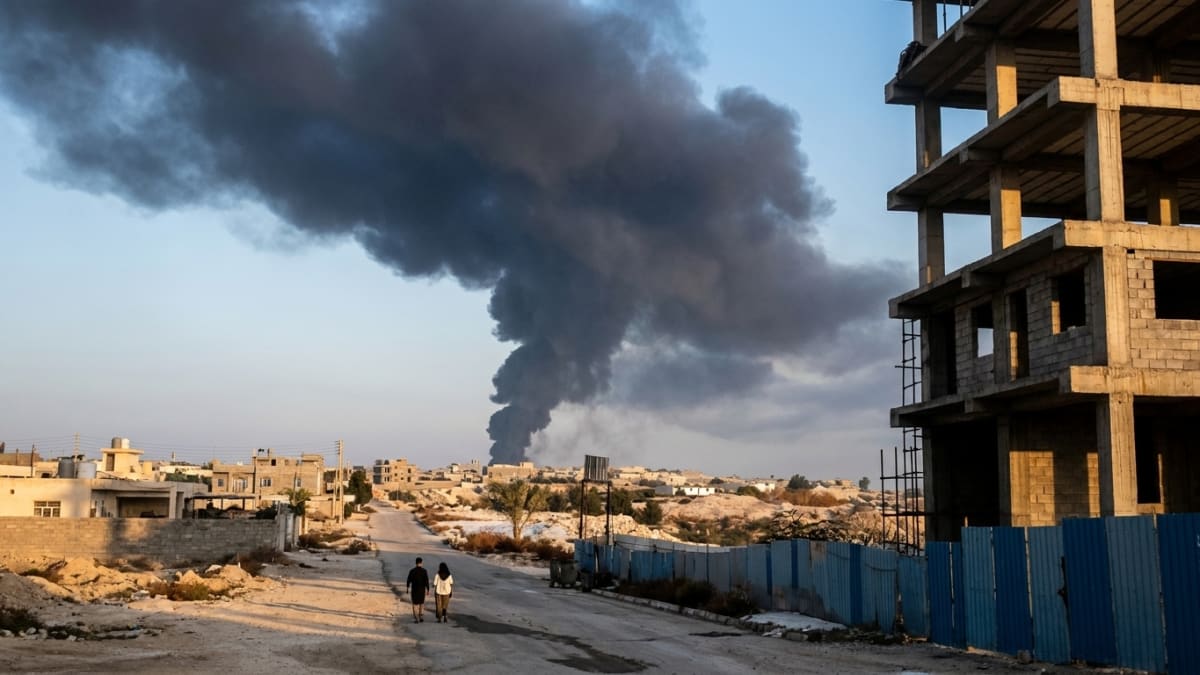
Market intelligence firm Kpler, which tracks vessel movements globally, recorded a rather different picture at the waterway. Tanker crossings through the strait averaged approximately 138 vessels per day before the conflict and fell to just 32 crossings on 24 June 2026, representing roughly 23 per cent of the pre-war daily average.[2] That collapse in vessel numbers persisted into late June, well beyond the conflict's early days.
The oil-flow figures are equally stark. International Energy Agency data show flows through the strait fell from around 20 million barrels per day in the pre-conflict period to an average of 2.7 million barrels per day across March to May 2026.[3] That is a reduction of more than 86 per cent in the volume of crude and refined products moving through what was once the world's most trafficked oil chokepoint.
Control of a waterway and the commercial usability of that waterway are, the figures suggest, separable propositions. A naval blockade that permits selective passage is not the same thing as an open shipping lane, and the distinction matters to the refiners, tanker operators and governments downstream.
Iran's six preconditions
Tehran has made its position on reopening conditions explicit. Iran's outgoing Supreme National Security Council secretary set out six preconditions before any normalisation of the strait: sanctions relief, the unfreezing of Iranian assets held abroad, war-damage payments, and related political and security guarantees.[2] The demand for war-damage payments places those preconditions in direct tension with Trump's own demand that Iran pay compensation to the United States.
Both sides are, in their public positions, demanding the other pay first. That contradiction sits at the centre of any negotiated path to reopening.
The Oman arrangement and its limits
Iranian Foreign Minister Abbas Araghchi said on 11 June 2026 that a joint management arrangement between Iran and Oman for the strait was in its final stages. "Iran and Oman will jointly manage the Strait of Hormuz in line with international law," Araghchi said.[5]
Oman, which borders the strait on its southern shore, has long served as a back-channel between Washington and Tehran. Its involvement signals that at least one of the corridor's riparian states is actively working toward some form of managed passage, though by Araghchi's own account the arrangement does not constitute a full commercial reopening of the waterway.
A managed shipping lane permitting certain categories of vessel under joint Iranian-Omani oversight is a different instrument from the restoration of normal commercial traffic. Tanker operators, war-risk insurers and very large crude carriers would need considerably more certainty before resuming routine operations.
What commercial reopening would actually require
S&P Global Energy analysts identified five conditions that would need to be satisfied before commercial shipping could safely resume through the strait.[4] Those conditions include vessel traffic recovering to between 50 and 90 per cent of pre-war levels and sustaining that recovery for one to four weeks; a 30 to 45 day observation period following any ceasefire; access to war-risk marine insurance; the physical removal of navigational hazards including mines; and the normalisation of fleet deployment, including very large crude carriers.[4]
Against those benchmarks, the current position is distant. Vessel traffic at 23 per cent of pre-war levels falls well short of the lower end of S&P Global's recovery threshold, mine clearance involves a physical task of uncertain duration, and war-risk insurance has not returned in any meaningful volume since the conflict's outset.
The United States Navy can enforce selective passage through the strait. It cannot, by itself, compel insurers to write war-risk policies, persuade tanker owners to send very large crude carriers through a contested channel, or satisfy Iran's six preconditions. Vessel traffic through the waterway stood at 23 per cent of pre-war levels as of 24 June 2026.
KEY TAKEAWAYS
SOURCES & CITATIONS
- President Trump on Fox & Friends: America's Unrelenting Strength Keeps Maximum Pressure on Iran
- Kpler: Strait of Hormuz Tanker Crossing Data, June 2026
- IEA: How Global Oil Supplies Have Readjusted to Help Fill the Huge Gap Left by the Strait of Hormuz Shock
- S&P Global Energy: Conditions for Commercial Reopening of the Strait of Hormuz
- Araghchi: Iran and Oman Have the Natural Right to Make Decisions About the Strait of Hormuz
FREQUENTLY ASKED QUESTIONS