

TLDR
US Central Command struck dozens of Iranian Revolutionary Guard targets overnight, hitting coastal surveillance posts, missile and drone storage facilities, and maritime sites. Iran had fired ballistic missiles at a US air base in Jordan; Jordanian defences intercepted every one. Iranian state media reported three deaths on Qeshm Island, including a two-year-old child, while Kuwait and Jordan were hit in suspected Iranian counter-strikes that killed one worker. The exchange marks a sharp escalation in a conflict running since February, with the Revolutionary Guard vowing to strike US military facilities across the region.
KEY TAKEAWAYS
What CENTCOM struck and why
CENTCOM announced that US forces had targeted Iranian coastal surveillance and air defence facilities, maritime capabilities, and missile and drone storage sites in the latest round of strikes against Iran.verifiedVerified Source: qna.org.qa[1] The statement, posted to X, described the operation as completed, with targets spread across Iran's southern coast and its Gulf-facing military infrastructure.
The strikes were framed as a direct response to an attempted Iranian missile attack on a US base. That logic has become the operational rhythm of this conflict: Iran fires, the US strikes; the US strikes, Iran fires back.
CENTCOM forces completed another round of strikes against Iran at the Commander-in-Chief's direction. US forces targeted Iranian coastal surveillance and air defense facilities, maritime capabilities, and missile and drone storage sites. #SelfDefense
2026-07-19T18:05:00Z · View on XThe trigger: Iran's missile attack on Jordan
Iran's Islamic Revolutionary Guard Corps launched ballistic missiles at Muwaffaq Salti Air Base in Jordan, with Jordanian air defences intercepting all of them before any struck the installation.verifiedVerified Source: axios.com[2] The base hosts US forces and had been targeted in earlier rounds of the conflict. That the intercept succeeded entirely did not soften Washington's response.
President Donald Trump addressed reporters directly on the question of justification. "It's America's turn to hit them," Trump said.[6] The framing was blunt, casting the exchange as bilateral scorekeeping rather than strategic calculation.
Casualties and damage: Qeshm Island
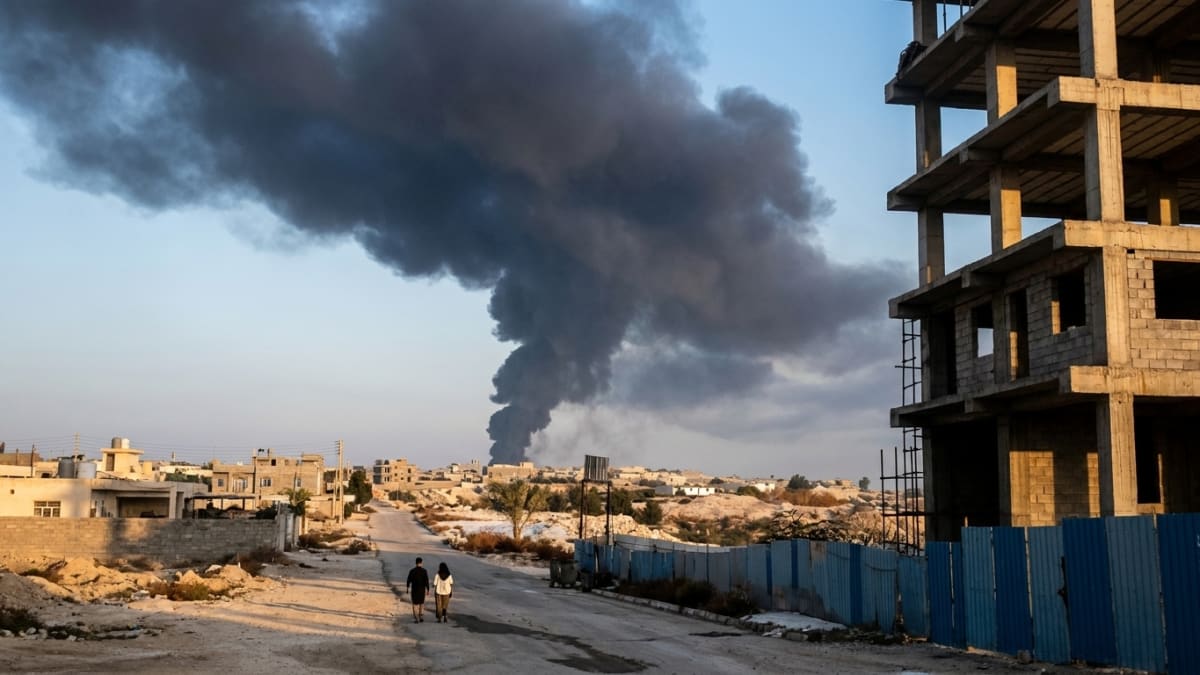
The human cost of the US strikes landed on Qeshm Island, a long strip of land in the Strait of Hormuz that Iran has developed as a strategic military and commercial hub. Iranian state media outlet IRNA reported that three people were killed in US strikes on Qeshm Island, among them a two-year-old child.verifiedVerified Source: aa.com.tr[3] At least six missiles were said to have struck the island. Bushletter could not independently verify those figures, which come from Iranian state sources.
Qeshm holds Revolutionary Guard naval assets alongside civilian infrastructure. US targeting doctrine emphasises precision, but on a populated island the margin for civilian harm is narrow.
Kuwait and Jordan hit in suspected Iranian counter-strikes
Kuwait and Jordan were struck in suspected Iranian counter-attacks, with one worker killed at a site in Kuwait and Jordanian authorities reporting the interception of multiple incoming missiles.[5] Egypt separately said a drone had caused a fire at a port facility, though no attribution was formally confirmed in the material available to Bushletter.
Iran's preferred counter-attack geometry runs through proxy and affiliated militia networks, striking US-aligned Gulf states rather than US territory directly. Kuwait has hosted US logistics and basing arrangements for decades; Jordan serves as a transit and forward-operating hub. Both are now absorbing strikes aimed, in strategic terms, at Washington.
The IRGC vow
Iran's Revolutionary Guard did not equivocate about what comes next. The IRGC said it would deliver a crushing response to any further US attacks, vowing to target US military facilities across the region.[4] Each US strike produces an IRGC vow; each vow produces another round of US planning.
The Revolutionary Guard's naval arm has been central to the coastal targeting logic on both sides. Iran's Gulf-facing facilities, including radar installations, fast-attack boat pens and surveillance posts on islands like Qeshm and Abu Musa, have been progressively degraded across successive US strike packages.
How the conflict reached this point
The current exchange traces to 28 February 2026, when President Trump launched Operation Epic Fury against Revolutionary Guard targets, citing repeated attacks on US forces across the region. A ceasefire brokered by Pakistan took effect on 8 April but collapsed within weeks amid mutual accusations of violations. Hostilities resumed and have since widened, with US strikes extending deeper into Iran's southern coastline and Iranian-affiliated attacks spreading across Jordan, Kuwait, Bahrain and Saudi Arabia.
The Strait of Hormuz, through which roughly a fifth of the world's traded oil passes, has become a primary arena. US strikes on coastal surveillance and maritime facilities are aimed, at least in part, at degrading Iran's capacity to threaten or interdict shipping. Iran's counter-moves have included mine-laying allegations, fast-boat harassment and repeated missile attacks on Gulf states hosting US logistics chains.
What distinguishes this round from previous cycles in US-Iran confrontation is the sustained, reciprocal tempo. Earlier episodes, from the 2019 tanker attacks to the killing of General Qasem Soleimani, produced single spikes followed by negotiated or tacit de-escalation. The current conflict has now run for five months without a durable pause. The April ceasefire, the only formal halt attempted, lasted less than four weeks, and there is no public indication of a second mediation effort under way.
SOURCES & CITATIONS
- CENTCOM announces completion of new round of strikes against Iran
- Iran missile attack on US base in Jordan
- At least 6 missiles hit Iran's Qeshm Island amid new US strikes
- IRGC navy responds to US aggression, strikes American targets
- Kuwait and Jordan intercept Iran missiles
- US airstrikes on Iran resume, Trump comments
FREQUENTLY ASKED QUESTIONS
What did the US strike in Iran?
What triggered this round of US strikes?
Were there civilian casualties?
Which countries were hit in suspected Iranian counter-strikes?
How long has the US-Iran conflict been running?
Nadia Petrova writes about geopolitics, defence and foreign affairs. She is interested in how decisions made far away arrive on Australian shores.


