

TLDR
President Donald Trump called off a planned large-scale US bombing campaign against Iran after Middle Eastern allies agreed the parameters of a deal, contingent on a rapid formal agreement being reached. The proposed framework centres on two conditions that have defined five months of conflict: the immediate reopening of the Strait of Hormuz and an end to Iran's nuclear threat. Saudi Crown Prince Mohammed bin Salman contacted Trump directly to warn of the risks of Iranian retaliation against Gulf states, underlining the regional anxiety surrounding this fragile pause. Tehran had not publicly responded to Trump's announcement at the time of writing, though Iran's acting defence minister had previously signalled the government treats every threat as real and credible.
KEY TAKEAWAYS
The post that stopped a war, for now
On 1 August 2026, President Donald Trump wrote on Truth Social that he would hold off on new US strikes against Iran, announcing that Middle Eastern allies had agreed the parameters of a deal covering the immediate reopening of the Strait of Hormuz and an end to Iran's nuclear threat.[1] A bombing campaign aimed at one of the world's most consequential waterways was called off in a social media post. At the time of writing, Tehran had not issued a formal response.
Trump framed the decision as a concession to global welfare and Iranian self-interest at once. "Based on this request, I have agreed, for the future benefit of the WORLD and, likewise, the survival of a successful and prosperous Iran, to cancel the attack, subject to being able to rapidly make a DEAL," Trump said. The capitalisation was his own. The conditionality was stark: this is not a ceasefire, it is a clock.
What was being prepared
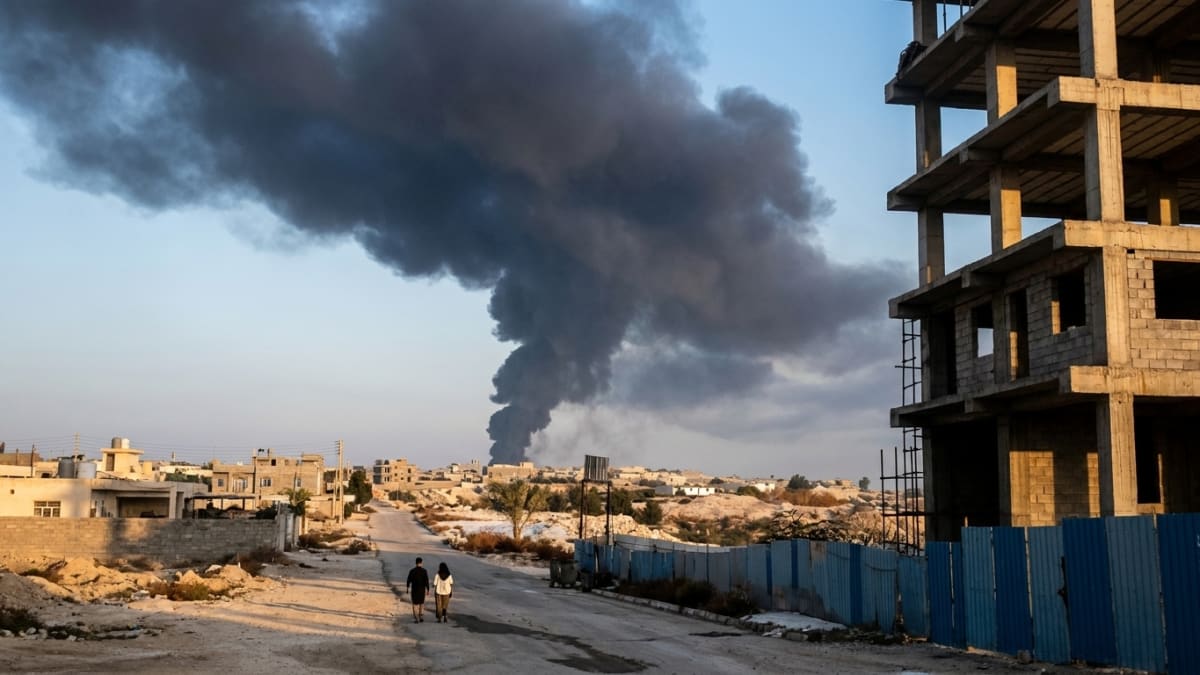
CBS News reported that the United States and Israel had been coordinating one of the harshest bombing campaigns yet contemplated in the five-month conflict, with Iranian energy infrastructure among the primary targets. The Trump administration's approach to Iran had been anchored in maximum pressure from the outset.
The White House had set out that posture formally as early as February 2026, releasing a fact sheet on the administration's strategy to prevent Iran from obtaining nuclear capabilities and to curb Tehran's support for regional proxies.[4] Striking energy infrastructure would have threatened the revenue base on which the Iranian government depends, taking that pressure to a new register. The decision to pause, then, represents either a genuine diplomatic opening or the latest threat designed to extract concessions, possibly both.
Gulf states and the fear of blowback
Saudi Crown Prince Mohammed bin Salman contacted Trump directly in the lead-up to the announcement, raising concerns about Iranian retaliation against Saudi Arabia and other Gulf states. Washington's partners in the region want Iran contained but have no appetite for the fires that containment might light on their own territory.
On 22 July 2026, the US Department of State issued a Worldwide Caution security alert advising Americans to exercise increased caution across ten countries: Bahrain, Israel, Iraq, Jordan, Kuwait, Lebanon, Oman, Qatar, Saudi Arabia and the United Arab Emirates.[2] That list covers virtually the entire Gulf and Levant, communicating plainly how wide the expected fallout zone had become.
Kuwait's experience offers a concrete illustration of what Iranian retaliation can look like at ground level. On 8 April 2026, Kuwait's military reported that drones launched from Iran struck multiple vital government facilities. Maj. Gen. Saud Abdulaziz Al-Otaibi, spokesperson for the Kuwaiti Defence Ministry, said the drones hit a number of vital facilities, including a government structure in the country's north, and that there were no casualties.[5] That episode illustrates precisely the scenario Mohammed bin Salman was warning about.
Iran's silence and what it may mean
Tehran's public posture since Trump's post has been one of deliberate silence. Iran's government had not directly responded to the announcement at the time of writing, though Iran's acting defence minister had previously said that Tehran treats every threat as real and credible, a formulation that reads as both deterrence signalling and a warning against assuming Iranian restraint is unconditional.
That silence carries its own ambiguity. It could reflect internal deliberation about whether the parameters Trump described represent a genuine off-ramp or a trap; it could equally reflect a government that has learned, across five months of strikes and pauses, that responding publicly to Trump's social media posts accelerates pressure rather than relieving it. Either way, the absence of a formal Iranian counter-statement leaves the deal's foundations entirely unverified from Tehran's side.
Five months of conflict and one fragile pause
The conflict began on 28 February 2026, when US and Israeli air strikes targeted Iranian infrastructure with the said aims of degrading Tehran's missile capabilities, preventing nuclear advancement and curbing support for regional proxies.[5] Iran responded with drone and missile attacks on Gulf shipping and US bases, and effectively closed the Strait of Hormuz, the narrow passage through which roughly 20 per cent of the world's oil supply transits, sending oil prices toward US$90 a barrel.
On 19 June 2026, the White House published a fact sheet announcing a US-Iran memorandum of understanding that provided for an immediate and permanent ceasefire, the reopening of the Strait of Hormuz and a framework for further negotiations.[3] That June agreement, brokered with the assistance of Qatar and Oman, drew fierce scepticism from the outset. Successive threats and air-strike pauses in the weeks that followed demonstrated exactly how tenuous the framework was.
The 1 August announcement is best understood in that context. It is the second time a major US strike package has been stood down in exchange for a promise of rapid negotiations, and the conditions attached, rapid deal-making, Hormuz reopening, nuclear resolution, are the same conditions that animated the June memorandum and that have driven the conflict from its start. What has changed is the proximity of force: a campaign reportedly targeting energy infrastructure, coordinated with Israel, was understood to be imminent before Trump's post appeared.
What happens next
The word "rapidly" does a great deal of work in Trump's Truth Social post. It implies a deadline without specifying one, suggesting the current pause is contingent not merely on talks beginning but on them producing results at a pace that satisfies Washington. The June memorandum of understanding, itself a product of sustained Qatari and Omani mediation, failed to hold for two months.
The Strait of Hormuz remains the central material fact of this conflict. So long as it stays effectively closed or subject to Iranian interdiction, oil markets will price in the risk, Gulf states will remain in Washington's ear about retaliation dangers, and the Trump administration will face pressure to either enforce or abandon the terms it has publicly set. The parameters of a deal may have been agreed among allies, but whether Tehran agrees with those parameters remains entirely open.
SOURCES & CITATIONS
- Trump says he called off Iran strikes after allies agreed deal parameters
- US Department of State Worldwide Caution, July 22, 2026
- President Trump's Iran Agreement Is America First in Action, White House fact sheet
- Fact Sheet: President Donald J. Trump Addresses Threats to the United States by the Government of Iran
- Trump, Iran, Strait of Hormuz, Israel, Gaza, AP News
- ABC News: Trump holds off on strikes against Iran
- BBC News: Trump says he is cancelling strikes on Iran subject to deal
- Al Jazeera: Trump cancels Iran strike, says deal perimeters reached
FREQUENTLY ASKED QUESTIONS
Why did Trump cancel the Iran strikes?
What was the planned US strike targeting?
What is the Strait of Hormuz and why does it matter?
Has Iran responded to Trump's announcement?
What was the June 2026 US-Iran memorandum of understanding?
Nadia Petrova writes about geopolitics, defence and foreign affairs. She is interested in how decisions made far away arrive on Australian shores.