

TLDR
Iran's Foreign Ministry has flatly denied negotiating with the United States over the Strait of Hormuz, saying its talks are bilateral with Oman. The two countries are working toward a merged central shipping lane coordinated with the International Maritime Organisation, even as projectile attacks on commercial vessels continue.
KEY TAKEAWAYS
The denial that redraws the map
Iranian Foreign Ministry spokesperson Esmaeil Baghaei stepped in front of cameras on 3 August with a pointed message: the talks Tehran is holding over the Strait of Hormuz involve Oman, not Washington. According to Tasnim News, Baghaei said the discussions are aimed at merging the southern Omani and northern Iranian shipping routes into one central lane, with the United States entirely absent from the table.[1] US President Donald Trump had intermittently claimed that direct talks with Iran had resumed, a characterisation Tehran has now rejected more than once.
Trump did not accept the denial. "Whether Iran wants to admit it or not, we are, in fact, talking," he said.[7] On his Truth Social platform he wrote that Iranian leadership is "unbelievably duplicitous", saying Tehran had asked for a meeting and then declared in public that nothing was being discussed and that it was dealing only with Oman.[3] He has said he pulled back planned strikes at the urging of Qatar, Saudi Arabia and the United Arab Emirates.[3]
Baghaei had made the same point in late July, dismissing reports that Tehran had sought negotiations with Washington.[1] A single denial can be read as a bargaining posture; two coordinated denials, each sourced to the Foreign Ministry's own spokesman, look more like a deliberate signal about who controls the negotiating architecture.
What Iran and Oman are actually building
Strip away the geopolitics and the substance is a traffic management problem. Two separate shipping lanes currently run through the strait, one close to the Omani coast in the south and one along the Iranian side in the north, and vessels threading between them face congestion and security exposure. The proposal on the table would fold both into a single central corridor.
Baghaei described the negotiations in unusually operational terms. According to Tasnim News, he said: "These are talks between Iran and Oman. Several rounds of talks were held on Friday and Saturday, and there were useful talks about how to manage shipping traffic in the Strait of Hormuz."[1] Framing the issue as traffic management rather than a security dispute is the kind of language chosen when parties want to build something functional without formally acknowledging the political temperature around it.
Oman's IMO framework and why it arrived first
Oman did not wait for a bilateral deal before acting. In late June, the Omani Foreign Ministry announced a temporary corridor was already in place. According to the Omani Foreign Ministry, Oman has worked in coordination with the International Maritime Organization to make available the option of a temporary maritime corridor for all vessels, in accordance with the coordinates announced by the International Maritime Organization and the competent Omani authorities.[2]
Oman occupies a structurally unusual position in Gulf diplomacy. Muscat has maintained open channels with Tehran for decades, served as a back-channel during previous rounds of nuclear talks, and shares the strait's southern coastline. Its ability to deliver an IMO-coordinated corridor without triggering a rupture with either Washington or Tehran reflects that long-cultivated neutrality, and the fee-free design removes the sovereignty argument that charging transit fees would have introduced.
The attack record that frames the urgency
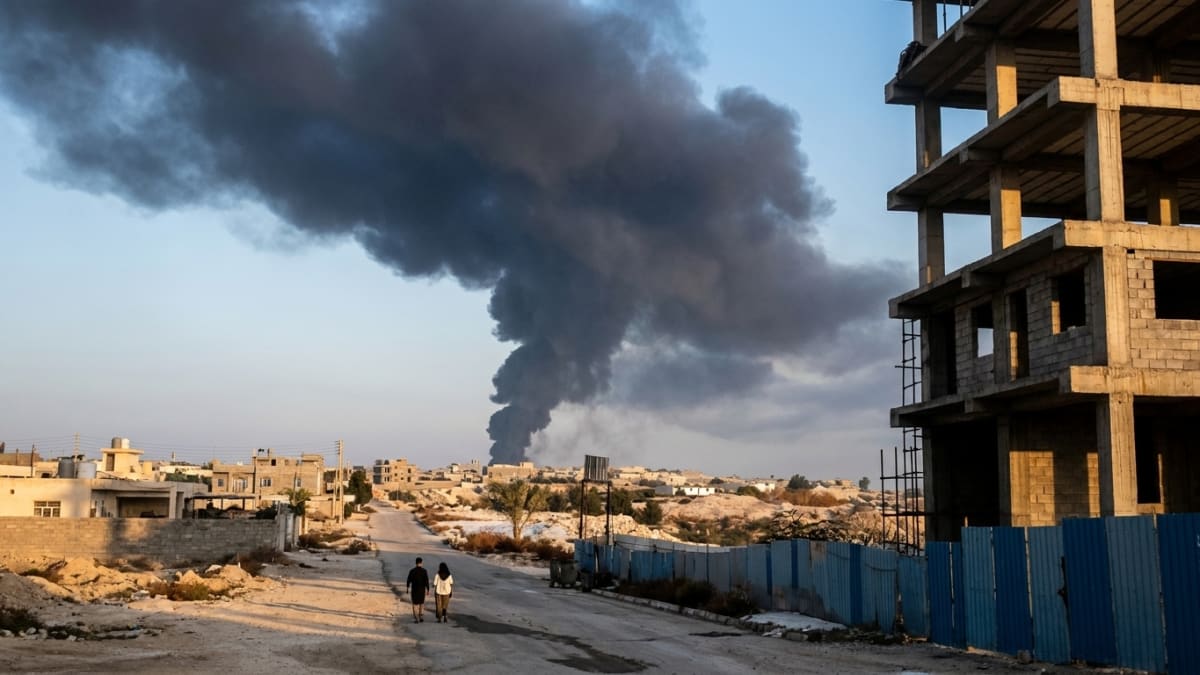
The corridor talks are not happening in calm waters. The United Kingdom Maritime Trade Operations centre has issued a run of advisories on projectile strikes against commercial shipping in and around the strait through June and July.[4] The latest came on 4 August, when UKMTO said a cargo vessel reported being hit by an unknown projectile at 2am local time, 20 nautical miles northeast of Al Khasab on the Omani side of the strait.[3] The maritime security firm Ambrey said the vessel was damaged.[3] Maritime trade outlets identified it as the Liberia-flagged, Greek-operated bulk carrier Minoan Pioneer and reported that the crew left the ship with one seafarer unaccounted for.[5]
No party has claimed responsibility for the strike, and none of the parties in the corridor negotiations have publicly connected it to the talks. That silence is itself careful messaging: naming a perpetrator would force a response that could derail the Oman channel before it produces a workable framework.
The strikes have clustered in the narrow eastern approaches to the strait, the same geography the merged central lane is designed to regularise. Whether the attacks are intended to create pressure for a deal, pressure against one, or reflect opportunistic aggression by an unrelated actor, each incident makes the case for a managed corridor more visible.
What a breakdown would cost global energy markets
About one-fifth of the world's oil supply transits the Strait of Hormuz. That single figure explains why shipping insurers, energy traders and transport ministries across Europe and Asia are watching the Iran-Oman corridor talks with attention that has nothing to do with regional politics. A durable, internationally recognised central lane, backed by the IMO and agreed by both littoral states, would reduce the incident risk that has been feeding war-risk premium into shipping insurance rates since the first June attack.
A breakdown carries the reverse logic. If the bilateral process collapses and the temporary Omani corridor loses operational credibility, vessel operators face a choice between transiting contested waters without a clear agreed lane or rerouting around the Cape of Good Hope, adding roughly two weeks to voyage times between the Persian Gulf and European ports. The additional cost lands on freight rates and, with a lag, on energy import prices.
Tehran's insistence that the channel runs through Muscat rather than Washington may itself serve the corridor's stability. A framework negotiated bilaterally between the two states that share the strait's coastline, then ratified through the IMO rather than through a US-brokered deal, is harder to unpick unilaterally if Washington's political priorities shift. Baghaei said the talks with Oman were aimed at reaching an understanding on a route that would allow shipping through the strait.[6] For now, the architecture Tehran has chosen keeps the strait's most consequential negotiation in Omani hands.
SOURCES & CITATIONS
- Spokesman says Iran-Oman talks have nothing to do with US, Tasnim News
- Statement on the temporary maritime corridor, Ministry of Foreign Affairs, Oman
- Cargo ship reports being struck in the Strait of Hormuz, AP News
- Cargo vessel hit by unknown projectile in Hormuz strait, Arab News
- Crewmember missing after bulker struck in Hormuz, Splash247
- Iran in talks with Oman over shipping route but not US, says Tehran, The Guardian
- Trump calls Iranian leadership duplicitous after Tehran denies new talks, NBC News
FREQUENTLY ASKED QUESTIONS
What is the Strait of Hormuz and why does it matter for global oil supply?
What has Iran actually denied?
What is the IMO-backed corridor Oman announced?
Who has been attacking ships in the strait?
Nadia Petrova writes about geopolitics, defence and foreign affairs. She is interested in how decisions made far away arrive on Australian shores.