
TLDR
The federal Coalition released an eight-point energy plan that would repeal Australia's Climate Change Act within 30 days of taking office and cancel four offshore wind zones. The package also scraps vehicle emissions limits, removes industrial emissions caps and lifts the civilian nuclear ban.
The bill and what it does
There is a particular confidence required to name legislation after the thing it destroys. The Coalition announced its Scrap Net Zero (Cheaper Energy) Bill on 23 September 2026, an eight-point plan that would, within 30 days of taking office, begin dismantling the architecture Australia has spent four years assembling around its climate commitments.[1] The bill's name is not subtle; neither is its scope.
The bill would repeal the Climate Change Act 2022, stripping Australia's legislated emissions reduction targets, including net zero by 2050, from the statute books.[4] Gone with it would be the safeguard mechanism, the instrument under the National Greenhouse and Energy Reporting (Safeguard Mechanism) Rule 2015 that caps emissions at the country's largest industrial facilities and generates tradeable credits for compliance.[5]
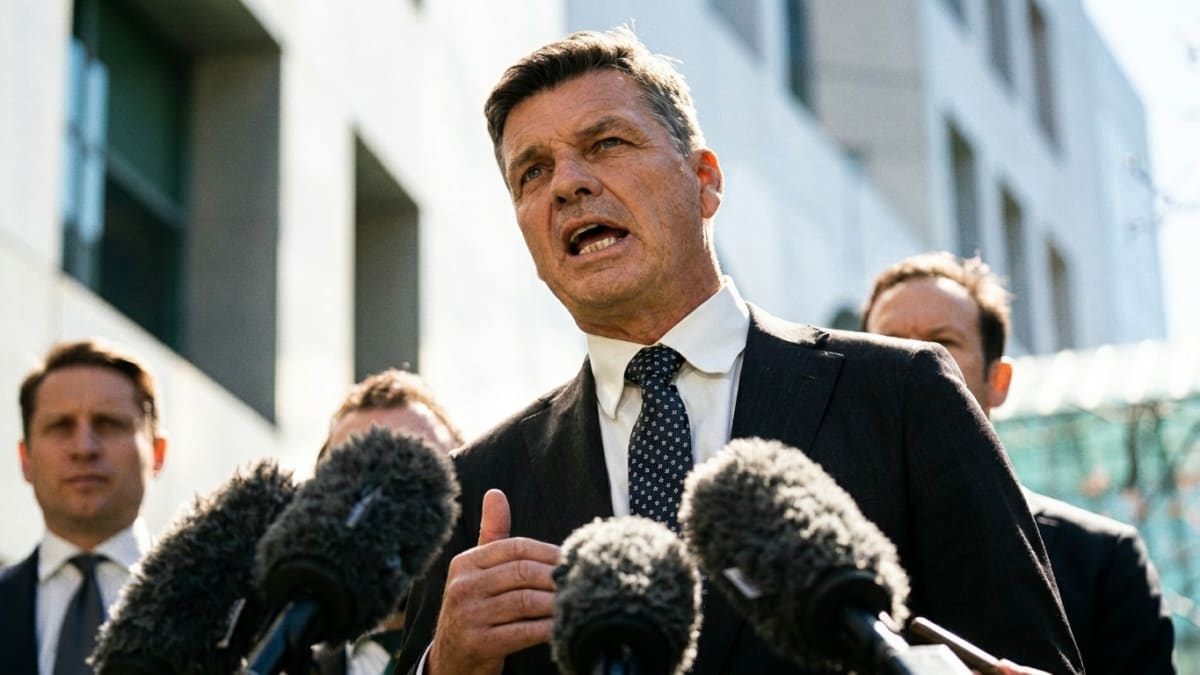
The New Vehicle Efficiency Standard Act 2024, which set declining greenhouse gas limits for new vehicles sold in Australia from 1 January 2025, would also be repealed.[6] Shadow Minister for Energy and Emissions Reduction Dan Tehan said that Chris Bowen's open hostility to oil, coal, and gas has left Australia dangerously exposed during this national fuel crisis.[1]
Wind zones, nuclear and what survives
The offshore wind program represents one of the plan's most immediate flashpoints. The Coalition would revoke four of the six declared offshore wind priority areas: the Hunter, Illawarra, Southern Ocean and Bunbury zones.[2] Gippsland and Bass Strait would be left standing, at least in name.
The timing compounds the disruption. Eight feasibility licence applications had already been lodged for the Hunter zone alone by August 2024.[3] Each represents committed planning expenditure and, in several cases, years of environmental assessment work that cancellation would render worthless.
On nuclear, the Coalition would move in the opposite direction. The Australian Radiation Protection and Nuclear Safety Act 1998 currently prohibits the construction or operation of nuclear power plants.[7] The bill would repeal those prohibitions, opening the door to civilian nuclear generation for the first time in the country's history, with Opposition Leader Angus Taylor framing the ambition as wanting the nation's car filled up, the nation fuelled up, and the future powered up.[1]
The investment pipeline at stake
The plan does not pretend to be incremental. Repealing four pieces of legislation within a single bill's 30-day window, covering the Climate Change Act, the safeguard mechanism rule, the vehicle efficiency standard and the nuclear prohibition, is a structural reorientation of Australian energy policy, and industry groups alongside the Albanese government warned the package would strand billions in committed clean-energy investment already flowing toward the zones and projects now under threat.[1]
The Coalition's position is that the existing framework imposes cost without security, and that coal, gas and nuclear must sit alongside renewables rather than be crowded out by them. Whether that argument finds a parliamentary majority will depend on an election the Coalition has not yet won, and the Hunter zone's eight licence applicants will be watching that count closely.
KEY TAKEAWAYS
SOURCES & CITATIONS
- Australians need cheaper power, not more ideology, Dan Tehan
- Offshore wind areas, Department of Climate Change, Energy, the Environment and Water
- ACCC Final Determination, Offshore Wind AA1000662
- Climate Change Act 2022, Federal Register of Legislation
- National Greenhouse and Energy Reporting (Safeguard Mechanism) Rule 2015
- New Vehicle Efficiency Standard Act 2024, Federal Register of Legislation
- Australian Radiation Protection and Nuclear Safety Act 1998
FREQUENTLY ASKED QUESTIONS
What is the Scrap Net Zero Bill?
Which offshore wind zones would be cancelled?
Would nuclear power become legal under the plan?
What happens to vehicle emissions standards?
Margaret Hale writes about politics, policy and the culture of business. She is drawn to the people behind decisions and to the moments when a political story turns out to be a human one.