
TLDR
A cross-party Senate inquiry has recommended stripping Telstra of its Triple Zero management role and creating a dedicated national authority. The 11-recommendation report, tabled 21 September 2026, follows a 2025 Optus outage in which 75 per cent of emergency call attempts failed, linked to two deaths.
A new authority to replace Telstra
A cross-party Senate inquiry tabled its final report on Monday 21 September 2026, recommending the federal government strip Telstra of its designation as Emergency Call Person and replace it with a purpose-built national Triple Zero authority.[1] The 11-recommendation report is the sharpest structural rebuke to the current model since the service was first privatised.
Telstra has answered Triple Zero calls since 1961, handling around 11.7 million calls a year, or roughly 32,000 a day.[2] The inquiry's centrepiece recommendation would end that arrangement, placing emergency call management inside a body whose sole statutory mandate is the integrity of the 000 system.
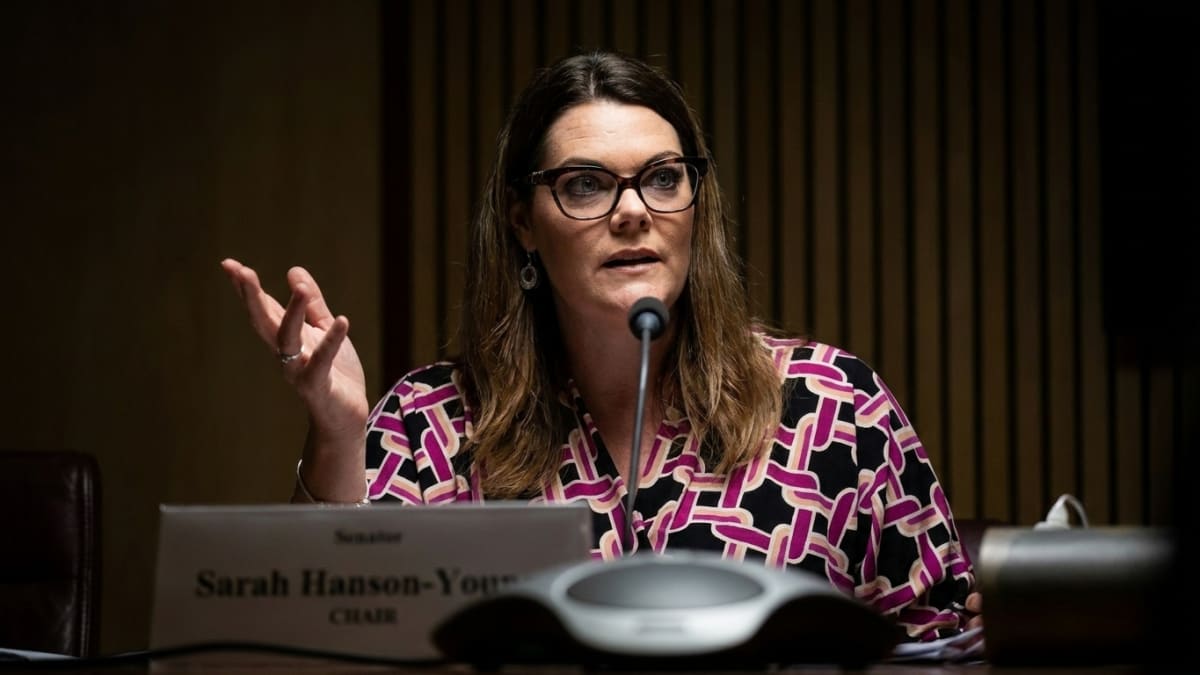
Senator Sarah Hanson-Young, who chaired the inquiry, said that Triple Zero is an essential service, a matter of life or death, and that the system must be fail safe with strong direct regulation, adding that privatisation has failed to keep Australians safe.[3]
What the September 2025 outage showed
On 18 September 2025, a network configuration change at Optus caused a 14-hour outage affecting emergency calls across South Australia, Western Australia, the Northern Territory and far west New South Wales; of 605 Triple Zero call attempts during that period, only 150 connected.[4] The 75 per cent failure rate, and its link to two deaths, drove the Senate referral seven weeks later.
The inquiry was referred to the Senate Environment and Communications References Committee on 28 October 2025, with an original reporting deadline of 11 February 2026, later extended to 21 September 2026.[1] Greens, Coalition and Labor senators all signed the final report, a degree of cross-bench agreement that reflects how far the structural critique travelled beyond its origins in the outage inquiry.
The other ten recommendations
Beyond the authority proposal, the committee recommended mandatory network roaming so that a customer stranded on a failed network can automatically connect through a rival carrier to reach Triple Zero.[3] Remaining recommendations cover minimum service standards with compensation obligations, a text-to-Triple Zero capability, and expanded powers for the communications regulator.
Hanson-Young said that when you need to call the ambulance, it shouldn't matter what phone company you're with or what type of phone you have.[3] The roaming recommendation targets precisely the scenario the 2025 outage exposed, where an Optus subscriber in a remote area had no fallback to a Telstra or other carrier signal during the failure.
Telstra's position on roaming
Telstra said mandated domestic roaming would place "extraordinary demand" on remaining networks during an outage, a concern it raised publicly at its August 2026 earnings call.[5] The company has not publicly responded to the specific authority proposal tabled in the final report.
Telstra's network would, under mandatory roaming, become the de facto emergency backbone whenever a rival carrier failed, absorbing load it was not dimensioned to carry. The committee's view, implicit in the recommendation, is that this is a design requirement to be engineered rather than a commercial objection to be accommodated.
What comes next
The government now holds 11 recommendations requiring a formal response, with the response timetable under standing orders running from the 21 September 2026 tabling date.
KEY TAKEAWAYS
SOURCES & CITATIONS
- Senate Environment and Communications References Committee, Triple Zero inquiry progress report
- Telstra, How Triple Zero works: the ecosystem behind a call for help
- Optus, Independent Report: Triple Zero Outage at Optus, 18 September 2025
- Senator Sarah Hanson-Young, Greens media release: Triple Zero review and ACMA overhaul
- Telstra Group Limited, Earnings call transcript, 12 August 2026
- CheckHansard, Senator Sarah Hanson-Young speech, 17 July 2026
FREQUENTLY ASKED QUESTIONS
Why does the inquiry want to replace Telstra with a national authority?
What happened during the September 2025 Optus outage?
What is mandatory network roaming and why does Telstra oppose it?
How many calls does Telstra currently handle through Triple Zero?
Elias Thorne writes about interest rates, the bond market and the Reserve Bank. He is interested in what monetary policy actually does to household budgets, and in the long stretches of economic history that tend to repeat.