TLDR
Australia's fertility rate is forecast to fall to 1.34 children per woman by 2065, well below the 2.1 replacement rate, while Australians aged 85 and over will triple to 1.9 million. Health spending will rise from 4 to 6.2 per cent of GDP, and budget surpluses will give way to deficits again by the late 2040s.
The numbers super funds already know
Start with what this does to your mortgage and your tax bill. Australia had 27,921,150 people at 31 March 2026[1], and that number is growing more slowly than at any point in recent memory. Population growth is projected to average just 0.9 per cent a year over the next 40 years, down from 1.4 per cent over the past four decades.[2] Fewer working-age people supporting more retirees means higher taxes or reduced services, and the 2026 Intergenerational Report released by Treasurer Jim Chalmers on 21 September makes that arithmetic unavoidable.
The fertility figures are the starkest part. The rate is forecast to fall to 1.34 children per woman by 2065, against a replacement rate of 2.1.[2] Deaths are expected to outnumber births by the 2060s, and that kind of structural shift takes decades to reverse, if it reverses at all.
Who will be in the country
The number of Australians aged 85 and over will triple over the next 40 years, reaching 1.9 million by 2066.[2] That cohort draws heavily on aged care, hospital beds and palliative services. Health spending sits at 4 per cent of GDP now; the report projects it rising to 6.2 per cent, with ageing alone driving roughly a third of that increase.[2]
At Australia's current economic size, the gap between 4 and 6.2 per cent of GDP represents tens of billions of extra dollars a year in health outlays. A larger economy helps carry it, but somebody still writes the cheque, and the report is clear that the structural pressure lands on the budget.
The fiscal window and what closes it
Treasury projects the budget returning to surplus from 2029-30 and holding there for roughly two decades, as the economy grows and debt as a share of GDP declines to 22.2 per cent by the mid-2050s.[2] Then the ageing costs compound. The underlying cash balance swings to a deficit of 0.3 per cent of GDP in 2036-37 before widening to 1.8 per cent by 2065-66, with gross debt rising back to 27.4 per cent of GDP.[2]
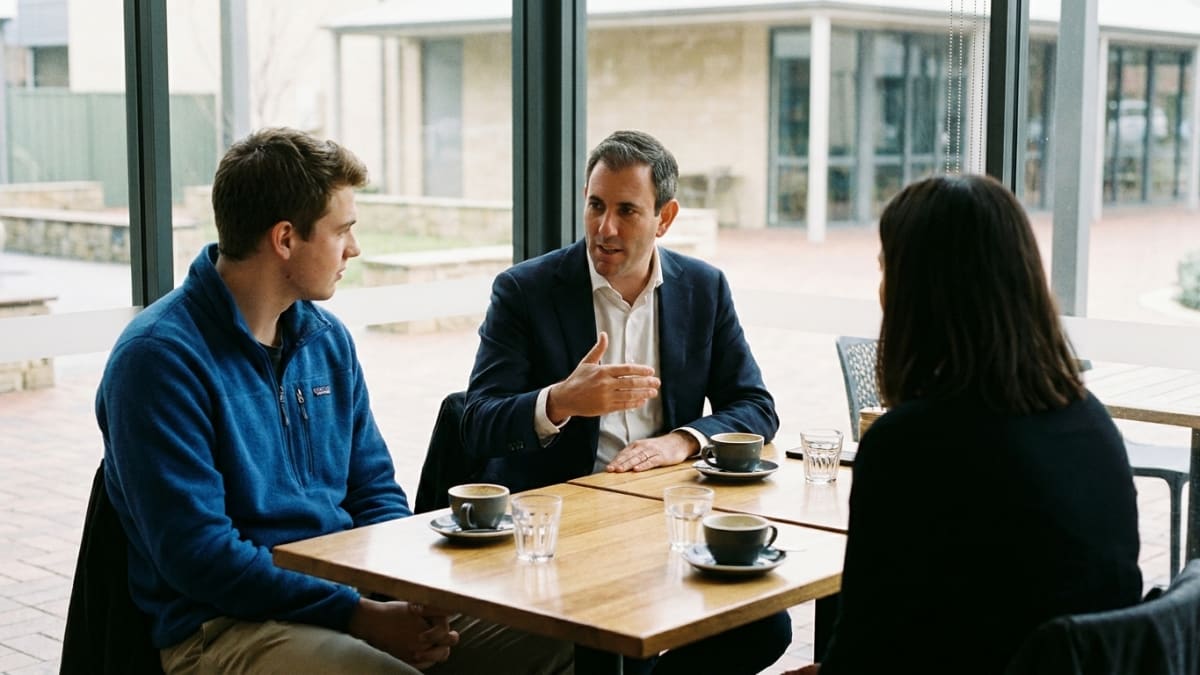
Chalmers framed the report as a call for structural reform, saying the pace of change is accelerating and intensifying globally and here at home.[3] Home ownership is one pressure point he singled out.
The home ownership gap that the report cannot ignore
About 250,000 fewer Australians aged 25 to 34 own a home today compared with 1981, with prices up 400 per cent since 1999.[3] That collapse in ownership rates among younger Australians feeds directly into the fiscal pressure the report describes: renters in retirement draw more heavily on the pension and Commonwealth rent assistance than homeowners do. Chalmers said the report makes the case for reforms to help more Australians into home ownership.[3]
The economy is still projected to more than double in real size by 2065-66, with real per capita income up 55 per cent over the period.[2] That growth does substantial work in the projections, but it does not stop the over-85 population from tripling and it does not lift the fertility rate. The Intergenerational Report is produced every five years under the Charter of Budget Honesty Act; the next one is due in 2031.
KEY TAKEAWAYS
SOURCES & CITATIONS
FREQUENTLY ASKED QUESTIONS
What is Australia's forecast fertility rate by 2065?
When will the budget return to deficit after the projected surplus period?
How much will health spending rise as Australia ages?
Gavin O'Malley writes about property and housing. He spends his time at auctions and on building sites, and is more interested in what buyers and builders are actually paying than in what the forecasts say.