TLDR
Four endangered Australian sea lions tested positive for H5 bird flu at the Pages islands off Kangaroo Island on 21 September 2026, lifting South Australia's confirmed sea lion cases to five. About 900 crested terns were found dead at the same site, raising fears of a large-scale mortality event at one of Australia's key breeding colonies.
Two colonies, one day, five confirmed cases
PIRSA recorded two new H5 bird flu events in Australian sea lions on 21 September 2026, one at South Page Island and one at North Page Island, both off Kangaroo Island's southern coast.[1] Three adults and a pup tested positive, bringing South Australia's confirmed sea lion tally to five. Ten sea lion carcasses were available for testing at the site, alongside the mass die-off of approximately 900 crested terns.
As of 21 September 2026, South Australia had recorded 318 confirmed H5 bird flu events in wildlife overall.[1] The Pages islands host one of Australia's largest Australian sea lion breeding colonies, which gives the cluster its particular weight.
How the virus reached Australian mammals
H5 high pathogenicity avian influenza has been spreading globally since 2022, driving mass mortality events in seabirds and spilling into marine and land mammals across South America, sub-Antarctic islands and now Australia's southern coastline. The first confirmed mass mortality event in Australian wild birds came at Baudin Rocks, SA, on 4 August 2026, when CSIRO's Australian Centre for Disease Preparedness recorded more than 80 sick or dead seabirds and six confirmed detections.[2]
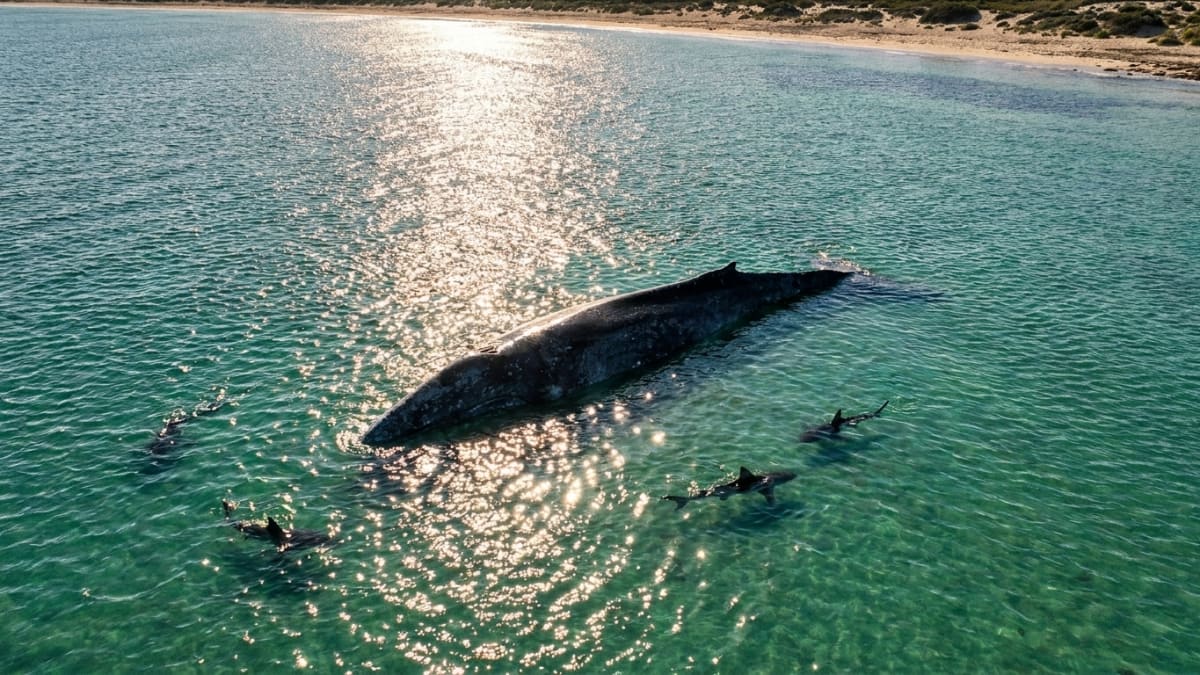
On 23 August 2026, CSIRO confirmed H5 high pathogenicity avian influenza in a long-nosed fur seal at Beachport, marking Australia's first detection in any marine mammal species.[2] Five days later, a red fox in metropolitan Adelaide's Osborne suburb tested positive, the first land mammal case recorded in Australia.[2]
The mammal-to-mammal transmission pathway remains under investigation. The pattern mirrors what epidemiologists observed in South American sea lion colonies from 2023 onwards, where dense breeding aggregations accelerated spread once the virus entered a colony.
Why sea lions carry extra risk
Australian sea lions (Neophoca cinerea) are endangered and exhibit strong site fidelity: adults spend their entire lives within a single regional population, with almost no movement between colonies. That biological reality turns a localised outbreak into a population-level threat. Robert Harcourt, Professor of Marine Science at Macquarie University, said "Our best hope is that we have a number of deaths but that we don't have thousands of them going."[4]
SA Environment Minister Emily Bourke described the Pages islands detections as an event of significance and said the state government is pursuing every option to join a national wildlife vaccine program. "We are pulling every lever possible to show we are willing, able and capable of participating in a national vaccine program," Bourke said.[4]
The federal and state response
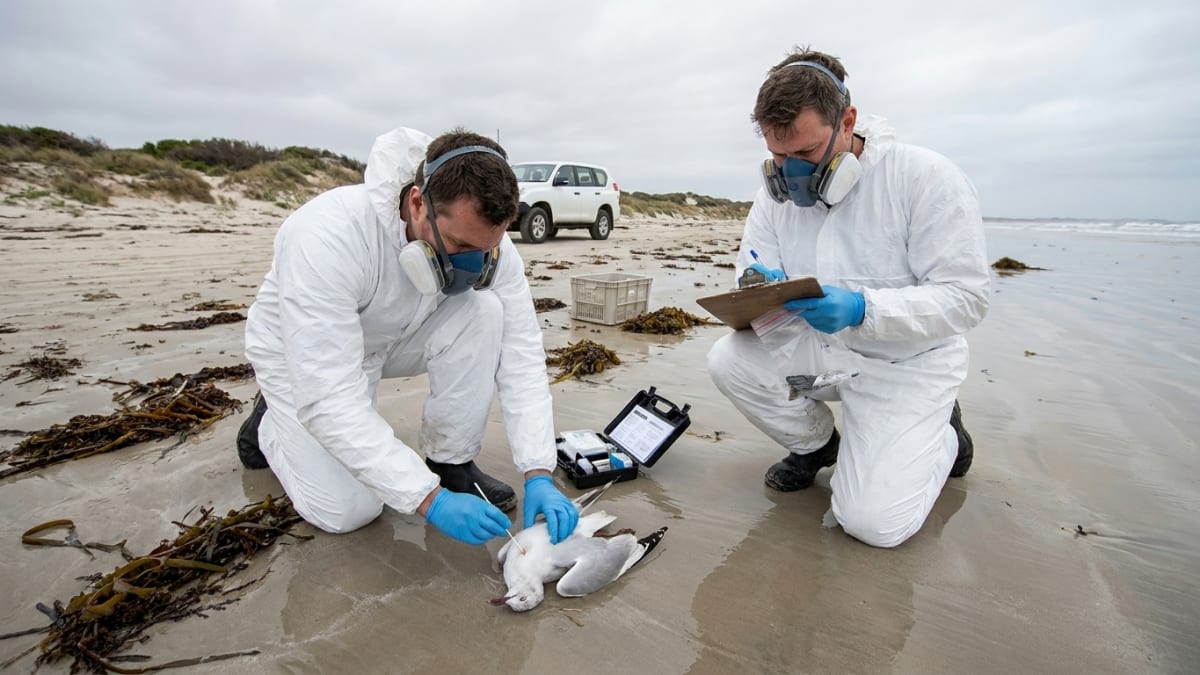
South Australia's response runs through PIRSA working alongside the Department for Environment and Water, SA Health, the federal Department of Agriculture, Fisheries and Forestry, and CSIRO's Australian Centre for Disease Preparedness.[3] Surveillance teams have been conducting carcass counts and sampling across affected island sites, with vaccine trial evaluation for at-risk species sitting at a national coordination level and South Australia lobbying for formal inclusion.
Kangaroo Island's sea lion tourism operations and nearby fisheries face the prospect of access restrictions if mortality numbers rise. Authorities have advised the public to avoid approaching any sick or dead marine wildlife on beaches and to report sightings to the relevant state agency rather than handling animals directly. PIRSA's next scheduled testing update will confirm whether additional positive cases have emerged from the ten carcasses collected at the Pages islands site.
KEY TAKEAWAYS
SOURCES & CITATIONS
FREQUENTLY ASKED QUESTIONS
What is H5 bird flu and can it infect humans?
Why are Australian sea lions particularly vulnerable?
What should beachgoers do if they find a dead or sick seal?
Vikram Singh writes about banking. He follows where money actually moves, from the strategy set in head office to what changes on a customer's phone.