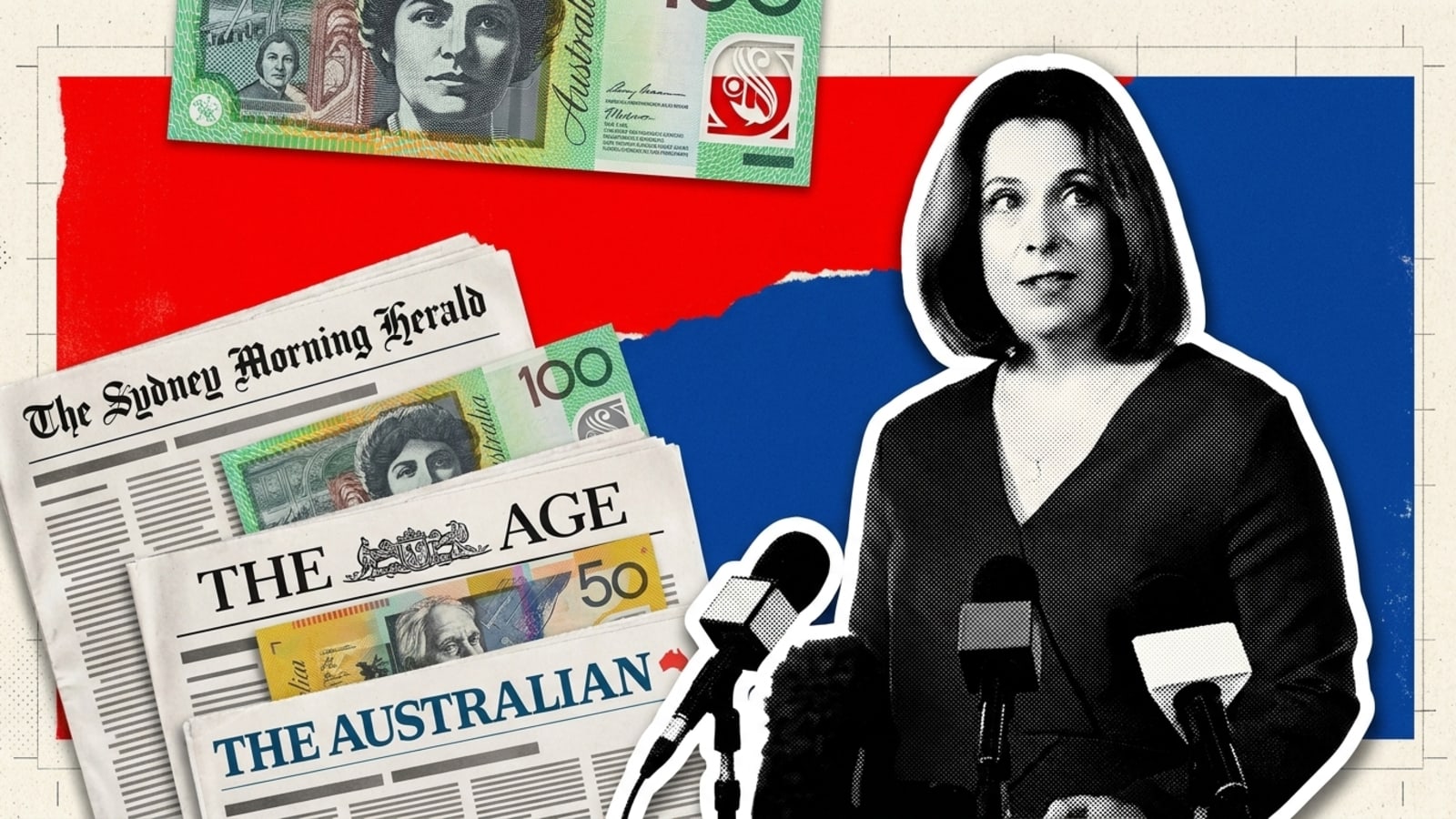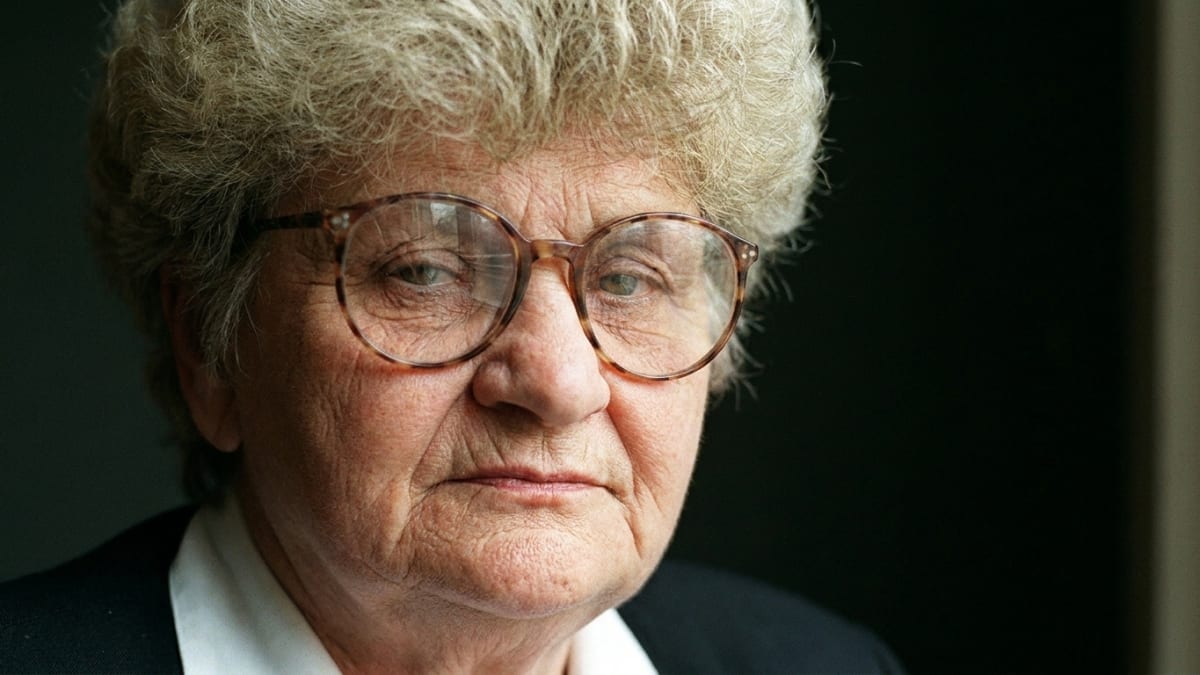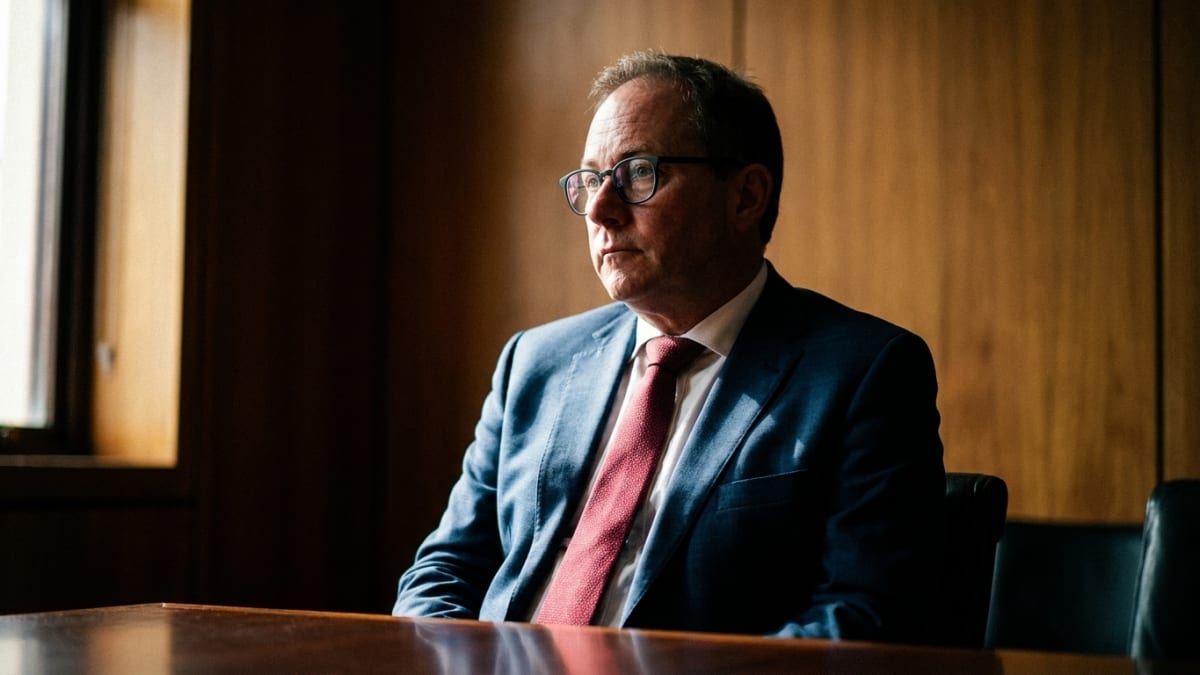


X banned the account of Australian outlet The Noticer without publishing a reason, a decision no law required it to explain. The regulatory architecture around it is public and contested: a royal commission, an age law that emptied 4.7 million accounts, a Federal Court claim against Telegram and a bill doubling platform fines to A$99 million.
KEY TAKEAWAYS
A ban with no published reason
Sometime around 3 August 2026, the X account @NoticerNews stopped working. Type the address today and X returns a single line: this account doesn't exist. The outlet behind it, The Noticer, said on its Telegram channel that it had been banned and was appealing. The conservative group Turning Point Australia posted a video about the ban the same day.[1]
X has published no reason and issued no statement. Bushletter could not independently verify what triggered the suspension, and no mainstream Australian outlet has reported on it. The site describes itself as independent journalism. ABC News Verify reported in April 2025 that it publishes white supremacist and neo-Nazi content, and that Google had disabled advertising on some of its articles under policies barring ads beside hate speech.[2]
The outlet blamed advocacy groups for the ban. It has produced no evidence for that, and Bushletter is not repeating the claim. What is checkable is narrower. The Anti-Defamation League lists "noticer" in its hate symbols database as a term antisemites use for themselves, while cautioning that the word can appear in innocuous settings and must be read in context.[3] The Royal Commission on Antisemitism and Social Cohesion has published one document from the Executive Council of Australian Jewry, a statement by Julie Nathan dated 11 May 2026. Bushletter downloaded and searched it. It mentions neither the word nor the ADL.[4] The commission received more than 20,000 submissions and says it will not publish all of them, so the published record settles nothing either way.[5]
One account is a small thing. What sits behind it is not. In eight months Australia has stood up a royal commission touching online speech, switched on an age law that emptied millions of accounts, taken a messaging platform to court, banned a political organisation, and asked Parliament for powers that reach offshore. The question is not who was right about one account. It is who decides what Australians can see, and how quickly the answer has moved.
What the regulator told the royal commission
The Governor-General issued Letters Patent on 9 January 2026 establishing the Royal Commission on Antisemitism and Social Cohesion after the Bondi terrorist attack, with former High Court judge Virginia Bell AC SC as Commissioner. An interim report landed on 30 April 2026 and the final report is due 14 December 2026.[6]
eSafety Commissioner Julie Inman Grant appeared before it on 2 July. Her evidence cut against the assumption that her office is the arm of government policing hate online. Antisemitism and hate speech, she told the commission, are not explicitly covered by her mandate, which runs to cyberbullying, adult cyber-abuse, image-based abuse and illegal and restricted content. Only 2 per cent of adult cyber-abuse complaints clear the threshold for action, she said, because of free-speech protections written into the scheme.[7]
She apologised to Jewish complainants her office could not help. Her agency runs fewer than 40 investigators against 108,000 complaints in the year to 30 June 2026, up from 55,000 the year before.[8] She also disclosed that of eight live matters between her office and X, six were started by X.[7]
An enforcement record that is not one-sided
On 29 July 2026 the eSafety Commissioner filed a statement of claim in the Federal Court's Victoria registry against Telegram FZ-LLC, proceeding VID836/2026.[9] Announcing it the next day, eSafety said the case concerns systemic obligations under the Online Safety Act's Relevant Electronic Services Standard, alleging Telegram failed to detect and remove pro-terror material, including footage tied to the Christchurch and Buffalo attacks. Penalties run to A$54.6 million.[10]
That is one line in a broader ledger. In May 2026 the Federal Court ordered X Corp by consent to pay A$650,000 for failing to fully answer a transparency notice about child sexual exploitation material.[11] On 31 March 2026 the regulator opened formal investigations into Facebook, Instagram, Snapchat, TikTok and YouTube over possible non-compliance with the under-16 ban.[12] Critics who argue the regime leans on one side of politics are making a claim the enforcement record does not carry on its own.
The age law commenced on 10 December 2025, requiring platforms including Facebook, Instagram, Snapchat, TikTok, X, YouTube, Kick and Reddit to take reasonable steps to keep under-16s from holding accounts. By mid-December, 4.7 million age-restricted accounts had been removed or restricted.[13]
The powers Parliament is being asked to add
The Online Safety Amendment (Strengthening Enforcement for the Social Media Minimum Age) Bill 2026 went to the Senate Environment and Communications Legislation Committee on 1 July, with a report due 25 August.[14] It doubles the maximum penalty for systematic breaches from A$49.5 million to A$99 million.[15] It also widens who the regulator can compel documents from, reaching past the platforms to the third-party age-assurance vendors and app-store operators that now hold face scans and identity documents belonging to Australian adults.
X objected in a submission published on 28 July. The bill would compel people outside Australia to hand over documents merely because they are "affiliated" with a company, X said, calling that a clear conflict with international legal principles and warning of a severe impact on international comity. It said the plans gave no due regard to procedural fairness or privacy.[16] The company raising the extraterritorial objection is the one that has been losing cases to eSafety, which is a reason to test the argument rather than dismiss it.
What the state can now put out of bounds
Speech regulation in Australia is no longer only about takedowns. Under the Combatting Antisemitism, Hate and Extremism Act 2026, passed after Bondi, the Home Affairs Minister listed the White Australia Party as a prohibited hate group on 15 May 2026. Membership, funding and support offences attach, and the group is challenging the law in the High Court, which refused an injunction on 3 June.[17]
The Queensland Council for Civil Liberties, which opposes the group's politics, opposes the mechanism more. The minister can ban an organisation on belief rather than proof, with no judicial oversight and no procedural fairness, it wrote, and it is "impermissible in a liberal democracy" for the executive to criminalise speech acts with no connection to actual or intended violence. It pointed to constitutional law professor Anne Twomey's view that the power could be used to ban political parties, including an opposition.[18]
The critics, and the scoreboard
The listing is itself under parliamentary review. The Parliamentary Joint Committee on Intelligence and Security opened an inquiry into it on 29 June 2026, and Parliament's own notice describes White Australia as a nationalist and racist extremist group previously known as the National Socialist Network.[19] The Free Speech Union of Australia has been fighting the regulator case by case and winning some of them. It points to the Baumgarten, Elston and Kirkham matters as decisions that limited powers eSafety had claimed for itself, and says it stands between the commissioner and an Australia where only "sanitised, pre-approved ideas and information are available".[20]
eSafety does not accept the framing. After the Full Federal Court's Baumgarten judgment in March 2026 it said informal notifications are a key tool for regulators nationally, that they reduce burden on companies, and that it had already changed its templates to make clear such correspondence is not a legal notice.[21]
Electronic Frontiers Australia has fought the age law from the other flank. Chair John Pane called it an authoritarian step into young Australians' online lives without adequate privacy protections, and the group argues age verification habituates the whole population to handing identity documents to private vendors.[22] That objection has become concrete: the enforcement bill would give the regulator a route into the vendor databases the age law created.
None of this establishes why one account disappeared on 3 August. X made that decision, gave no reasons, and owes nobody an explanation under Australian law. The architecture built since Bondi is public and reviewable, with submissions, hearings, court files and a High Court challenge. The decision that removed a masthead from the largest public square in the country was made privately, by a company, overnight. Australians can read the bill. They cannot read the ban.
SOURCES & CITATIONS
- Turning Point Australia, 'The Noticer have been banned on X'
- ABC News Verify, how election candidates are boosting The Noticer
- Anti-Defamation League hate symbols database entry, 'Noticer'
- Exhibit 1-094, Statement of Julie Nathan, Executive Council of Australian Jewry
- Royal Commission on Antisemitism and Social Cohesion, submissions
- Letters Patent, Royal Commission on Antisemitism and Social Cohesion
- The Guardian, eSafety regulator tells antisemitism commission platforms monetise gore
- ABC News, eSafety commissioner tells royal commission Jewish community let down
- Statement of Claim, eSafety Commissioner v Telegram FZ-LLC & Anor (VID836/2026)
- eSafety, civil penalty proceedings against Telegram over pro-terror material
- eSafety, X Corp penalised over transparency notice non-compliance
- ABC News, five social media platforms investigated over under-16 ban compliance
- eSafety, Social Media Minimum Age compliance update, March 2026
- Senate inquiry, Online Safety Amendment (Strengthening Enforcement for the Social Media Minimum Age) Bill 2026
- The Guardian, Australia to double penalty for social media ban breaches to $99m
- Reuters, X says Australia's social media crackdown undermines international law
- The Guardian, White Australia loses injunction bid against hate group designation
- Queensland Council for Civil Liberties on the hate group proscription regime
- PJCIS review into the listing of White Australia as a prohibited hate group
- Free Speech Union of Australia, eSafety fighting fund
- eSafety statement on the Baumgarten matter
- Electronic Frontiers Australia condemns the under-16 social media age ban
FREQUENTLY ASKED QUESTIONS
What is eSafety alleging against Telegram?
How many under-16 accounts were removed under the age law?
What would the proposed fines bill change?
Why did X ban The Noticer?
Diana Trent writes about regulation, competition and the law as it meets technology. She reads the judgments and the regulator filings that most people skip, and finds the story in them.