
TLDR
Kath Pettingill, matriarch of Melbourne's most notorious crime family, died aged 91 at a Venus Bay nursing home. Police called her Granny Evil, her family called her Nanna Kath, and two of her sons were tried and acquitted over the 1988 Walsh Street police murders.
KEY TAKEAWAYS
Death of a matriarch
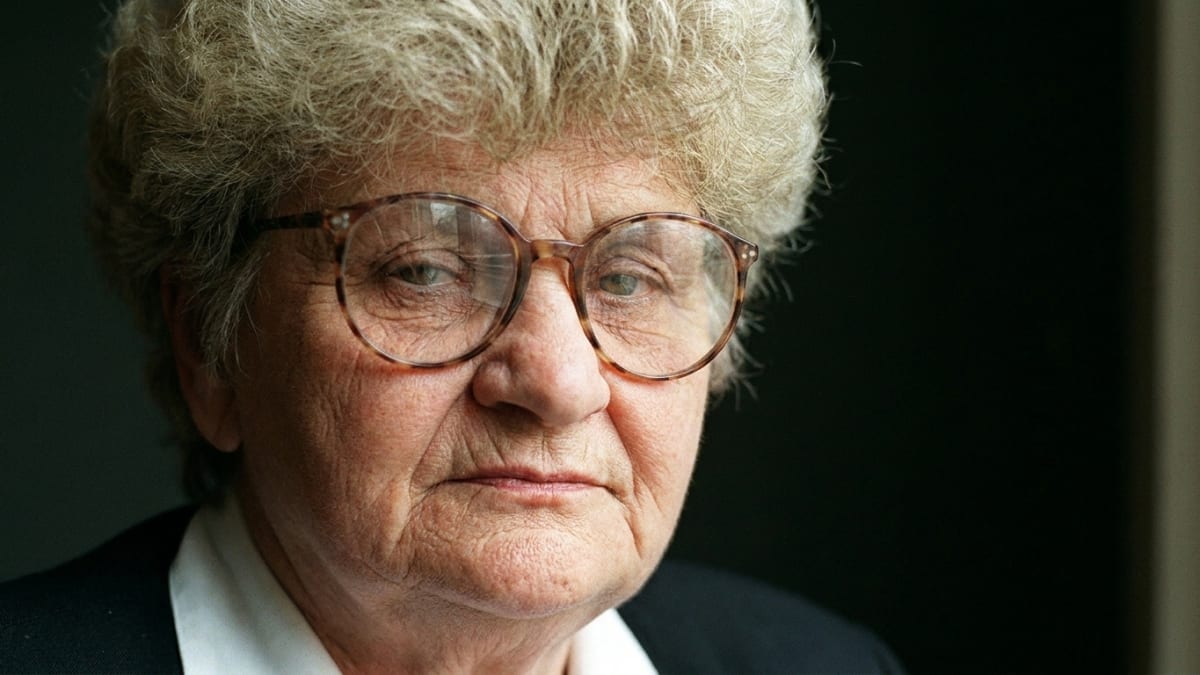
Kath Pettingill, the woman Victoria Police knew as Granny Evil and her own family called Nanna Kath, died on 1 August 2026 at a nursing home in Venus Bay, in Victoria's South Gippsland, aged 91. She had been living with dementia in her final years.[1][2]
Pettingill was born on 27 March 1935 and was embedded in the criminal life of Melbourne's inner suburbs from the 1970s to the 2000s.[4] She outlived most of the figures who defined that world, including several of her own children. Her death was confirmed by a family member, who declined to comment to the ABC.[2]
Richmond, brothels and ten children
Pettingill emerged in the 1970s as the de facto head of a sprawling family enterprise centred on the then working-class suburbs of Richmond and Collingwood. She was the mother of ten children, and a former sex worker who went on to run brothels in inner-city Richmond.[3][4] Her own criminal record was modest. What made her formidable was the network her sons built around her, which ran to heroin, armed robbery and vice.[1]
Pettingill was voluble, confrontational and, at times, disarmingly candid about what her family was. In a 1996 interview with the ABC, given as her biography was launched, she said her life had never been ordinary and had been very brutal. "I never wanted them to become criminals," she said. "I don't think any mother wants their sons to become criminals."[2]
In October 1978 Pettingill was shot at a Collingwood housing commission flat, where she and her eldest son had gone to settle a $300 debt owed by her daughter. A bullet came through a closed door and took out an eye. She wore a glass eye for the rest of her life. Police named the investigation Operation Cyclops.[1][4]
Dennis Allen and the family enterprise
Dennis Allen, the eldest of her sons, became the most feared figure in the network during the 1980s. He ran heroin out of Richmond, was a suspect in more than ten murders and was never tried for any of them, staying out of jail and on bail by working as a police informer.[1][2] He had earlier served time for rape. Allen died in custody in 1987 of a heart attack while awaiting trial for murder, more than a year before Walsh Street.[3]
Pettingill was clear-eyed about what her eldest son was. "Dennis never trusted me 100 per cent and I never trusted him 100 per cent, and he's my son," she said.[1] Another son, Peter Allen, was a convicted heroin dealer who spent decades in prison.[2][3]
Walsh Street, 1988
In the early hours of 12 October 1988, two young Victoria Police constables, Steven Tynan, 22, and Damian Eyre, 20, were ambushed and shot dead as they examined an abandoned car in Walsh Street, South Yarra. Investigators believed it was payback for the police shooting of Graeme Jensen, an associate of the family, the day before.[5][1]
Two of Pettingill's sons, Victor Peirce and Trevor Pettingill, were charged and stood trial in the Supreme Court of Victoria alongside two other men. In 1991 a jury acquitted all four.[5] Pettingill called for three cheers for the boys and got silence. She had turned up at court in a T-shirt reading, "Life's A Bitch. Then You Die."[1]
Pettingill never wavered on her family's innocence. Hours after the killings she told The Age: "I hate coppers but those boys didn't do anything. Our family wouldn't do that. We were not involved." She added that if anyone had wanted payback, they would have gone after the officer who shot Jensen, not two young constables.[1] Victor Peirce was himself shot dead in Port Melbourne in 2002. His widow, Wendy Peirce, who had been a prosecution witness before refusing to give evidence, later told reporters that her husband had planned and carried out the killings, a claim never tested in court.[2][3]
Animal Kingdom and the Hollywood verdict
In 2010 the writer and director David Michod released Animal Kingdom, his debut feature, loosely inspired by Walsh Street and the world Pettingill had built. The film named nobody, but the architecture was unmistakable: a crime matriarch at the centre of a collapsing underworld, her sons circling inward as police pressure mounted. It took the World Cinema Jury Prize at Sundance and earned more than $1.8 million in under a fortnight on Australian release.[6]
Jacki Weaver played the matriarch, a character named Janine "Smurf" Cody, and earned an Academy Award nomination for best supporting actress.[6] Her performance made the character nurturing and terrifying at once, warm over the kitchen table and cold everywhere else. Ellen Barkin later played a version of the same character in an American television adaptation.[4]
Pettingill had her own verdict. "Jacki Weaver and I have only one thing in common, neither of us can act," she told the Herald Sun after the film's release. "I've seen the movie and I'm not impressed. She's supposed to have read books about me and studied me for the part, but it doesn't come off."[2][3] For a new generation of viewers, Smurf Cody became the face of what Pettingill had built. Pettingill had spent her life making sure that face was her own.
Final years
Pettingill retired to the coast at Venus Bay and spent her last years largely out of public view. Dementia stripped away the sharp intelligence and combative wit that had defined her public persona for decades. Locals saw her around the town for years, then stopped seeing her at all.[3]
The two names sat side by side to the end. The Age reported that in 2004 she was given an International Year of the Volunteer award for raising money through bingo to pay for the town's street decorations, and that after her death her family posted a photograph of nanna Kath holding a piece of cake.[1] She is survived by her sons Lex, Trevor and Peter.[3]
SOURCES & CITATIONS
- The Age: 'Granny Evil' to some, 'Nanna Kath' to others. The matriarch who built a crime empire and inspired a movie
- ABC News: Kath Pettingill, the matriarch of the Walsh Street police killers, dies
- Daily Mail Australia: Melbourne underworld crime family matriarch Kath Pettingill dies aged 91
- Wikipedia: Kath Pettingill
- Wikipedia: Walsh Street police shootings
- Australian Screen (National Film and Sound Archive): Animal Kingdom (2010), curator's notes
FREQUENTLY ASKED QUESTIONS
Who was Kath Pettingill?
What was the Walsh Street case?
What was the film Animal Kingdom?
How did Kath Pettingill die?
Margaret Hale writes about politics, policy and the culture of business. She is drawn to the people behind decisions and to the moments when a political story turns out to be a human one.