
TLDR
The RBA's October 2026 Financial Stability Review found fewer than 1 per cent of Australian mortgage holders are in negative equity, judging the housing correction manageable. Off-balance-sheet AI infrastructure debt of up to US$1.5 trillion and US hedge fund repo borrowing above US$3 trillion now rank as the central bank's primary concerns.
The housing picture is uncomfortable but contained
Fewer than 1 per cent of Australian mortgage borrowers owe more on their loan than the current value of their property.[1] That figure, drawn from the Reserve Bank of Australia's October 2026 Financial Stability Review, is the clearest available measure of how much damage the housing correction has actually done to household balance sheets.
The RBA stress-tested that number against a severe downside: if prices fell a further 20 per cent from current levels, negative equity would climb to around 5 per cent of loans.[1] That is a manageable tail. By the RBA's own assessment the household sector has absorbed the correction with enough equity and savings buffers intact to prevent widespread distress.
Cash-flow stress tells a more nuanced story. Around 2 per cent of variable-rate owner-occupier borrowers are estimated to be in cash-flow shortfall, meaning their income falls short of covering scheduled mortgage repayments and essential living expenses.[1] Two per cent is not trivial when applied to Australia's mortgage book, but it has risen only modestly and arrears rates remain low, leaving the housing story uncomfortable rather than dangerous.
The AI financing chain the RBA is actually watching
Set the housing numbers aside and the October review reads quite differently. The RBA's deeper concern sits in a financing structure that most Australian savers have never encountered: off-balance-sheet debt being assembled, at speed, to fund artificial intelligence infrastructure around the world.
Technology companies and hyperscalers, the large cloud and data-centre operators, are routing capital through special purpose vehicles rather than recording it on their own balance sheets. The RBA estimates that financing of this kind for AI infrastructure has reached an estimated US$1 to US$1.5 trillion globally.[2] The higher-risk nodes in this chain are data centres, utilities and so-called neoclouds, newer specialist cloud providers. Some of them are caught in circular financing arrangements where chip purchases are collateralised against neocloud contracts that themselves depend on the chip supply.
The structure is opaque by design. Off-balance-sheet vehicles remove debt from the headline numbers that investors and ratings agencies scrutinise most closely. Whether the underlying assets (servers, cooling systems, power contracts and the revenue streams attached to them) justify the capital being poured in is the question the RBA cannot yet answer with confidence.
Sovereign yields and the repo pile
The AI financing boom is already moving bond markets in ways that reach well beyond the technology sector. Corporate bond issuance from hyperscalers has grown large enough to compete directly with sovereign debt for the pool of available funding. The RBA found that this competition has contributed to the rise in government bond yields over recent months, which have reached 15-year highs.[3] When governments and the world's largest technology companies are bidding for the same pool of capital, the price of that capital rises for everyone.
Layered on top of that is the leverage sitting inside US hedge funds. Repo borrowing by US hedge funds has climbed above US$3 trillion, near record highs and approaching 10 per cent of US GDP.[2] Repo markets are the plumbing of short-term finance, and when that plumbing seizes, as it has before, the effect travels fast and broadly. Elevated bond yields combined with record repo leverage create conditions in which a sharp repricing event could cascade quickly across asset classes.
How Australia gets pulled in
Australian banks, companies and superannuation funds do not hold significant direct exposure to US neocloud special purpose vehicles or AI-linked corporate bonds. That distinction matters, though only so far. The RBA was direct about the mechanism through which contagion travels: equity risk premia, corporate bond spreads and sovereign term premia in Australia move closely with other advanced economies.[3] A repricing in the US that pushes spreads wider does the same in Australia, regardless of what Australian borrowers are financing.
Australian companies, banks and superannuation funds have mitigated that exposure through hedging and significant liquidity buffers.[2] Those buffers buy time and reduce the first-order impact of a global funding shock, but they do not eliminate the transmission channel. The RBA's October review said plainly that Australia is unlikely to be immune should international funding conditions abruptly tighten.[3]
For superannuation members and retail investors, the practical implication runs through the valuation of growth assets. A sustained rise in term premia, the extra yield investors demand to hold longer-dated bonds, compresses the present value of equities and real assets. It also raises the cost of corporate refinancing, which eventually touches earnings. None of that is imminent or certain, but it is the channel the RBA is watching.
Bubble or durable value?
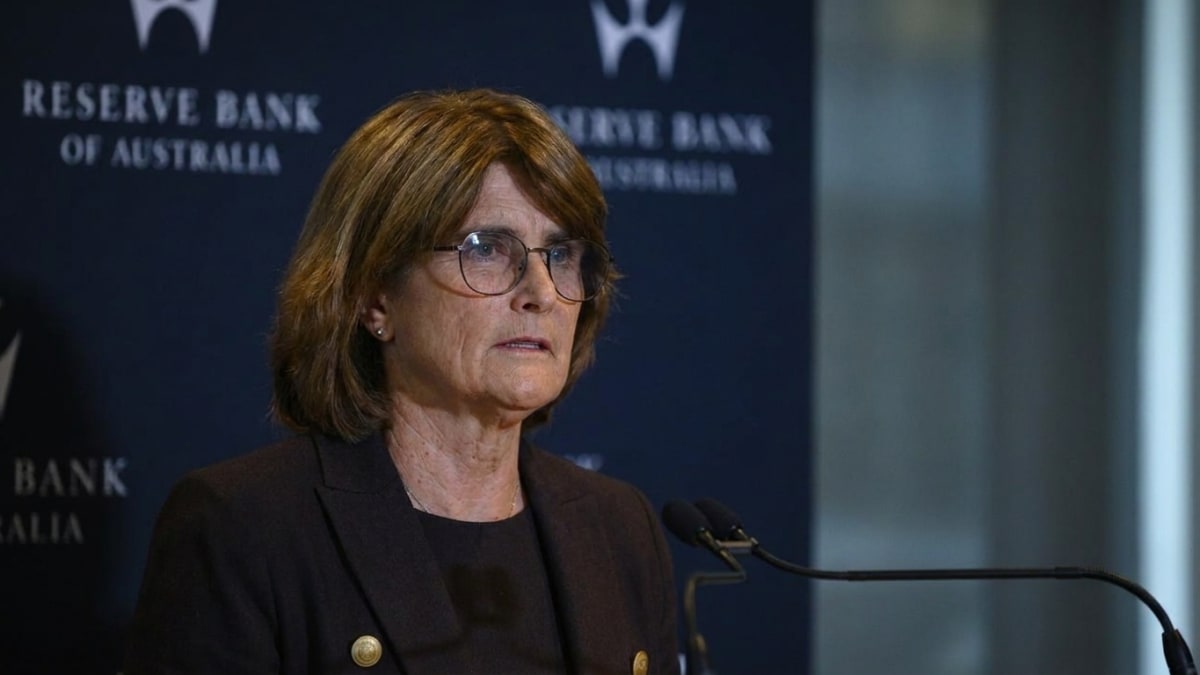
The debate about whether AI financing resembles dotcom-era excess or reflects genuine long-run value creation is live among economists, and the RBA has declined to resolve it unilaterally. Governor Michele Bullock said in September: "Some people think it's a bubble, some people don't. I don't have a particular view one way or the other, but it's a risk that I think we're watching."[5]
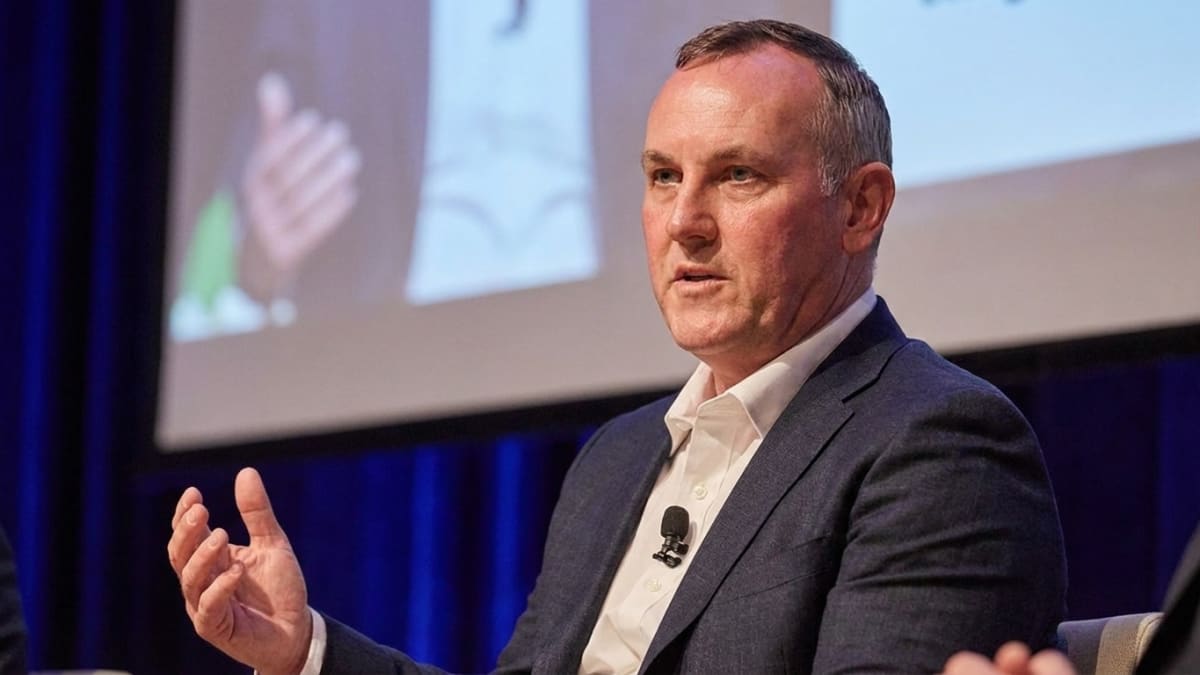
Luke Yeaman, Chief Economist at Commonwealth Bank of Australia, sits closer to the optimist camp. "Traditional valuations of AI are high. We do expect to see some corrections over time. But at CBA, we don't think this is dotcom 2.0. Fundamentally, they look solid. We think there is real value in artificial intelligence over the next few years," Yeaman said.[4]
The disagreement between a cautious central bank and a measured optimist at a major commercial lender reflects genuine uncertainty. Dotcom-era collapses were characterised by companies with no revenue and speculative valuations collapsing when capital dried up. The current AI cycle involves companies generating substantial and growing revenue, but financing structures that obscure the true quantum of debt and the quality of the collateral behind it.
What this means for Australian savers and borrowers
Mortgage holders sitting on the right side of the 1 per cent negative equity figure, which is the overwhelming majority, face limited acute risk from the housing correction as it stands. A further 20 per cent fall in prices would change that calculation for a meaningful minority, but the RBA's own modelling suggests the system would remain broadly solvent even in that scenario.
For superannuation members in balanced or growth options, the relevant variables are global bond yields, credit spreads and the stability of funding markets that underpin portfolio valuations. Hedging and liquidity buffers provide a degree of insulation. Those protections are priced into what funds already hold and do not guard against a sharper repricing if global funding conditions tighten faster than central banks and treasuries can absorb.
The RBA's next Financial Stability Review is scheduled for April 2027. By then the pace of AI infrastructure financing and the trajectory of US repo leverage will have moved materially in one direction or another.
KEY TAKEAWAYS
SOURCES & CITATIONS
- Resilience of Australian Households and Businesses, RBA Financial Stability Review, October 2026
- The Global Macro-Financial Environment, RBA Financial Stability Review, October 2026
- Financial Stability Assessment, RBA Financial Stability Review, October 2026
- CBA Chief Economist on AI valuations and the dotcom comparison
- RBA Governor Michele Bullock speech, September 2026
FREQUENTLY ASKED QUESTIONS
What is negative equity and how many Australian borrowers are affected?
What is off-balance-sheet AI financing and why does it concern the RBA?
How does a US hedge fund repo crisis reach Australian superannuation balances?
Is the RBA saying AI is a bubble?
Fiona Sterling writes about superannuation, tax and personal finance. She takes rules that are written to be confusing and explains what they mean for the money in your account.