TLDR
At least 224 people have been confirmed dead after the 10 August earthquake in Colombia, with search crews placing the true toll above 250 as they reach isolated parts of Chocó. More than 3,000 remain missing, the upper floors of a major Cali hospital collapsed, and President Abelardo De La Espriella has declared a national state of emergency.
Death toll and missing persons: where the numbers stand
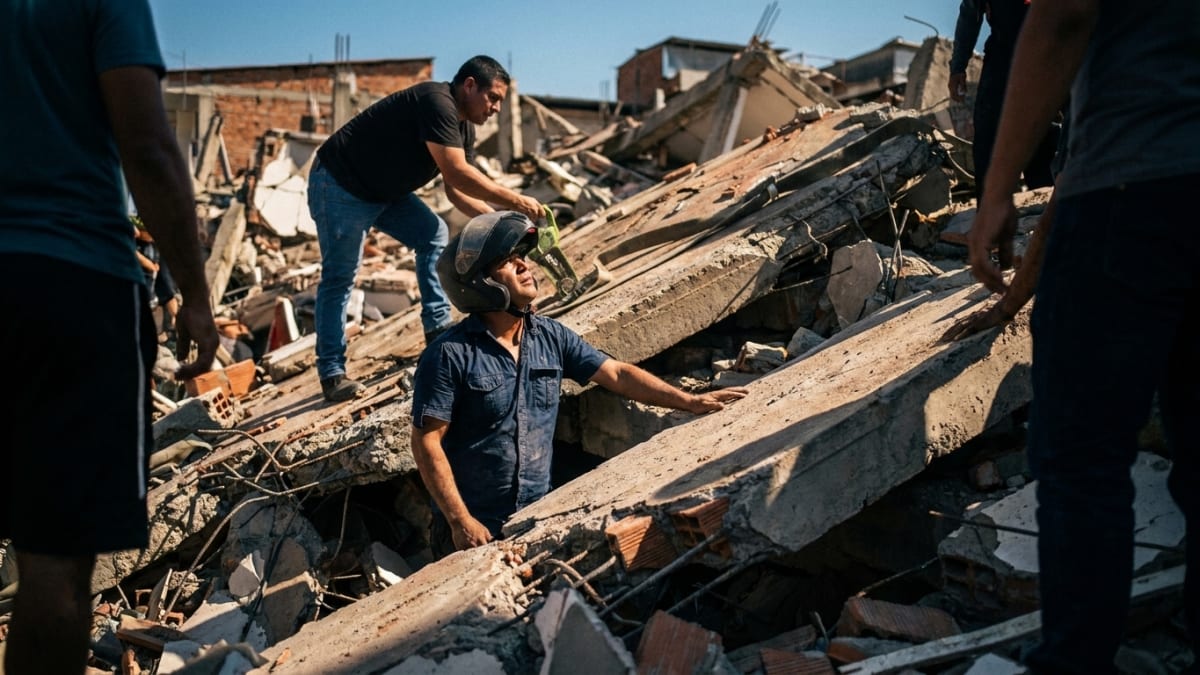
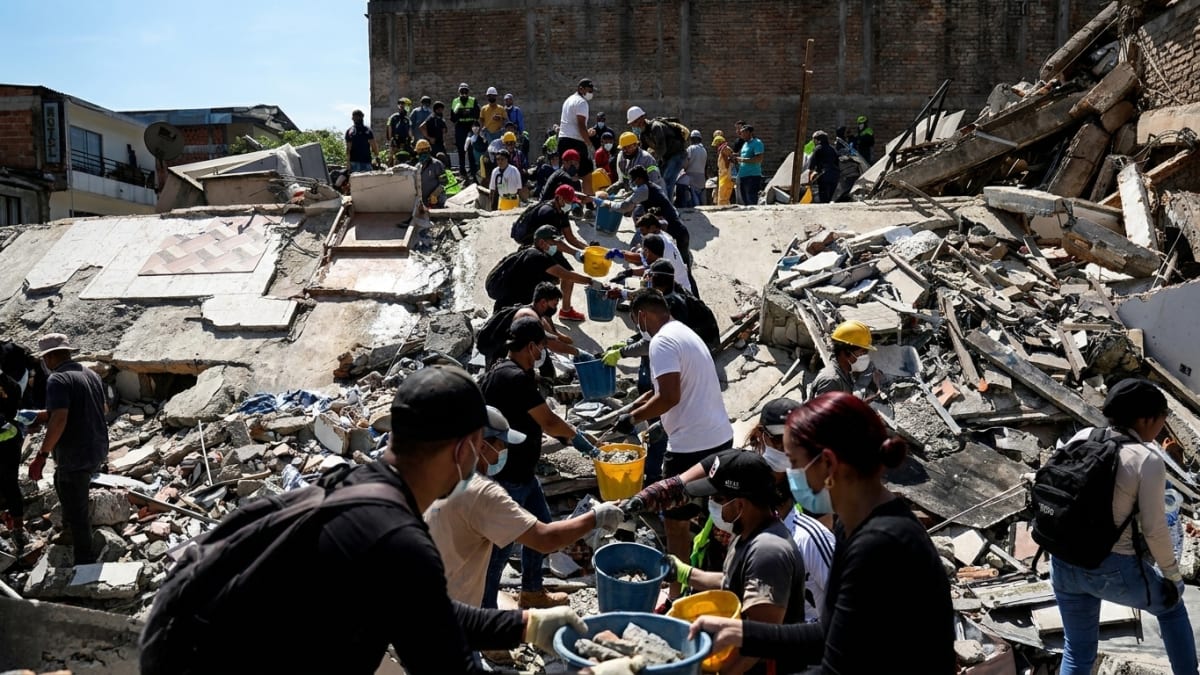
Colombian authorities confirmed at least 224 deaths from the 10 August earthquake as of 12 August 2026, yet that figure had barely settled before search crews working into previously unreachable valleys began revising it upward.[1] Colombia's national disaster management authority, the UNGRD, said its crews on the ground estimated fatalities had already surpassed 250.[2]
More than 3,000 people remain unaccounted for across the affected region, according to the UNGRD.[3] In disasters of this kind, where entire communities sit behind severed roads and collapsed communications, the missing are not simply the unidentified dead. Many are people whose fates are unknown, reachable by neither phone nor road.
Rescue window closing: conditions in Chocó
Red Cross Quindío search chief Jose Fernando Usma put the situation plainly. "We have approximately 24 more hours to have hope of life," Usma said.[4] That statement, made on 12 August, places the rescue operation at the edge of the survivable window, the roughly 72 hours that emergency medicine treats as the boundary between retrieval and recovery.
Chocó's geography makes an already desperate situation harder. Communications remain down in eight municipalities, including San José del Palmar, the town closest to the epicentre.[5] The department is bordered to the west by the Pacific and threaded by rivers rather than highways, so local emergency teams have relied on small aircraft and boats to ferry supplies and bring the wounded out. Heavy rain, a fixture of one of the wettest places on Earth, has not relented.
I have declared a national state of emergency and mobilized all available resources to save lives and rebuild.
2026-08-12 · View on XSan José del Palmar sits in a region that is, in ordinary times, among the most isolated in South America. Building stock there was rarely engineered to modern seismic codes, and connecting roads were often unsurfaced. Chocó already carried some of the highest poverty rates in Colombia before the ground moved on 10 August.
Cali hospital collapse and the scale of infrastructure damage
Across more than 30 municipalities, approximately 1,600 buildings were damaged or destroyed, according to Colombia's risk management authority.[6] That figure spans ordinary dwellings, schools, clinics and bridges, and hints at the reconstruction task that will outlast the search phase by years.
The upper floors of Cali's Hospital Universitario del Valle collapsed in the quake, forcing the treatment of 600 patients outdoors in the hours that followed.[5] Cali sits roughly 170 kilometres south-east of San José del Palmar and might have been expected to absorb the shock with less catastrophic effect. The hospital collapse suggests the tremors carried enough force to damage engineered structures well outside the immediate epicentre zone.
Cali's health authorities were working to identify alternative treatment sites as of 12 August, with the injured needing beds in a city of nearly three million whose main public hospital had partially lost its upper floors.[5]
Government response: emergency declaration, curfews and security deployment
President Abelardo De La Espriella declared a national state of emergency on 12 August. "I have declared a national state of emergency and mobilized all available resources to save lives and rebuild," De La Espriella said.[7] The declaration came with three months of economic relief for the department of Risaralda, one of the worst-affected regions.[7]
In Cali, where reports of looting followed the breakdown of order in damaged neighbourhoods, the government deployed 1,000 security forces and imposed overnight curfews.[8] Pereira, the capital of Risaralda, also came under overnight curfew. Large-scale disasters routinely produce this dual pressure: humanitarian emergency and civil disorder arriving together, with governments stretched to manage both at once.
The Risaralda relief announcement signals the government anticipates a prolonged disruption rather than a short crisis. What the relief entails, whether tax deferrals, direct payments or debt relief, had not been fully specified in official communications as of 12 August.
Colombia's seismic history and what comes next
Colombia sits across multiple seismic fault lines, and the 10 August event was described as the strongest quake the country had experienced this century, with its epicentre in Chocó where geography has always made disaster management hardest.[9] The 1999 Eje Cafetero earthquake, which killed more than 1,000 people, prompted sweeping revisions to Colombia's building codes and disaster response framework. Whether those revisions have been consistently applied in poorer and more remote departments is a question this quake's aftermath will eventually have to answer.
The practical challenge now is sequencing. Rescue operations remain live, yet the window Jose Fernando Usma described closes quickly. Behind it comes recovery: cataloguing the dead, identifying the missing, assessing structural damage across 30-plus municipalities, and beginning to rebuild in a region whose infrastructure was already strained before 10 August. The eight Chocó municipalities still cut off from communications represent both a logistics problem and a humanitarian one, given that needs assessment cannot begin where communications have not been restored.
Colombia's UNGRD had not revised its missing persons count of more than 3,000 as of the afternoon of 12 August, with crews still working to reach the most isolated communities in Chocó.
KEY TAKEAWAYS
SOURCES & CITATIONS
- President De La Espriella, confirmed death toll statement
- UNGRD, fatalities estimate above 250
- UNGRD, more than 3,000 missing
- GestionRiesgoCol, 1,600 buildings damaged across 30 municipalities
- SaludCali, Hospital Universitario del Valle collapse, 600 patients outdoors
- Dimarcolombia, communications down in eight Chocó municipalities
- President De La Espriella, national emergency declaration and Risaralda relief
- Mindefensaes, 1,000 security forces deployed to Cali
FREQUENTLY ASKED QUESTIONS
How many people have died in the Colombia earthquake?
How many people are missing after the Colombia quake?
What has the Colombian government done in response?
Why is the rescue operation so difficult in Chocó?
Margaret Hale writes about politics, policy and the culture of business. She is drawn to the people behind decisions and to the moments when a political story turns out to be a human one.