

TLDR
Brazil's federal police have formally accused 16 current and former Voepass employees, including the airline's owner, over the August 2024 ATR 72 crash that killed all 62 aboard. Investigators found ice accumulation, de-icing failures and a culture of hiding faults from maintenance logs were jointly responsible.
The owner of a regional airline is now formally accused of criminal conduct over a crash that should never have happened
Brazil's federal police formally accused 16 current and former Voepass employees over the 9 August 2024 ATR 72-500 crash that killed all 62 people on board.[1] Among those accused is the airline's owner and president, José Luiz Felicio Filho.[1]
Federal police investigator André Ribeiro put it plainly: "This is a watershed in air crash disasters here."[1] Indicting executives and operational staff, not just the crew, for a fatal crash is a genuinely unusual step in a legal system where accountability for aviation disasters has historically stopped at the cockpit door.
What the aircraft did
Voepass Flight 2283 departed Cascavel in Paraná state on the morning of 9 August 2024, bound for São Paulo's Guarulhos International Airport. The aircraft was an ATR 72-500, registered PS-VPB, a twin-turboprop suited to regional routes across Brazil's interior.
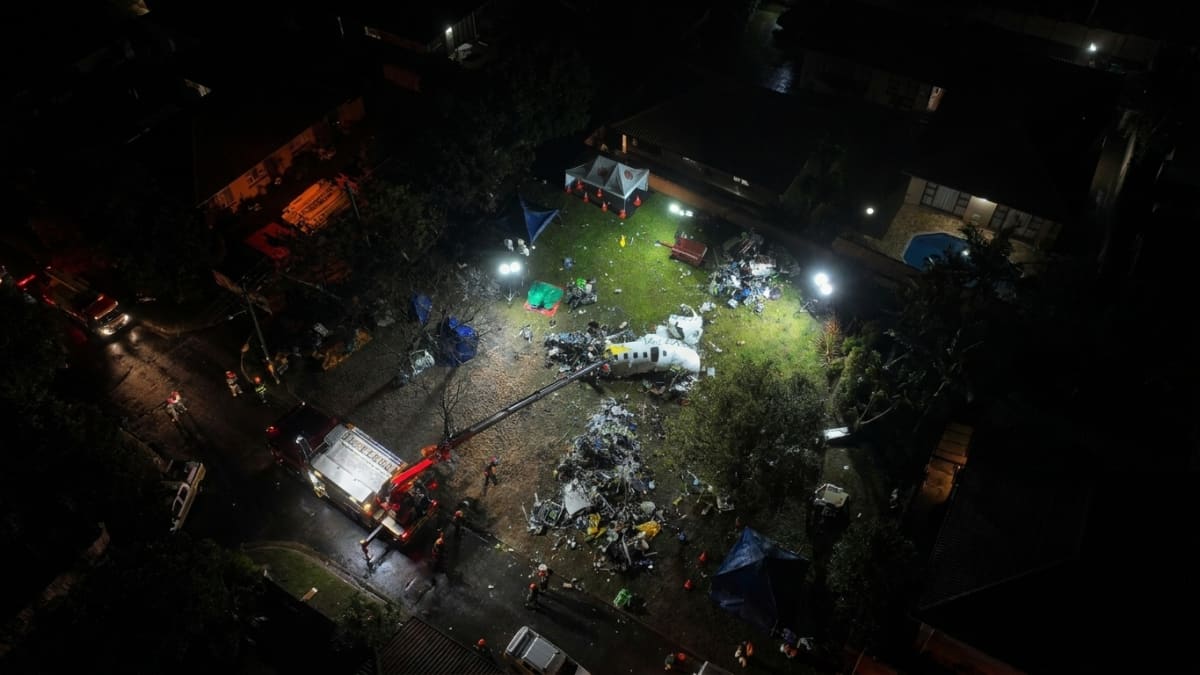
During descent into Vinhedo, São Paulo, the turboprop lost lift and entered a flat spin, plummeting roughly 13,000 feet into a residential condominium and killing all 58 passengers and four crew.[1] A flat spin in a propeller-driven commuter aircraft is a catastrophic loss of controlled flight, and at that point recovery is effectively impossible. The aircraft struck the ground intact and at speed in a built-up residential area.
What the investigators found
Brazil's Centro de Investigação e Prevenção de Acidentes Aeronáuticos, known as CENIPA, operates under International Civil Aviation Organization standards. Its mandate is to find causes, not assign blame, and its reports are technically no-fault documents designed to improve safety rather than support prosecution.
CENIPA issued its final report on 23 July 2026, nearly two years after the accident. The report found severe ice buildup, multiple de-icing system failures, crew actions and organisational safety culture weaknesses at Voepass all jointly contributed to the accident.[2] Recommendations were issued to Brazil's civil aviation authority ANAC and to the European Union Aviation Safety Agency, EASA, which oversees the ATR 72 type certificate.
The de-icing picture is particularly damning. The report found the aircraft's de-icing system failed repeatedly and was cycled on and off by the crew amid active icing warnings.[3] Ice accumulation on the wings and empennage degrades lift and control authority, and in icing conditions with an inconsistently functioning system, the margin for error evaporated.
CENIPA investigator Lieutenant Colonel Paulo Mendes Froes identified something more systemic: "This stemmed from a culture of informality in which pilots and mechanics did not record aircraft-related issues in maintenance logs, with the aim of allowing the aircraft to continue operating the next day."[3] The de-icing system had a history of problems. Those problems were, on the findings, being systematically hidden.
When faults are not logged, they cannot be fixed. The dispatch decision that sent PS-VPB into those icing conditions was made against a maintenance background that CENIPA says was incomplete by design.[2]
How the accusations connect to the findings
The federal police and the São Paulo public prosecutor built their criminal case in parallel with the CENIPA technical inquiry. The 16 people accused include both current and former employees spanning operational and executive roles.[1] The inclusion of owner and president José Luiz Felicio Filho signals that investigators drew a direct line from the organisational safety culture identified in the CENIPA report back to leadership decisions.
A culture of not logging faults does not emerge spontaneously from the maintenance floor. It reflects pressure, implicit or explicit, to keep aircraft flying rather than ground them for repair, and that pressure originates somewhere in an organisation's structure. Brazilian prosecutors are apparently satisfied they can trace it to specific individuals, including the person at the top.
The charges have not been fully detailed in publicly available material, but the framing from federal police points to criminal negligence at minimum across maintenance, dispatch and management functions.[1]
Where criminal liability sits in aviation
Brazil's safety investigation system is structured, like most ICAO-member states, to separate technical fact-finding from criminal accountability. CENIPA operates under the SIPAER system and produces safety-focused reports with no fault findings, a framework that exists because pilots and maintenance workers who fear criminal prosecution for self-reporting faults simply stop reporting.
What makes this case unusual is the breadth of the accused. The 2007 TAM Flight 3054 disaster, in which an Airbus A320 overran the runway at Congonhas Airport in São Paulo and killed 199 people, produced criminal proceedings largely confined to the crew level. The Voepass indictments reach into management and ownership in a way Brazilian aviation has not previously experienced on this scale.[1]
Aviation criminal cases are notoriously difficult to prosecute to a guilty verdict. Establishing personal criminal intent or gross negligence against an airline owner, as distinct from the failure of systems and processes beneath them, requires a high evidentiary standard. What is already established, on the CENIPA findings, is that an aircraft with a documented pattern of de-icing problems, problems that were being hidden from maintenance records, was dispatched into severe icing conditions.[2]
The crew cycled the failing de-icing system on and off as warnings accumulated, the aircraft entered a flat spin, and 62 people died in a residential neighbourhood in Vinhedo. Under Brazilian procedure the police findings now pass to the São Paulo public prosecutor, who decides whether to bring formal charges. CENIPA published its final report on 23 July 2026. None of the 16 people named by police has been charged or convicted of any offence.
KEY TAKEAWAYS
SOURCES & CITATIONS
FREQUENTLY ASKED QUESTIONS
Who has been formally accused over the Voepass crash?
What caused the Voepass Flight 2283 crash according to investigators?
Is it unusual to charge airline executives over a crash in Brazil?
What is CENIPA and how does it differ from a criminal investigation?
Gavin O'Malley writes about property and housing. He spends his time at auctions and on building sites, and is more interested in what buyers and builders are actually paying than in what the forecasts say.