TLDR
Nigeria's government says 308 people kidnapped in Kwara and Niger states were freed in a joint security operation, the largest same-day release announced by the Tinubu administration. At time of writing, no independent confirmation from police, state officials, families or aid groups had been established.
What the government claims
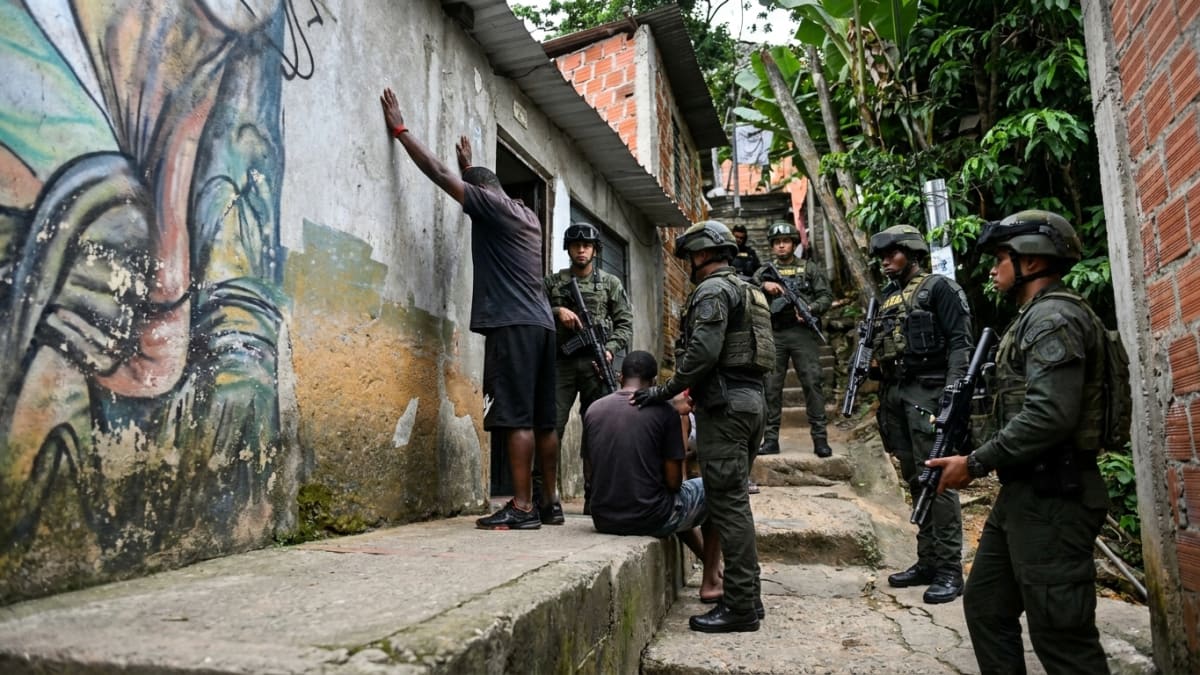
Nigeria's Federal Government announced on 5 August 2026 the rescue of 308 citizens abducted in separate attacks across two northern states.[1] Of those freed, 163 were taken from Woro Community in Kaiama Local Government Area of Kwara State, and 145 from Niger State.[1] The presidency described it as the largest same-day rescue by a joint security team under the Tinubu administration.
The National Counter Terrorism Centre led the operation, with the Armed Forces of Nigeria, the Department of State Services and the Nigeria Police Force all involved, according to the presidential press statement.[1] The statement described a coordinated, intelligence-driven mission but gave no detail on where the hostages were held, which armed group was responsible, or what conditions the rescued people were found in.
President Bola Ahmed Tinubu said: "The successful execution of this intelligence-led operation demonstrates the growing efficiency and collaboration among our security services. I commend our gallant men and women in uniform for their bravery and unwavering commitment to safeguarding Nigerian lives."[1] The statement also called for stronger early warning systems, with no specific policy detail on funding or implementation.
Every figure and claim in this account comes from the presidential press office. At time of writing, Bushletter could not independently verify the 308 figure or the operational account through police, state government officials, families of those rescued, or aid organisations working in the affected states.
The scale of the abduction crisis
The rescue announcement comes against a backdrop of industrialised kidnapping across northern Nigeria. Amnesty International Nigeria recorded at least 1,100 people abducted across the north between January and April 2026 alone, and the organisation warned that count almost certainly understates the true toll.[2] Isa Sanusi, Director of Amnesty International Nigeria, said: "Apart from killing people, gunmen are now on a rampage of abductions, largely for lucrative ransom. Some stay months at the mercy of gunmen in punishing situations. Estimates of the number of abductions by gunmen and armed groups across Nigeria vary and some of the commonly cited figures vastly understate the scale of the problem."[2]
The ransom economy driving these attacks is now structurally embedded. Research published by the International Committee of the Red Cross found that kidnapping and armed banditry together account for about 40 per cent of national insecurity in Nigeria.[3] Hostage-taking has shifted from opportunistic crime into a predictable revenue stream for armed groups, with rural and internally displaced communities bearing the heaviest burden.
The Woro attack and the pattern of mass abductions
The Kwara rescue connects directly to one of the year's deadliest single incidents. On 3 February 2026, gunmen attacked Woro village in Kaiama Local Government Area, the same community named in the presidential statement, killing 200 people and abducting 176.[2] The government's claim of 163 rescued from Woro represents a majority of those taken, though the gap between the number abducted and the number now said to be freed remains unexplained in the official account.
Borno State has sustained even larger attacks. On 3 March 2026, Boko Haram fighters attacked Ngoshe town in Gwoza Local Government Area, abducting more than 400 people and laying siege to the town.[2] Sixteen days later, on 19 March, Boko Haram fighters abducted over 100 internally displaced persons working in Kumbul forest near Mafa in Borno State.[2] Across these incidents the pattern is consistent: armed groups exploit weak state presence and target farming communities, displaced persons and students who have limited means of resistance or escape.
Schools and workplaces have been deliberately targeted throughout the year. Bandits abducted pupils and teachers from institutions in Oyo State's Oriire Local Government Area in May 2026, mirroring the strategic logic Boko Haram has used for more than a decade: high-profile victims who generate publicity, community panic and ransom leverage at the same time.
Political pressure and what this operation does not resolve
Tinubu has faced mounting public pressure to restructure Nigeria's security architecture. Critics and state governors have pushed for state-controlled police forces, distinct from the federally commanded Nigeria Police Force, on the grounds that local forces would gather community intelligence more effectively and respond faster to abduction incidents. The presidency's call for stronger early warning systems, made in the same statement that announced the rescue, acknowledges the gap without committing to a mechanism for closing it.
A single successful operation, however large, does not alter the structural conditions that make mass abductions profitable and relatively low-risk for armed groups. The ICRC's research makes clear that banditry and kidnapping function as organised industries in the Nigerian context, sustained by consistent ransom payments and a security architecture that has struggled to interdict hostage networks at scale.[3] Whether this operation disrupted a specific network or recovered hostages through negotiation is a question the presidential statement does not answer.
The ransom question
The presidency's statement says nothing about whether ransom was paid to secure the release of the 308 individuals. When governments pay ransom, directly or through intermediaries, they fund the same networks that conduct the next abduction. When they do not, military or intelligence operations become the primary recovery mechanism, and the record across Nigeria's north suggests that mechanism does not scale to the volume of abductions occurring.
No state government officials from Kwara or Niger State had publicly confirmed the rescue figures at time of writing. No police command, no aid organisation and no family group had issued statements corroborating the 308 number or describing the condition of those freed. The government's account stands as the sole source of the claim, which is not unusual in active security operations, but is a material limitation on what can be established with confidence at this stage.
Isa Sanusi said the scale of abductions across the north means any response must go beyond individual operations. Amnesty International Nigeria's count of 1,100 abductees in four months makes clear that even a rescue of 308 people, if independently verified, represents a fraction of the population currently held by armed groups across the region.[2]
KEY TAKEAWAYS
SOURCES & CITATIONS
FREQUENTLY ASKED QUESTIONS