

TLDR
Jared Kushner landed in Israel after the Board of Peace confirmed Hamas had agreed to the next phases of a Gaza peace roadmap, following rare direct talks. Eight Arab and Muslim foreign ministers jointly condemned Israel's repeated ceasefire violations, warning that failure to commit to the plan's second phase threatens the entire political process.
The envoy, the agreement and the silence from Jerusalem
Jared Kushner arrived in Israel this week carrying something concrete: confirmation from the Board of Peace that Hamas had agreed to the roadmap's next phases, following rare direct talks. The government he flew to meet had still not formally endorsed the plan he was there to advance.[1]
That gap, Hamas moving while Israel holds, sits at the centre of one of the most loaded negotiations of the post-ceasefire period. It has drawn formal censure from eight governments and sharpened the question of whether Donald Trump's 20-point framework for Gaza can survive resistance from its most essential party.
What the roadmap actually requires
Trump's Full Plan, released on 16 January 2026, sets out a transitional framework for Gaza built around four pillars: the disarmament of Hamas, a phased withdrawal of Israeli forces, the establishment of a technocratic Palestinian governance body known as the National Committee for the Administration of Gaza (NCAG), and a broad reconstruction programme under international supervision.[2] A US-led Board of Peace was established to oversee implementation.
Under the Board of Peace's 15-point roadmap, Hamas must decommission its heavy weapons, permit the destruction of its tunnel network, and implement a permanent ceasefire over an eight-month period, in exchange for a phased full Israeli withdrawal and the commencement of sustained humanitarian relief and reconstruction.[3] The structure trades tangible military assets for territorial withdrawal, an exchange that has animated and frustrated Middle East diplomacy for decades.
OIC, Arab League and GCC bodies affirmed in February 2026 that the US-Egypt-Qatar-Türkiye-sponsored initiative represents the path to ending the bloodshed, securing full Israeli withdrawal, ensuring unhindered humanitarian access and launching reconstruction under international oversight.[4] That convergence of multilateral support lends the roadmap a weight few Gaza proposals have achieved.
WATCH: @jaredkushner details the progress being made in Gaza under President Trump's peace plan pic.twitter.com/9JoE2nP5GR
2026-02-10 · View on XHamas moves, Israel holds
The Board of Peace's announcement in late July was specific. Following rare direct talks with Kushner, the Board confirmed that Hamas had agreed to the roadmap's next phases.[1] For a group that has historically treated disarmament proposals as existential threats, agreeing to staged heavy-weapons decommissioning and tunnel destruction represents a measurable shift in posture.
Israel's position has been a different matter. Benjamin Netanyahu's government raised security reservations about the plan and withheld formal endorsement, a stance Bushletter reported on in August when Netanyahu publicly rejected the Gaza roadmap. That rejection has hardened into an absence the eight-nation joint statement of 1 February 2026 was designed to make impossible to ignore.
Eight governments speak in one voice
The foreign ministers of Saudi Arabia, Jordan, the UAE, Qatar, Indonesia, Pakistan, Egypt and Türkiye issued a joint statement on 1 February 2026, strongly condemning Israel's repeated ceasefire violations in Gaza and stressing the necessity of full commitment to implementing the second phase of President Trump's peace plan.[5]
The eight foreign ministers said Israel's repeated violations constitute a direct threat to the political process and hinder ongoing efforts to create appropriate conditions for transitioning to a more stable phase in the Gaza Strip, both in terms of security and humanitarian conditions, and stressed the necessity of full commitment to ensuring the success of the second phase of President Trump's peace plan.[5]
The signatories are not peripheral states. They include two of the largest Arab economies, the Gulf's most influential mediating power, two of the world's most populous Muslim nations, and Türkiye, a NATO member with deep historical ties to Palestinian governance. Saudi Arabia and the UAE, which have often differed with Türkiye and Qatar on regional questions, signed the same document, a signal worth reading carefully.
Trump's call and the weight it carries
The White House maintained consistent public pressure on all parties since January. President Trump said the plan's success depended on full cooperation: "The President calls on all parties to cooperate fully with the NCAG, the Board of Peace, and the International Stabilization Force to ensure the swift and successful implementation of the Comprehensive Plan."[2]
The phrase "all parties" does real work in that sentence, addressed to Hamas and Israel alike, placing the burden of implementation on both equally. Whether the administration is prepared to apply equivalent pressure to its closest ally in the region is a question Kushner's visit to Israel does not yet answer.
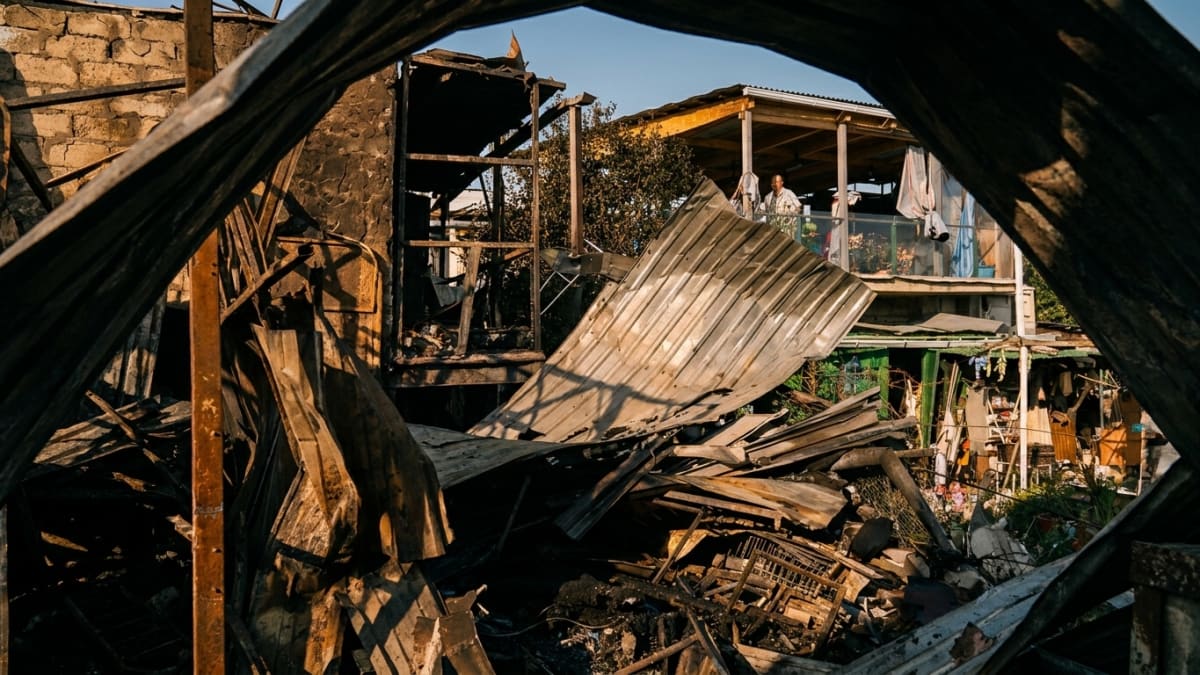
A ceasefire between Israel and Hamas ended two years of war in October 2025, leaving Gaza divided between areas under Israeli security control and areas still nominally governed by Hamas. The humanitarian situation remained severe. Trump's January 2026 framework was the US response, an attempt to convert a ceasefire into a durable political settlement before conditions for renewed conflict could reassert themselves.
Where the process now stands
Mediators from Egypt, Qatar and Türkiye engaged directly with Hamas leadership in the lead-up to the late July agreement. The Board of Peace, working alongside those regional intermediaries, extracted a commitment that Kushner's direct engagement appears to have been central to securing. Kushner arrived in Israel carrying that commitment, a form of diplomatic leverage the administration will be expected to deploy.
Eight governments speaking in one voice, a multilateral body affirming the plan as the only viable path to peace, and a US envoy in Tel Aviv with a Hamas agreement in hand, each of these elements describes a process that has moved further than many observers anticipated, and a spoiler position for Israel that is becoming harder to sustain quietly.
Whether Israel's security reservations can be addressed within the framework's existing structure, or whether they require a renegotiation that would test the patience of every other party to the process, is the central question Kushner's visit is intended to resolve. The Board of Peace's 15-point roadmap sets an eight-month implementation window from the point of full commitment by all parties.
KEY TAKEAWAYS
SOURCES & CITATIONS
- Board of Peace: Hamas agrees to roadmap's next phases after Kushner talks
- Statement on President Trump's Full Plan to End the Gaza Conflict
- Text of Board of Peace Gaza plan: Hamas to disarm over eight months
- Joint statement by eight foreign ministers condemning Israel's ceasefire violations
- OIC, Arab League and GCC affirm Gaza peace plan as path to ending bloodshed
FREQUENTLY ASKED QUESTIONS
What is the Board of Peace's Gaza roadmap?
Why did eight Arab and Muslim foreign ministers issue a joint statement?
What did Hamas agree to after talks with Jared Kushner?
Has Israel endorsed the Gaza peace roadmap?
Margaret Hale writes about politics, policy and the culture of business. She is drawn to the people behind decisions and to the moments when a political story turns out to be a human one.