
TLDR
Washington imposed 50 per cent tariffs on nearly $20 billion of Canadian goods on 19 August under a rarely invoked 1930 trade law, overriding USMCA protections. Three days of Washington talks collapsed before the tariffs took effect, and Prime Minister Mark Carney announced matching countermeasures from 8 September.
Talks collapse, tariffs land
The mechanism matters before the politics do. President Trump used his authority under Section 338 of the Tariff Act of 1930 to impose 50 per cent ad valorem duties on nearly $20 billion of Canadian imports.[1] That statute, enacted during the Great Depression, grants the president power to punish any country found to be discriminating against US commerce. Invoking it is rare; invoking it against a country sharing the world's largest bilateral trading relationship is rarer still.
High-stakes trade talks in Washington collapsed before the tariffs took effect on 19 August.[4] Three days of negotiations produced no deal, and the duties came into force on schedule, cutting across an integrated supply chain spanning automotive manufacturing, dairy and alcohol distribution, and dozens of other sectors.
What Section 338 actually does
Section 338 of the Tariff Act of 1930 is not a standard tariff tool. It empowers the president to levy duties of up to 50 per cent on goods from any country deemed to be placing American exporters at an unfair disadvantage, sitting outside the normal World Trade Organisation dispute mechanism and, critically, outside the protection framework of the US-Mexico-Canada Agreement.
The Section 338 tariffs apply to all covered Canadian goods regardless of whether they originate under the USMCA.[2] That is the move's sharpest legal edge: goods that would otherwise travel duty-free under a negotiated free-trade agreement now carry a 50 per cent surcharge by presidential proclamation alone. The White House framed the action as a response to Canada's discrimination in dairy, motor-vehicle and alcohol markets, sectors where American exporters have long complained about quota frameworks limiting their reach.[2]
Washington swept broadly across tariff-origin categories rather than targeting specific product lines, making clear this dispute is about Canada's overall regulatory architecture, not a surgical complaint about a single commodity. That scope explains why the Washington talks failed: the ask was structural, not transactional.
Carney draws the line
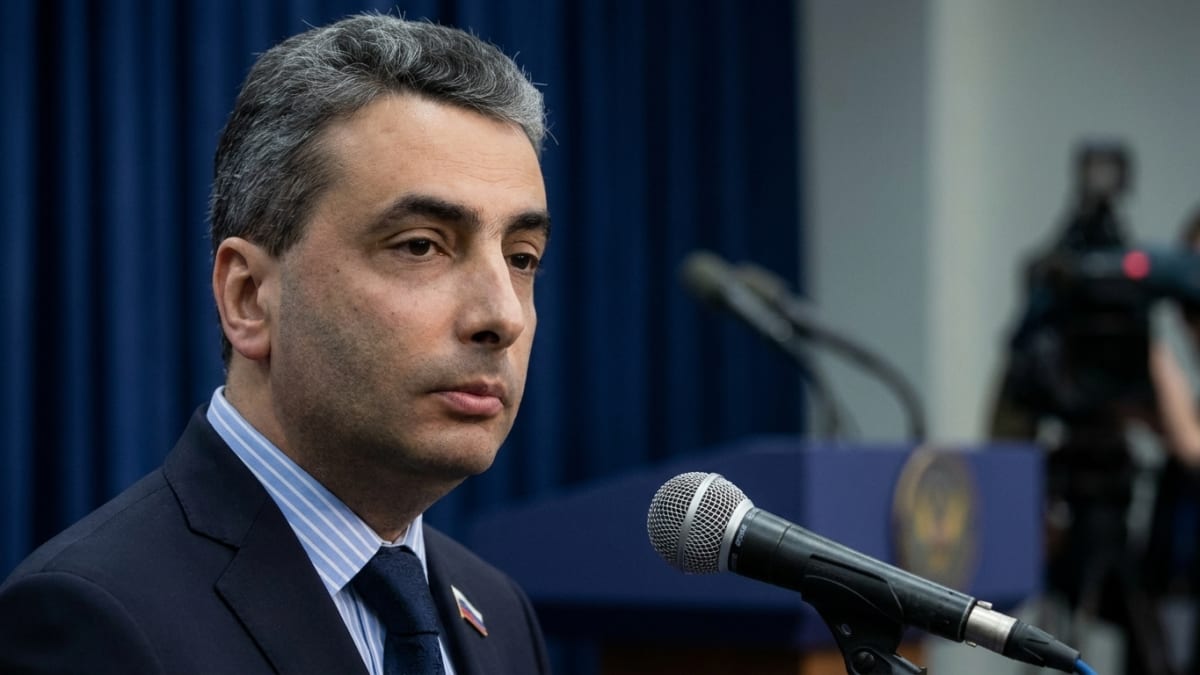
Prime Minister Mark Carney did not equivocate. "Canada will match those tariffs dollar for dollar to protect our workers and businesses," he said.[6] Canada's countermeasures will match the US 50 per cent tariffs dollar for dollar and come into force the Tuesday after Labour Day, 8 September 2026.[5]
Carney went further after the talks collapsed. "You're at war when you get attacked. We got attacked," he told CNN.[4] Carney has spent months positioning Canada as a country that will absorb neither the economic hit nor the diplomatic framing Washington has applied to its trading partners throughout 2025 and 2026. Matching the tariffs dollar for dollar is the mechanism; the war metaphor is the political signal.
The countermeasures come into force less than three weeks after the US tariffs landed, a timeline that forecloses any assumption Ottawa would pause and renegotiate. Both sides now face the compounding costs of parallel 50 per cent walls on goods crossing a border that carries more than $2 trillion in annual two-way trade.
The scope versus the said grievance
Washington's said rationale centres on three sectors: dairy, motor vehicles and alcoholic beverages. These are markets where Canada's supply-management systems, interprovincial alcohol regulations and automotive content rules have generated persistent friction with American industry groups. US Trade Representative Ambassador Jamieson Greer issued a statement framing the Section 338 action squarely in those terms.[1]
The reach of the tariffs extends well beyond those three sectors. Nearly $20 billion of Canadian goods are affected across the full covered list, meaning manufacturers, processors and exporters in sectors far removed from dairy or alcohol are now absorbing costs that were never part of any specific US complaint. Section 338 is a country-level instrument, not a product-level one, and Washington appears to have used it precisely because it cannot be negotiated around product by product.
The Australian precedent
For trade-policy watchers in Canberra, the episode carries a specific warning. Australia holds a free-trade agreement with the United States, signed in 2005, and has generally operated on the assumption that such agreements provide durable protection against unilateral tariff action. The Section 338 episode tests that assumption directly.
What Washington demonstrated against Canada is that a president can reach for a Depression-era statute, declare a partner country to be discriminating against US commerce, and impose 50 per cent duties that override a negotiated zero-tariff framework, all without congressional approval and outside the WTO dispute settlement process. The legal architecture for doing the same to Australia exists and has now been exercised against a close ally with a comparable free-trade relationship.[3]
Australia's pharmaceutical benefits scheme, its agricultural quarantine settings, its digital services rules and its foreign investment screening regime have each drawn criticism from American industry groups at various points. Any of those friction points could, in a future dispute, be characterised as discrimination against US commerce, with Section 338 providing the legal mechanism to act on that characterisation unilaterally and immediately. Canada just faced that move; Canberra has not, yet.
The immediate economic damage falls on Canadian exporters and, through supply-chain disruption, on US manufacturers dependent on Canadian inputs. Both sides now have until 8 September to find an offramp, and nothing in the past three weeks suggests one is close.
KEY TAKEAWAYS
SOURCES & CITATIONS
- Ambassador Greer Issues Statement on President Trump Imposing Section 338 Tariffs on Canada
- Fact Sheet: President Donald J. Trump Imposes Additional Tariffs on Canada
- Presidential Action: Temporary Suspension of Additional Duties on Canada
- CNN Interview with Prime Minister Mark Carney, 23 August 2026
- Prime Minister Carney Delivers Remarks on Canada-US Trade Negotiations
- Statement from Prime Minister Carney on Canada-US Trade Negotiations
FREQUENTLY ASKED QUESTIONS