
TLDR
Russia's Pskov City Court sentenced Yabloko deputy chairman Lev Shlosberg to eleven years in a penal colony for social media posts opposing the war in Ukraine. Rights monitors at OVD-Info count at least 692 criminal prosecutions for anti-war speech since February 2022, with the conviction resting on wartime censorship laws that criminalise criticism of the military.
Three posts, eleven years
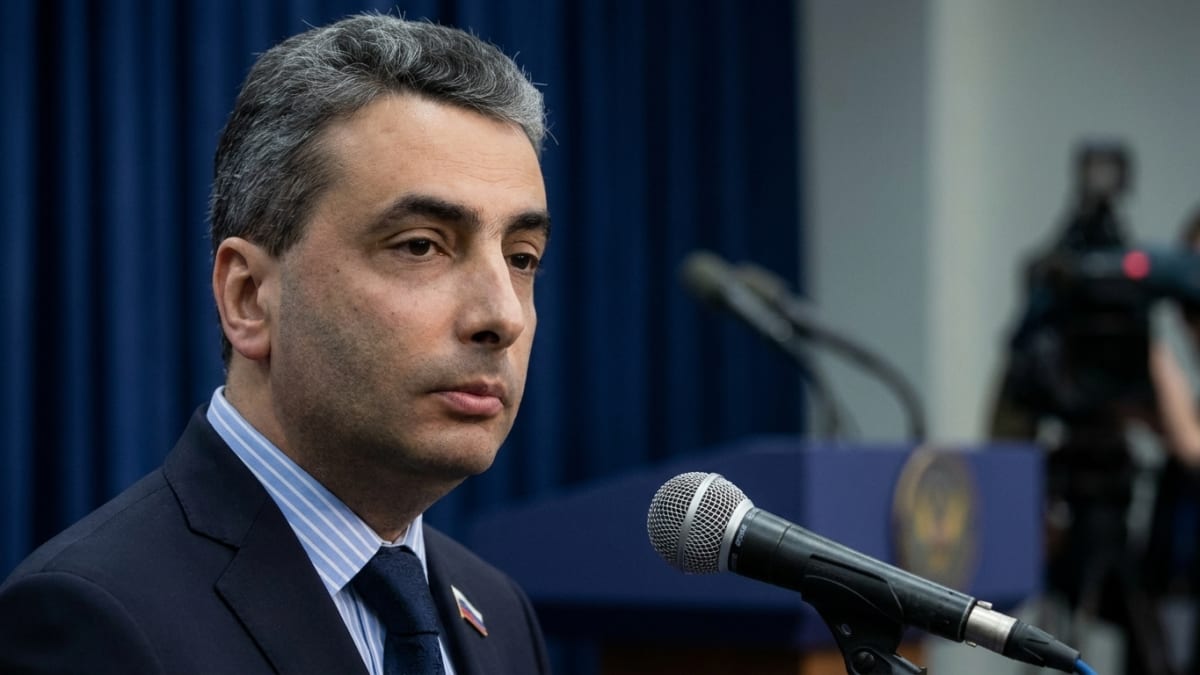
The Pskov City Court did not, on 17 August 2026, convict Lev Markovich Shlosberg of violence, espionage or sedition in any classical sense. The court sentenced Shlosberg to eleven years in a penal colony for anti-war statements published on social media, making his case one of the most severe applications of Russia's wartime speech legislation since the full-scale invasion of Ukraine began in February 2022.[1] The charge rested on words alone.
Article 207.3 of the Criminal Code, introduced after the invasion, criminalises the "discrediting" of the Russian armed forces and carries a maximum term of fifteen years.[2] Shlosberg received eleven of them.
The posts that became a prosecution
Prosecutors built their case on three items published in the days immediately following the invasion. The first was a repost of an anti-war statement by independent media outlet Meduza, shared on 28 February 2022. The second and third appeared on 2 March 2022, including a social media video of a protester interrupting a live state television broadcast.[3]
Among the words prosecutors placed before the court was a declaration Shlosberg had made publicly in those first days of the war: "My dear Ukraine, I stand with you! Shame and disgrace to Russia."[3] That sentence, it appears, was enough.
Who Shlosberg is
Lev Shlosberg, born 30 July 1963, has spent much of his adult life in the kind of democratic politics Russia has systematically dismantled. He serves as deputy chairman of the Russian Democratic Party Yabloko and represented the Pskov region in its Regional Assembly from 2016 to 2021.[4] The European Court of Human Rights previously examined his case after he was disqualified from standing in the 2021 State Duma elections, that exclusion resting on his participation in a rally supporting Alexei Navalny.
The Russian Ministry of Justice formally designated Shlosberg a "foreign agent" under order No. 811-р on 16 June 2023.[5] That designation provided the legal scaffolding for the administrative proceedings that preceded the criminal case, meaning the machinery of the state had been turning against him for years before the Pskov court delivered its verdict.
His words in court
Shlosberg did not concede the legitimacy of what was done to him. Speaking during proceedings, he said: "Police have no right to investigate this criminal case, and the court had no right to accept it."[6] The statement was less a legal argument than a refusal to inhabit the role the proceedings had assigned him.
Russia's acquittal rate in criminal cases hovers below one per cent, so the courtroom was not a forum for genuine contest. Shlosberg's words were addressed not to the judges but to a record.
The pattern behind the case
Shlosberg's sentence did not arrive in isolation. Rights monitor OVD-Info documented at least 692 individuals facing criminal prosecution for anti-war speech between February 2022 and September 2025, with hundreds more caught in administrative proceedings and thousands detained for peaceful protest or social media activity across Russian regions.[3]
The wartime censorship architecture was assembled quickly. Amendments to the Criminal Code introduced after February 2022 created provisions against both "spreading false information" about the armed forces and "discrediting" military operations, with prison terms reaching fifteen years.[2] The laws landed within weeks of the invasion; the prosecutions followed almost immediately.
Shlosberg's case sits at the severe end of that spectrum. Most prosecutions under Article 207.3 have produced shorter terms or administrative penalties. An eleven-year sentence for three social media posts, one of them a repost of another organisation's statement, signals what the state now considers necessary, whether that signal is aimed at opposition figures, ordinary citizens, or both.
Yabloko's position and the ballot ban
The sentence against Shlosberg coincides with a parallel assault on the institution he represents. On 10 August 2026, a week before the Pskov City Court delivered its verdict, Russia's Supreme Court rejected Yabloko's appeal against its exclusion from the September parliamentary ballot.[1] The court affirmed lower court decisions holding that the party's stance on Ukraine, combined with foreign agent designations against several of its members, disqualified it from elections scheduled for 18 to 20 September.
Read together, the two decisions describe what remains of Russian political life. The individual who spoke against the war goes to a penal colony for eleven years; the party that formed the institutional home for that opposition is removed from the ballot entirely.
Yabloko has been the most durable of Russia's liberal parties, surviving the Putin era longer than most of its counterparts. Its exclusion from the ballot closes a category: registered, parliamentary-track liberal politics operating inside Russia's borders. What remains of that tradition will now have to find other forms, or accept that no forms are available to it.
What the verdict represents
Article 207.3, the provision under which Shlosberg was convicted, was introduced into the Criminal Code after the February 2022 invasion specifically to criminalise public criticism of the war, carrying a maximum penalty of fifteen years.[2] Eleven years for three posts published in the first days of the invasion is not a proportionate legal response by any standard of democratic jurisprudence; it is the logic of deterrence operating at scale.
Shlosberg entered those first days of the war as a regional political figure with a long record of opposition activity and an evident willingness to say publicly what millions of Russians may have thought privately. OVD-Info's count stood at 692 criminal prosecutions for anti-war speech as of September 2025, and Shlosberg's eleven-year sentence is now the measure against which others in that count will be assessed.
KEY TAKEAWAYS
SOURCES & CITATIONS
- Pskov City Court judgment, case No. 71284691
- Article 207.3, Criminal Code of the Russian Federation, Consultant.ru
- ECHR forthcoming judgments and decisions, September 2024, Shlosberg v. Russia
- ECHR judgment, Shlosberg v. Russia (2021 Duma election disqualification)
- Pskov City Court, case document, foreign agent order No. 811-р
- Yabloko Pskov, Shlosberg court statement, June 2026
FREQUENTLY ASKED QUESTIONS
What was Lev Shlosberg convicted of?
How long is Shlosberg's sentence?
Who is Lev Shlosberg?
What happened to Yabloko as a party?
How many people have been prosecuted for anti-war speech in Russia?
Margaret Hale writes about politics, policy and the culture of business. She is drawn to the people behind decisions and to the moments when a political story turns out to be a human one.


