
TLDR
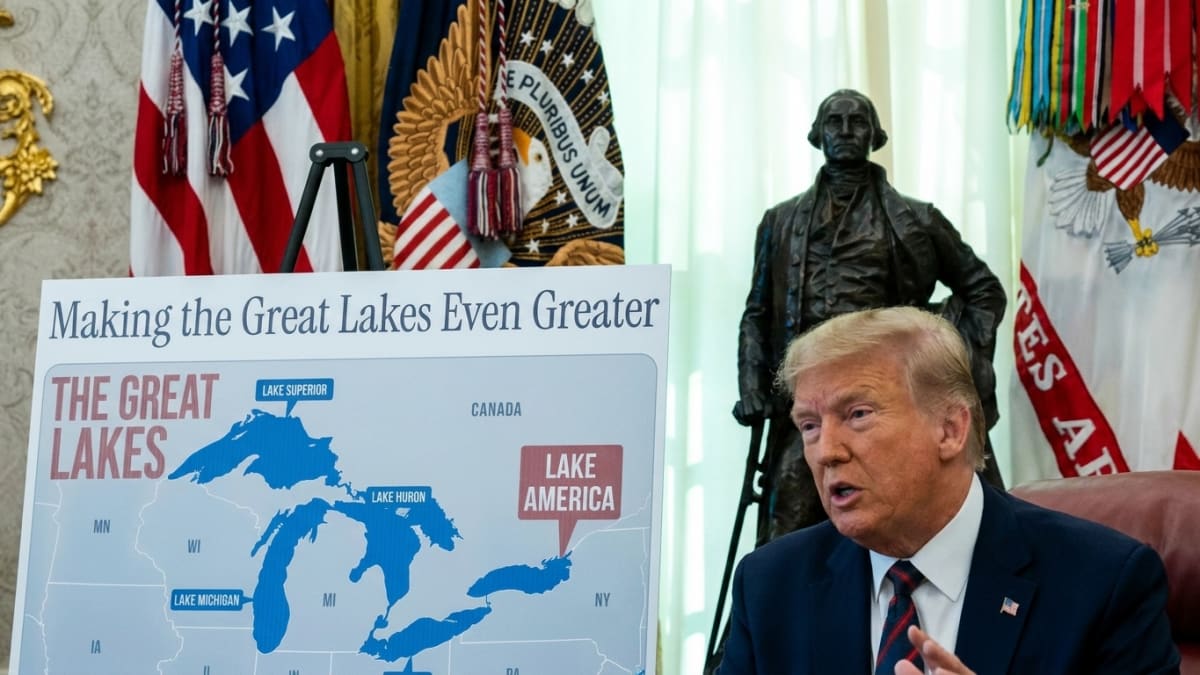
Trump signed an executive order renaming Lake Ontario as Lake America in all US federal usage, giving agencies 30 days to update official maps. The move coincides with 50 per cent US tariffs on Canadian goods and Canada's pledge to hit back from 8 September.
A lake renamed, a trade war deepened
Donald Trump signed an executive order on 27 August 2026 directing that Lake Ontario be renamed Lake America across all US federal usage. The order instructs the Secretary of the Interior to update the Geographic Names Information System within 30 days, working through the Board on Geographic Names under 43 U.S.C. 364 through 364f.[1]
The order's preamble leans on an operational argument: the US Coast Guard supplies nine of the eleven ice-breaking vessels on the Great Lakes, a figure the White House uses to frame the renaming as recognition of American investment rather than provocation.[1] Trump's text is direct: "In recognition of this flourishing economic resource and its critical importance to our Nation's economy and its people, I am directing that the Lake officially be renamed as Lake America."[1]
What the order does and does not do
The directive binds US federal agencies alone. Canada, the International Joint Commission and international hydrographic bodies carry no obligation to adopt the new name, and Lake Ontario will persist on Canadian charts, in international treaties and on maps produced outside the United States. The Geographic Names Information System, maintained by the US Geological Survey as the official federal repository of domestic place names, will carry the update once the Interior Secretary acts.[4]
Trump's January 2025 executive order renaming the Gulf of Mexico offers the clearest guide to what follows in practice. Federal agencies, domestic mapmakers, airlines and technology platforms updated US-facing charts and databases; every other country kept the traditional name. The same split is likely here: Lake America on a US government website, Lake Ontario on a Canadian one, with no legal mechanism to compel convergence.
Tariff backdrop
The United States imposed 50 per cent tariffs on $27.6 billion of Canadian goods effective 22 August 2026, five days before Trump signed the renaming order.[2] Prime Minister Mark Carney responded the same day, promising Canada would match Washington dollar for dollar. "Canada will match Washington's new tariffs dollar for dollar in order to protect Canadian workers, farmers, families, and businesses," Carney said.[3]
Ottawa's counter-tariffs, tiered at 15, 25 and 50 per cent depending on the category of US goods, take effect 8 September 2026.[2] A shared Great Lake carrying two different names on either side of the border captures the texture of a dispute that has generated more symbolic escalation than diplomatic movement. Canada's counter-tariff deadline of 8 September remains the next concrete date either side has put on the calendar.
KEY TAKEAWAYS
SOURCES & CITATIONS
FREQUENTLY ASKED QUESTIONS