TLDR
Russia's government can now take temporary control of privately owned critical infrastructure whose operators fail to protect or repair it after Ukrainian drone strikes. The Federal Agency for State Property Management gains full ownership powers except the right to sell. Analysts describe the move as a further step toward wartime nationalisation.
What the decree does
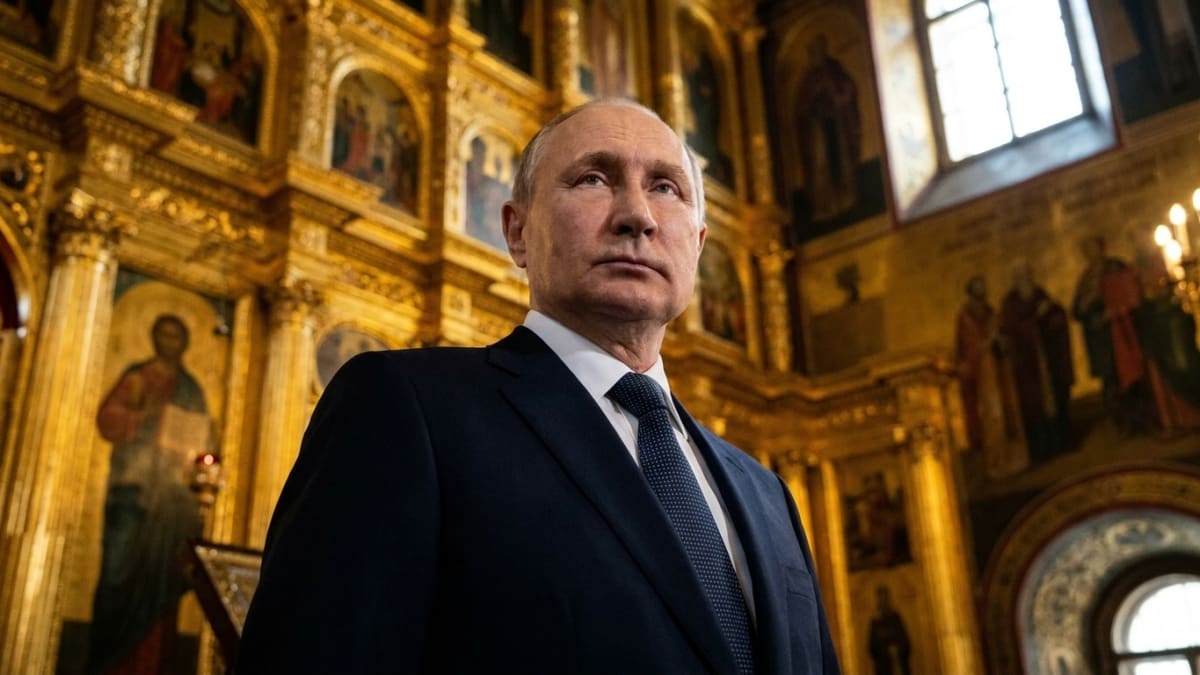
Vladimir Putin signed Decree No. 604 on 24 August 2026, allowing the Russian government to impose temporary management on privately owned critical infrastructure whose operators fail to implement required security measures against drone attacks or delay post-strike restoration.[1] The Federal Agency for State Property Management assumes all ownership powers over seized assets except the right to dispose of them, holding that position until the government decides otherwise.[1]
The decree's scope is wide. "Critical infrastructure" under the decree includes fuel and energy facilities, nuclear sites, industrial plants, communications networks, transport and logistics systems, municipal life-support services, and any other assets deemed vital to Russia's security and economy.[1] That framing leaves the government wide discretion over which privately held businesses qualify.
The drone-strike pressure that drove it
Ukrainian forces have escalated drone attacks on Russian fuel refineries, logistics bases and energy installations since mid-2025, aiming to erode Moscow's capacity to sustain military operations and civilian services. Intensifying strikes on refineries and export hubs have tightened domestic fuel markets and disrupted deliveries inside Russia, according to the International Energy Agency.[2]
Russian authorities had already responded with emergency measures including export bans, priority fuel allocation to agriculture and accelerated repair programmes. Those steps proved insufficient to prevent localised shortages, and the decree represents an escalation from logistical fixes to direct legal control over privately managed assets.
What analysts say about state control
Legal and political observers read the decree as institutional rather than merely operational. An analyst at The Public said the decree officially sets in motion a process of creeping nationalisation of the private sector to meet the needs of wartime.[4] The mechanism requires no court finding of negligence; the government alone determines whether security standards have been breached or repairs are too slow.
Lawyer Sergei Uchitel described the practical consequences in terms that go beyond temporary inconvenience. In practice, external management means a company loses control over its operations, cannot set its own strategy, and is eventually forced to sell on terms that can hardly be described as voluntary, Uchitel said.[3] The absence of an independent judicial check on the initial seizure decision sits at the centre of that concern.
What it means for foreign capital and the war economy
Decree No. 604 follows the 2022 seizures of Western-owned businesses after Russia's invasion of Ukraine, extending what analysts describe as a pattern of wartime nationalisation applied in successive waves.[4] For any residual foreign capital still operating inside Russia, the decree adds a new category of expropriation risk: a company's assets can be placed under state management because a drone strike damaged a pipeline it owned and the government judged the repair schedule inadequate.
The decree carries no said time limit on how long temporary management can last, and the government retains full discretion over when control reverts to the original owners. Moscow's war economy now holds a formal legal instrument to absorb private infrastructure into state hands whenever drone damage provides the pretext, with no requirement for compensation at the point of seizure.
KEY TAKEAWAYS
SOURCES & CITATIONS
FREQUENTLY ASKED QUESTIONS