TLDR
Sydney quantum software company Q-CTRL has closed a US$290 million (A$415 million) Series C led by Salesforce Ventures, crossing the US$1 billion valuation mark. The oversubscribed round drew the federal government's National Reconstruction Fund Corporation as a new investor with a A$70 million equity stake.
Largest software-focused quantum raise on record
Sydney-based quantum software company Q-CTRL closed a US$290 million (A$415 million) Series C on 12 November 2026, with Salesforce Ventures leading the round and Bullhound Capital and Affinity Partners participating significantly. Q-CTRL said the financing was oversubscribed and expanded twice in response to investor demand, and described it as the largest quantum-sector fundraise for a software-focused business.
The National Reconstruction Fund Corporation said the round valued Q-CTRL at more than US$1 billion, making it Australia's first quantum unicorn. Neither Q-CTRL nor the NRFC disclosed a more precise valuation figure.
Who backed the round
New investors joining the register included Affinity Partners, AMD Ventures, EDGE Group, MPower Partners, the National Reconstruction Fund Corporation and SPARX Asset Management. Returning backers included Salesforce Ventures, Bullhound Capital, DCVC, In-Q-Tel, Lockheed Martin Ventures, Main Sequence and Square Peg.
The NRFC took a A$70 million equity stake, the federal government's most substantial direct investment in quantum technology. NRFC chief executive David Gall said the investment strengthens Australia's sovereign quantum capability and supports development onshore.
What Q-CTRL sells and who buys it
Q-CTRL's commercial model centres on AI-powered, hardware-agnostic infrastructure software designed to improve the reliability and performance of quantum computers and quantum sensors, rather than a proprietary quantum processor. Target markets include finance, energy, aerospace, government, aviation and autonomous systems.
Its flagship sensing product, Ironstone Opal, is a GPS-independent quantum navigation system deployed on commercial aircraft with Airbus and on autonomous platforms with Lockheed Martin. Lockheed Martin said it is collaborating with Q-CTRL on next-generation quantum navigation sensors for advanced defence platforms under DARPA's Robust Quantum Sensors (RoQS) program, including a quantum-enabled inertial navigation system prototype.
On the computing side, IBM reported that Q-CTRL used its performance-management software on the IBM Quantum Platform in a materials-science simulation that ran more than 3,000 times faster than a leading classical method while maintaining useful accuracy.
What founders and investors said
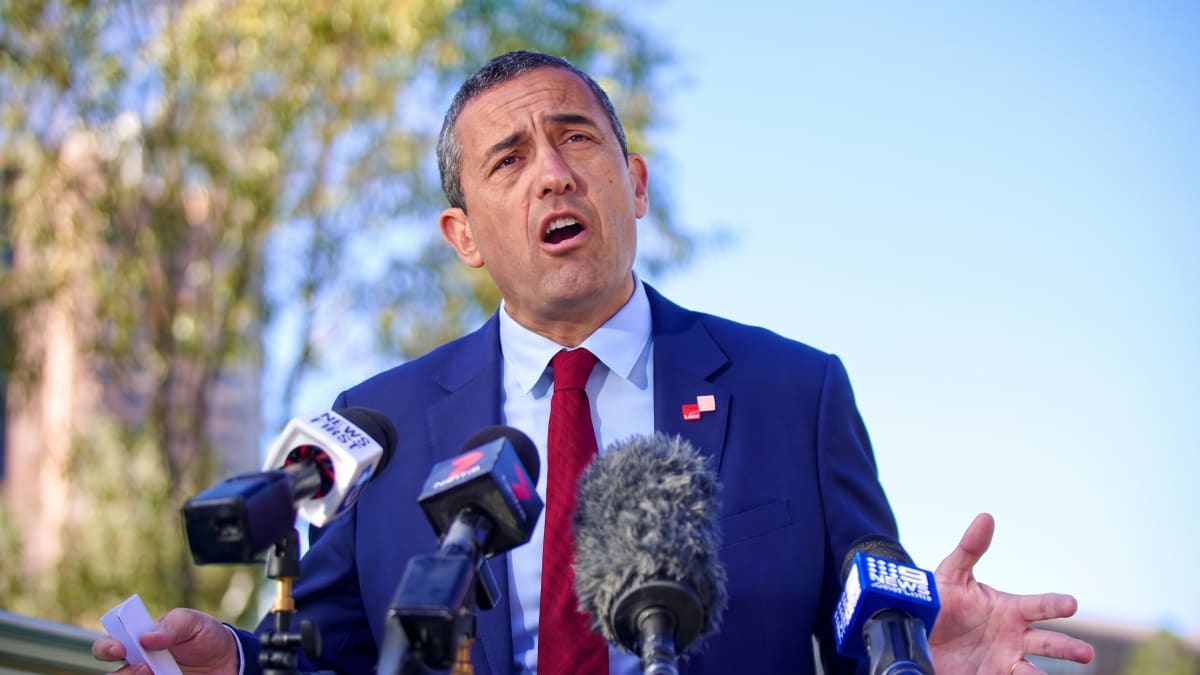
Q-CTRL founder and chief executive Michael J. Biercuk said the investor syndicate "showcases the strength of our technology, revenue growth, and strategic alignment with some of the most important sectors today, from AI to aviation."
Robert Keith, partner at Salesforce Ventures, said the core challenge in the sector is extracting useful output from quantum machines, and that Q-CTRL addresses this with AI-powered control software. Keith pointed to a materials simulation on IBM hardware that developers can call directly from the IBM Quantum Platform, and the first quantum navigation system qualified for safety of flight, as proof of the approach.
Per Roman, Bullhound Capital founding partner and Q-CTRL board member, said Q-CTRL is one of the few quantum companies with real customers and real revenue, and that Michael Biercuk has executed on everything he told the firm he would. Roman joined Q-CTRL's board in July 2025 as part of Bullhound's Fund VI investment.
KEY TAKEAWAYS
SOURCES & CITATIONS
FREQUENTLY ASKED QUESTIONS