TLDR
Colombia's outgoing Defence Minister has flagged a tracked terrorism threat ahead of Friday's presidential inauguration, with 246,000 security personnel deployed nationwide. President-elect Abelardo de la Espriella, who won June's runoff by less than one percentage point, takes office as the ELN, dissident FARC factions and the Clan del Golfo are identified as the principal risks.
A warning, not a certainty
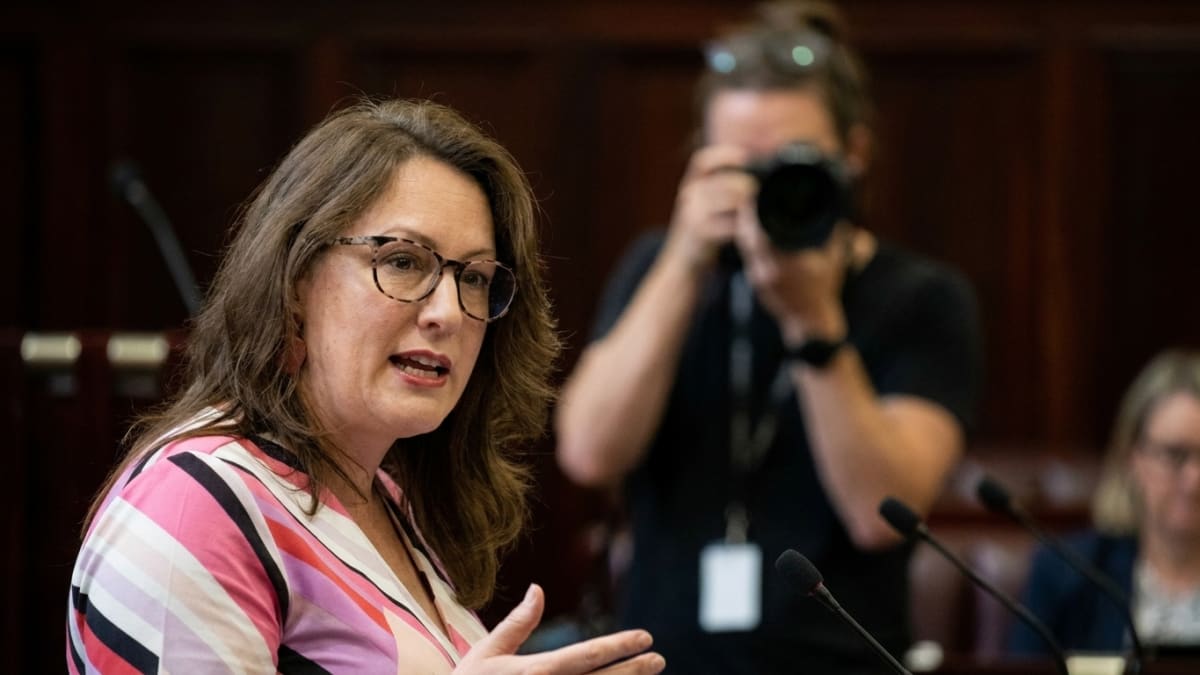
Colombia's transition periods have rarely been quiet, and this one is noisier than most. Outgoing Defence Minister Pedro Sánchez Suárez went on radio station La FM this week to tell listeners that authorities are tracking a terrorism threat ahead of Friday's inauguration of President-elect Abelardo de la Espriella Otero. Sánchez was careful to draw the distinction that matters: a tracked risk, not a confirmed plot.
Sánchez framed the warning in pointed terms. "El terrorismo es más una muestra de debilidad y de cobardía que de fortaleza," he said, terrorism is more a display of weakness and cowardice than of strength. The remark carries the tone of a government trying to project calm authority while disclosing that something is being watched.
The man taking the oath
Abelardo de la Espriella Otero is a 47-year-old lawyer and businessman who launched his outsider candidacy in July 2025 through the Defensores de la Patria movement. De la Espriella ran the entire campaign insisting his operation took no external funding. "Esta campaña no pide plata a nadie ni la recibe: es autofinanciada," he told supporters at the Movistar Arena.[1] The self-financing claim was itself a statement of positioning, placing distance between him and the patronage networks that have driven Colombian politics for decades.
On 24 June 2026, the National Electoral Council issued Resolution E-3181 formally declaring de la Espriella president-elect for the 2026 to 2030 term and ordering the issuance of his credentials.[2] De la Espriella had prevailed in the 21 June runoff by fewer than one percentage point over his leftist rival, a margin so thin it would ordinarily invite prolonged legal contest, yet the council's resolution was orderly and prompt.
What he intends to do
De la Espriella's programme represents a deliberate reversal of the progressive security agenda pursued by his predecessor Gustavo Petro. The incoming president has proposed aerial fumigation of illicit crops, strikes on what his campaign calls narcoterrorist camps, and the abolition of the Special Jurisdiction for Peace, the transitional justice body established under the 2016 FARC peace agreement.[1] Each of those positions places him in direct confrontation with the armed organisations already named as inauguration-day risks.
De la Espriella has also announced the "Programa Matemos el Hambre", a state-business-farmer alliance to address food insecurity affecting an estimated 12 million Colombians.[1] De la Espriella told the Movistar Arena crowd that under his leadership, Colombia would be a nation where citizens trust the state and criminals fear it, though whether those two ambitions can coexist in a country where coca cultivation, food insecurity and armed territorial control are often the same problem in different forms remains the central question of his term.[1]
Three armed groups, one threat picture
The United Nations Office on Drugs and Crime identifies the ELN, dissident factions of the FARC and the Clan del Golfo as the principal insurgent and organised criminal actors operating in Colombia.[3] The three are not equivalent: the ELN is an ideological guerrilla organisation that has historically targeted state institutions and economic infrastructure; the dissident FARC factions are the remnants of a peace process de la Espriella has pledged to dismantle; the Clan del Golfo is principally a drug-trafficking organisation with paramilitary roots and territorial reach across Colombia's Pacific and Caribbean corridors.
A new president promising fumigation and camp strikes represents a material threat to all three groups' operating environments. The inauguration of such a president, attended by foreign heads of state and filmed by international cameras, is a stage on which disruption would carry maximum symbolic weight.
The scale of the security operation
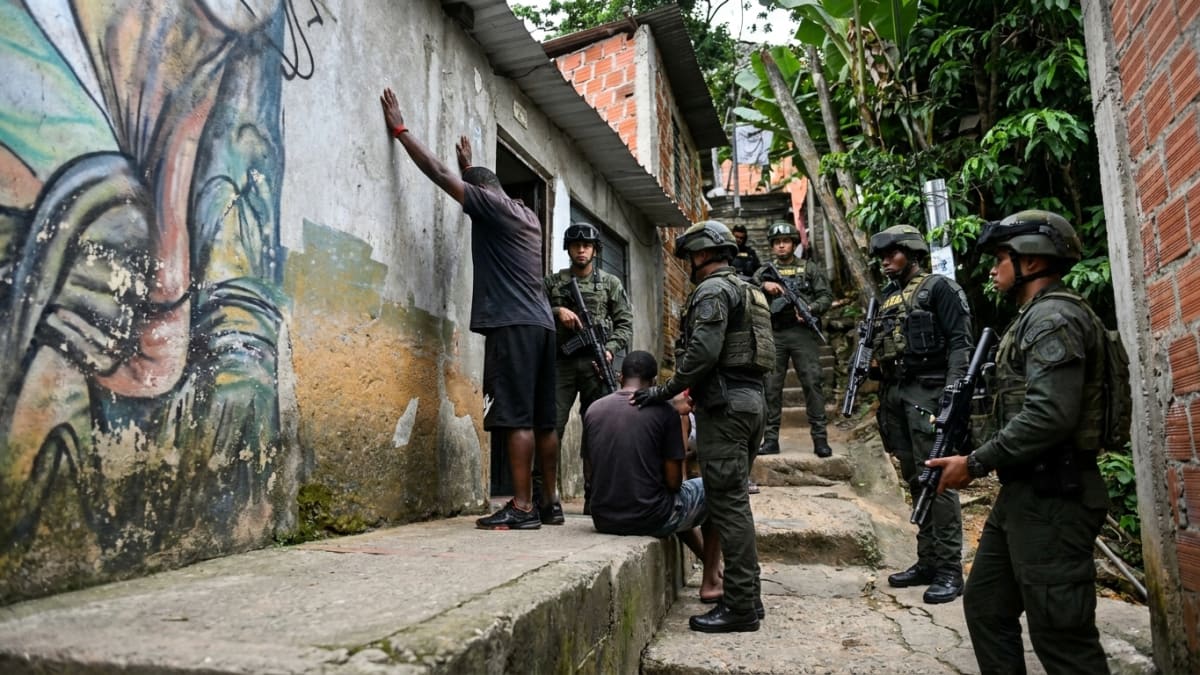
The Ministry of Defence deployed 246,000 uniformed personnel to secure all 13,493 polling-era infrastructure sites across the country, a commitment extended to cover the inauguration itself.[4] Soldiers have already been conducting searches in Cali, operating under Plan Democracia, the framework governing election-period security operations.
Since 7 August 2022, Colombian forces have neutralised approximately 16,000 members of illegal organised armed groups, engaging in combat on average every 20 hours.[5] That figure is the evidence the ministry presents for why a 246,000-strong deployment is proportionate rather than excessive.
The international dimension
Heads of state from Argentina, Paraguay, Chile and Ecuador are expected to attend Friday's ceremony, alongside Spain's King Felipe VI. Their presence transforms what is already a high-security domestic event into a multi-lateral diplomatic occasion, with all the complexity of protecting multiple principals under a single threat assessment.
For de la Espriella, the attendance of regional leaders from centre-right and conservative governments that have recently come to power across Latin America signals political alignment. De la Espriella takes the oath on 7 August 2026 as a lawyer who self-financed a campaign, won a knife-edge runoff, and now faces a tracked terrorism warning on the day he assumes office.
KEY TAKEAWAYS
SOURCES & CITATIONS
- Discurso Abelardo de la Espriella, Movistar Arena
- CNE Resolution E-3181, 24 June 2026, National Electoral Council
- Global Cocaine Report 2023, UNODC
- Capacidades de seguridad y defensa, Ministry of Defence
- Comunicado a la opinión pública, 6 August 2026, Ministry of Defence
- Autoridades electorales y de seguridad activaron PMU, Ministry of Defence
FREQUENTLY ASKED QUESTIONS
Who is Abelardo de la Espriella and how did he win the Colombian presidency?
What is the nature of the terrorism threat flagged before the inauguration?
What are de la Espriella's main policy commitments?
Margaret Hale writes about politics, policy and the culture of business. She is drawn to the people behind decisions and to the moments when a political story turns out to be a human one.