TLDR
The Norwegian Nobel Committee awarded the 2026 Nobel Peace Prize to South African jurist Navanethem 'Navi' Pillay, citing her exceptional courage in building a global legal order. Israel's Prime Minister condemned the choice while South Africa's President celebrated it.
Committee cites exceptional courage in building global legal order
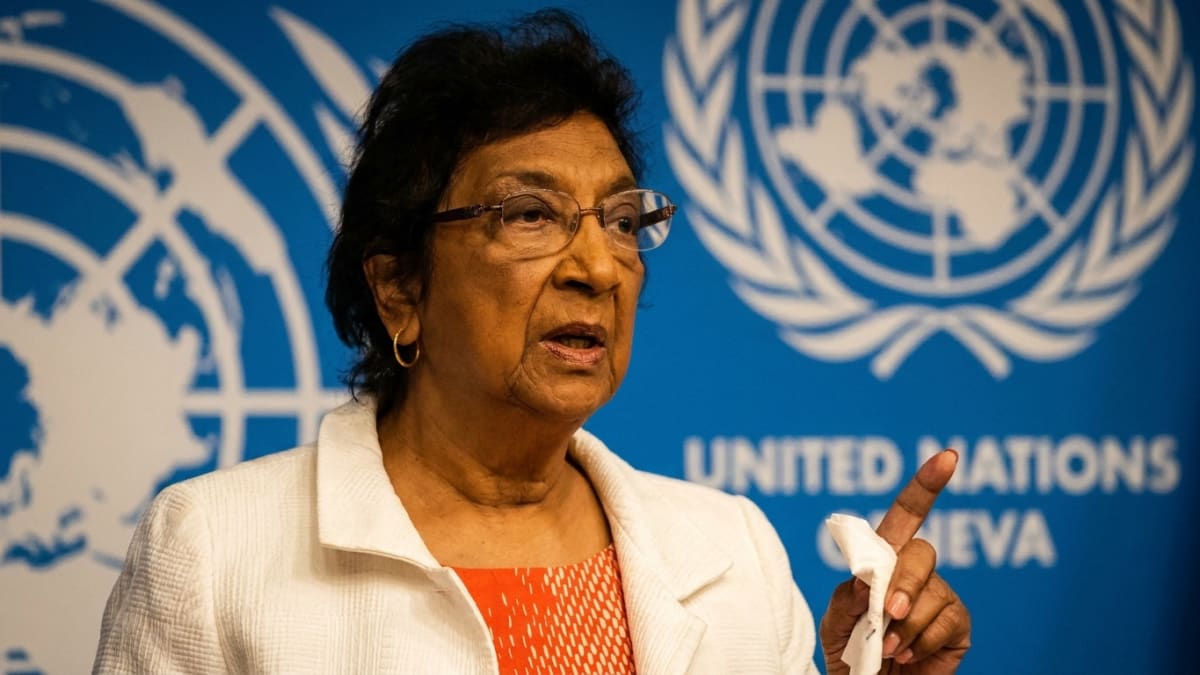
The Norwegian Nobel Committee awarded the 2026 Nobel Peace Prize on 9 October to Navanethem "Navi" Pillay, an 85-year-old South African jurist whose career spans apartheid-era defence work, three international criminal tribunals and six years leading the United Nations human rights office.[1]
Committee chair Jørgen Watne Frydnes said: "The Nobel Peace Prize for 2026 goes to a person who, with exceptional courage and integrity, has led the way towards a more comprehensive global legal order. This year's laureate has been instrumental in ensuring that war crimes, crimes against humanity and genocide are prosecuted."[1] The prize carries SEK 12 million, after the Nobel Foundation raised each prize by SEK 1 million for 2026.[2]
From apartheid courtrooms to the highest international benches
Born in Durban in 1941 to a South African family of Indian Tamil origin, Pillay began her legal career defending anti-apartheid activists at a time when that work carried serious personal risk.[3] South Africa's High Court appointed her in 1995, shortly after the end of apartheid.
Pillay served on the International Criminal Tribunal for Rwanda from 1995 to 2003, as its president from 1999, before moving to the Appeals Chamber of the International Criminal Court from 2003 to 2008.[3] Pillay then led the UN Office of the High Commissioner for Human Rights from 2008 to 2014.
From 2021 to 2025, Pillay chaired the UN Independent International Commission of Inquiry on the Occupied Palestinian Territory, a role that drew sustained criticism from Israel.[3] Pillay currently serves as an ad hoc judge on the International Court of Justice.
Sharp division in reaction
Israeli Prime Minister Benjamin Netanyahu condemned the award in a statement published on 9 October, saying the Nobel Prize committee had lost its moral compass and calling Pillay a bigot who built her career around inventing and propagating blood libels against Israel.[4]
South African President Cyril Ramaphosa welcomed the announcement with an official statement from the presidency. "Justice Pillay's crowning as winner of the Nobel Prize allows us to celebrate the progressive contributions she has made to strengthen peace, uphold human dignity and bring hope in South Africa and to peoples globally," Ramaphosa said. "She has served humanity with principle and the belief that the world can and should be a better place."[3]
UN Secretary-General António Guterres said Pillay had "shown that the force of law must prevail over the law of force and that defending human rights is the surest safeguard against injustice."[5]
What the award signals
The Nobel Committee's choice of an international jurist over a diplomat, activist or political leader reflects a deliberate emphasis on legal accountability as the foundation for peace at a time of rising global conflict.[1] Pillay's career cuts across the bodies most central to that framework: the ICTR, the ICC and the ICJ.
Recognitions of international legal figures at this level are rare in Nobel history. The committee's citation named prosecution of war crimes, crimes against humanity and genocide as the specific work it sought to honour, pointing to the legal architecture built across three decades as the substance behind the award.[1] The prize ceremony takes place in Oslo on 10 December 2026.
KEY TAKEAWAYS
SOURCES & CITATIONS
FREQUENTLY ASKED QUESTIONS