
TLDR
China could cut hybrid and plug-in hybrid car exports to the EU by more than half over four years under a 16-point agreement reached in Beijing, EU Trade Commissioner Maroš Šefčovič said. The deal also speeds up rare earth export licences and cuts tariffs on nearly €4 billion of EU goods entering China, saving European exporters at least €225 million in duties.
Beijing talks yield cuts to hybrid exports and faster mineral licences
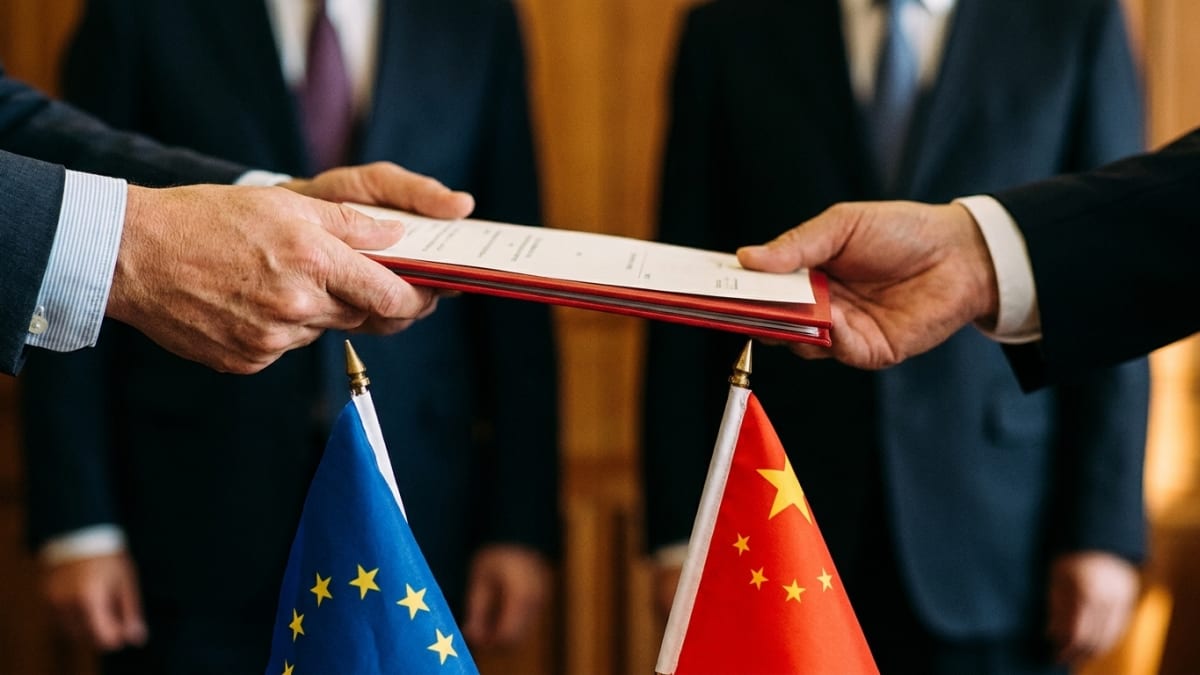
China could reduce exports of hybrid and plug-in hybrid vehicles to the European Union by more than half over the next four years under an agreement announced in Beijing on 9 October 2026, EU Trade Commissioner Maroš Šefčovič said.[1] The 16-point outcome closes what the EU has called the first phase of Trade and Investment Consultations, a formal mechanism the two sides established to address imbalances, export controls and market access.
European Commissioner for Trade and Economic Security Maroš Šefčovič travelled to Beijing with a direct brief. "I came here with one clear purpose to start rebalancing the EU China trade relationship and to make sure this first phase of negotiations under the trade and investment consultations delivers its first tangible outcomes," Šefčovič said.[1]
The EU ran a €359.8 billion goods trade deficit with China in 2025, importing €559.4 billion worth of goods while exporting €199.6 billion.[2] That imbalance sharpened political pressure in Brussels to extract binding commitments on automotive trade, where Chinese-made vehicles have rapidly expanded their share of European roads.
What the vehicle curb means for automakers
Hybrid and plug-in hybrid cars sit at the centre of the dispute. In 2024, extra-EU imports of hybrid and electric cars made up 43 per cent of all extra-EU car imports, with 55 per cent of extra-EU electric car imports originating from China.[3] A reduction of more than fifty per cent in hybrid and plug-in hybrid shipments across four years would withdraw substantial Chinese volume from the European market and ease pressure on domestic manufacturers in Germany, France and Italy.
The agreement also reduces most-favoured-nation tariffs on EU products entering China, covering car parts, olive oil and footwear valued at nearly €4 billion and delivering at least €225 million in duty savings.[1] European exporters gain a direct financial return from the round alongside the defensive win on vehicle volumes.
Rare earths: supply chain stakes for EU industry and Australian miners
The two sides reached a shared understanding to facilitate China's export licensing of rare earth elements and permanent magnets to ensure stability of EU supply chains.[1] The commitment carries weight because China supplied 46.8 per cent of the weight of rare earth element imports to the EU in 2025, amounting to 7,100 tonnes.[4] Rare earths and permanent magnets feed directly into electric motors, wind turbines and defence electronics, making licensing delays a material risk for European manufacturers.
Lynas Rare Earths holds a distinctive position outside China, operating as the only significant commercial producer of separated rare earth materials not under Chinese control, supplying European manufacturers with both light and heavy rare earth elements from its Western Australia mine and Malaysian processing facility.[5] Any shift in Chinese licensing pace alters the competitive dynamic for Lynas, which has positioned itself as the reliable non-Chinese alternative for buyers seeking supply chain security.
China's framing of the outcome
China's Minister of Commerce Wang Wentao described the result as a repositioning of the broader relationship. Wang said China and the EU "held the first meeting of the China-EU Trade and Investment Consultation (TIC) and issued a joint statement, confirming the new positioning of a stable and balanced key trading partnership between the two sides."[6]
Beijing's language emphasises partnership and mutual benefit, while Brussels has consistently framed the same talks as a rebalancing exercise aimed at correcting a structural deficit. Both governments have committed to the Trade and Investment Consultations mechanism as the channel for further negotiations, with additional rounds expected to address outstanding market access and subsidy issues.
KEY TAKEAWAYS
SOURCES & CITATIONS
FREQUENTLY ASKED QUESTIONS


