TLDR
Moderna has vaccinated the first participants in a Phase 1 trial of mRNA-1469, its candidate vaccine against Bundibugyo ebolavirus, at three Canadian sites. No approved vaccine covers this strain, which has killed more than 1,700 people in the Democratic Republic of Congo. CEPI committed up to US$50 million to back the program.
KEY TAKEAWAYS
A gap in the vaccine map
The world has licensed Ebola vaccines. None of them work against the strain currently killing people in the Democratic Republic of Congo. The FDA-licensed Ervebo, which uses a recombinant vesicular stomatitis virus to present the glycoprotein of Zaire ebolavirus, is not expected to protect against Bundibugyo ebolavirus, and CEPI said in June that no licensed vaccine covered the strain and none was in clinical development.[2] Inmazeb, a monoclonal antibody treatment also targeting Zaire ebolavirus, sits in the same position.
The glycoproteins on the surface of each ebolavirus species are structurally distinct enough that antibodies raised against one do not reliably neutralise another. It is a key-and-lock problem at the molecular level: the immune response trained on Zaire does not fit the Bundibugyo lock. That antigenic gap is precisely what Moderna's mRNA-1469 candidate is designed to close.
What the trial actually tests
The first-in-human Phase 1 study, registered under the identifier NCT07737717, will evaluate safety, tolerability and immunogenicity at escalating doses in healthy adult volunteers across three sites in Canada.[1] Phase 1 is not designed to test whether the vaccine stops Bundibugyo infection in exposed populations; that question belongs to later phase trials. The narrower questions here are whether the candidate causes unacceptable side effects and whether it produces any measurable immune response at all.
Dose escalation in healthy volunteers is the standard method for mapping a candidate's safety profile before exposing anyone at elevated risk. Researchers start low, monitor for adverse events, and move to the next dose tier only when the data supports it. Immunogenicity data gathered here, specifically whether the body generates Bundibugyo-specific antibodies and at what titres, will inform the design of subsequent efficacy trials.
Moderna announced that the first participants had been vaccinated in Canada on 4 August 2026, following Health Canada's authorisation of the study on 30 July.[1] The mRNA platform underlying mRNA-1469 is the same architecture Moderna used for its COVID-19 vaccine: lipid nanoparticles deliver a strand of messenger RNA encoding the Bundibugyo glycoprotein, prompting cells to produce the antigen and trigger an immune response without using live virus.
The outbreak driving urgency
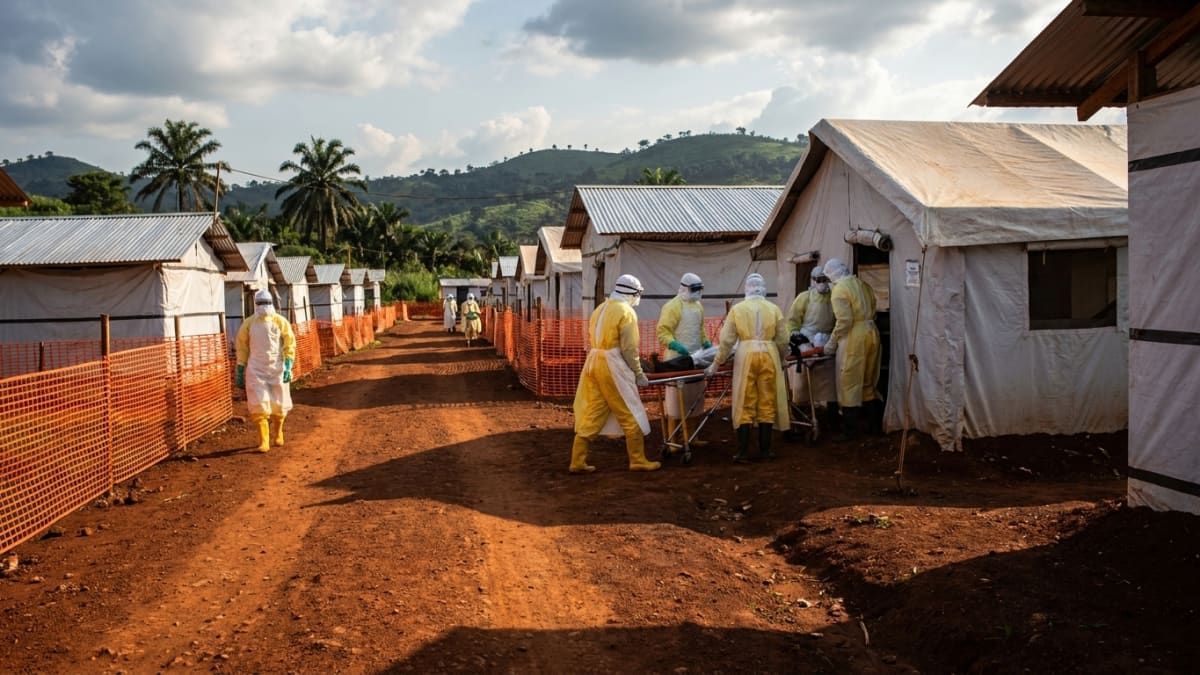
WHO Director-General Dr Tedros Adhanom Ghebreyesus declared the Bundibugyo ebolavirus outbreak a Public Health Emergency of International Concern in May 2026, the highest alert level the organisation can issue.[3] The outbreak has since spread to a fifth province in the DRC, with the death toll exceeding 1,700 people. A PHEIC declaration requires a determination that the event is extraordinary, that it poses a public health risk to other states through international spread, and that a coordinated response is needed.
The DRC context matters for understanding the pace of Moderna's trial. Under normal circumstances, a vaccine candidate moves through preclinical testing over years before reaching Phase 1. The PHEIC declaration, and the absence of any licensed product covering this strain, compressed that timeline; regulatory agencies including Health Canada moved quickly because waiting carries its own mortality cost.
The money behind the science
The Coalition for Epidemic Preparedness Innovations committed up to US$50 million to support preclinical testing and Phase 1 clinical trials of mRNA-1469, as part of a broader US$518 million continental response plan developed alongside Africa CDC and WHO.[2] CEPI's mandate is to fund vaccine development for epidemic threats where commercial incentives alone would not drive investment, and Bundibugyo fits that profile: a high-mortality pathogen concentrated in a low-income setting.
Moderna chief executive Stéphane Bancel said the company would apply its platform experience with related filoviruses to the Bundibugyo candidate. Bancel said Moderna would "move with urgency and scientific rigor to support the response and help bring a potential vaccine closer to the communities that need it most".[2] Dr Tedros said the funding arrangement was a model for how epidemic response should work. "This is exactly the kind of cross-sectoral collaboration that epidemic response demands," he said.[2]
CEPI's US$50 million is not the only money moving. The broader US$518 million plan covers surveillance, healthcare worker protection, community engagement and supply chain logistics across the affected provinces, not just vaccine development. A vaccine candidate in Phase 1 in Canada will not reach DRC communities for at minimum one to two years, assuming the trial succeeds at every stage, which makes the non-vaccine components of that plan the operative response for the duration of the outbreak.
What comes next
Phase 1 data from NCT07737717 will determine whether mRNA-1469 clears the bar for Phase 2 testing, which would involve a larger and more diverse cohort and generate more strong immunogenicity and preliminary efficacy signals. Phase 2 trials for epidemic-threat vaccines can, under certain regulatory frameworks, be conducted in affected regions to generate efficacy data in the actual at-risk population, though that carries its own ethical complexity when a placebo arm is involved during an active outbreak.
Canada's three trial sites will need to enrol, monitor and report before the next phase can be designed, a process that typically takes six to twelve months for a Phase 1 study of this type. The trial registration, the CEPI funding announcement and the WHO PHEIC declaration set the boundaries of what is currently verified; interim safety data, the dose at which immunogenicity is observed, and any timeline for Phase 2 remain in the hands of the investigators.
SOURCES & CITATIONS
- CBC News, Moderna begins first human trial of Bundibugyo Ebola vaccine, 4 August 2026
- CEPI fast-tracks three Bundibugyo ebolavirus vaccine candidates
- WHO Disease Outbreak News: Bundibugyo ebolavirus, DRC, PHEIC declaration
- CBC News, Health Canada authorizes mRNA vaccine trial for Ebola virus causing huge outbreak in Congo, 4 August 2026
FREQUENTLY ASKED QUESTIONS
Why can't existing Ebola vaccines protect against the DRC outbreak strain?
What does a Phase 1 clinical trial actually test?
How much money has been committed to the Bundibugyo vaccine effort?
When did WHO declare the Bundibugyo outbreak a global health emergency?
Samuel Abiola writes about inequality and social policy. He works close to the research and is interested in what the numbers mean for the people counted in them.