TLDR
A Jetstar A320 and a Qatar Airways 777 under tow nearly collided on a Sydney Airport taxiway early on Sunday morning, injuring one cabin crew member and forcing the cancellation of flight JQ402. The near-miss follows three consecutive days of air traffic control staffing shortfalls that delayed more than 150 flights the previous day.
Two aircraft on one taxiway, stopped just in time
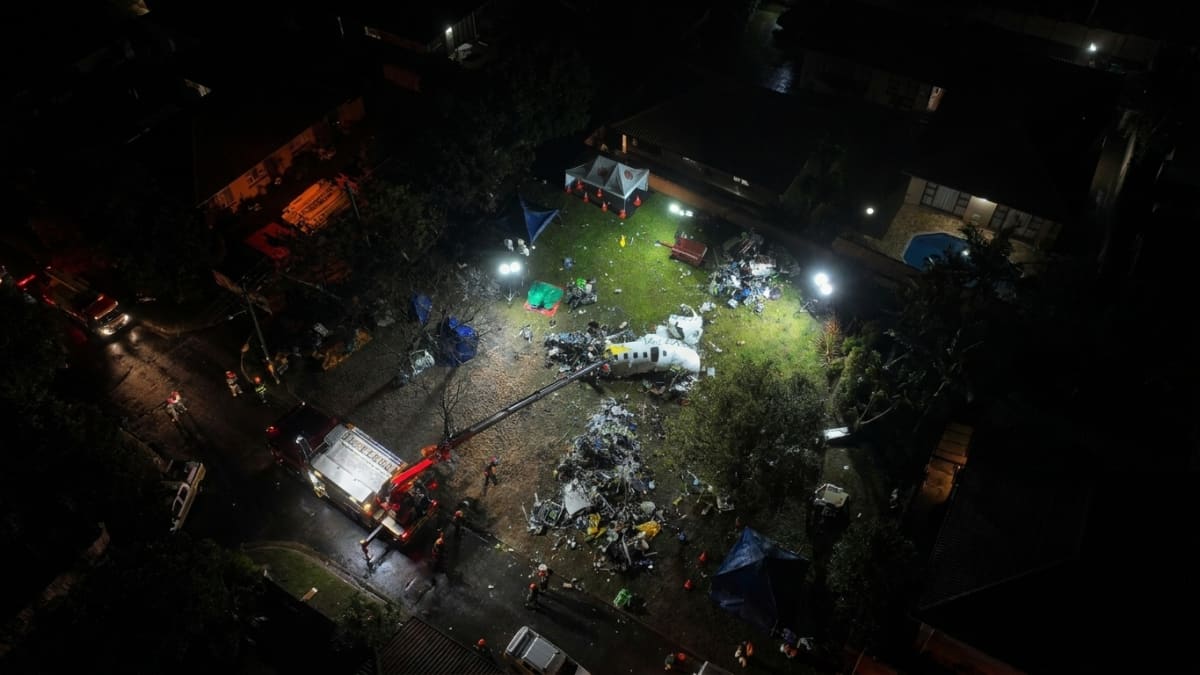
A Jetstar Airbus A320 operating flight JQ402 bound for the Gold Coast and a Qatar Airways Boeing 777 under tow came close to colliding on a crossing taxiway at Sydney Airport about 7am on Sunday, 9 August 2026.[1] Both aircraft stopped in time. The gap between a close call and something far worse was, by any measure, uncomfortably small.
Pilots of both aircraft braked firmly and came to an abrupt stop to avoid impact.[1] That sudden stop came at a cost: one Jetstar cabin crew member was injured and needed medical attention at the scene.[1] No passengers aboard the A320 were reported hurt.
Damage, cancellation and disruption for passengers
There was damage to the connection between the nose gear of the Qatar Airways Boeing 777 and the aircraft tug.[1] The towbar links a ground tug to the aircraft's front landing gear during push-back and towing; damage to that connection renders further towing unsafe until repairs are done.
Jetstar flight JQ402 was cancelled following the incident.[2] Jetstar confirmed no passengers were injured, though travellers expecting an early Sunday departure to the Gold Coast faced rebooking queues and disrupted connections.
The ATSB opens its investigation
The Australian Transport Safety Bureau has opened an investigation into the ground proximity event.[1] The ATSB operates under the Transport Safety Investigation Act 2003, which gives it broad powers to examine the sequence of events, the conduct of ground and flight crews, air traffic control instructions, and any systemic factors that contributed.
Initial inquiries suggested the tug vehicle pulling the Qatar aircraft may not have followed instructions, according to a source quoted by Guardian Australia.[1] The bureau said investigators would interview flight crew, tug operators and air traffic controllers, and review any CCTV footage.[2] Taxiway incursions of this kind typically involve a breakdown in one of three places: the instruction given, the instruction received, or the instruction acted upon.
Ground proximity events at major airports carry serious safety implications, and the bureau's findings, when published, will be available to airport operators, airlines and Airservices Australia as a basis for procedural change.
A staffing crisis playing out in real time
Sunday's incident did not occur in isolation. Airservices Australia had struggled to roster sufficient air traffic control staff for three consecutive days leading into the weekend, contributing to network-wide delays.[3] More than 150 flights at Sydney Airport were delayed on Saturday, 8 August, and over 120 on Friday, 7 August 2026, due to air traffic control staffing constraints.[4] Behind each delayed flight are passengers who missed connections, freight that arrived late, and crews whose rosters cascaded into the following day.
Stephen Beckett, chief executive of Airlines for Australia and New Zealand, has been direct about the scale of the problem. Speaking at an industry summit in late July, Beckett said the industry is seeing an "inability" to staff air traffic control towers around the country, and that it is leading to considerable disruption for airlines and passengers.[5] The events of the past week give that warning a sharper edge.
Investigators have not established a formal causal link between the staffing shortfall and Sunday's taxiway event, and it would be premature to draw one before the ATSB completes its work. A system operating under sustained pressure does, though, carry less margin for the small errors that, in combination, produce large incidents.
Western Sydney and the question of capacity
NSW Premier Chris Minns told reporters on Sunday he was "obviously concerned" by the near miss, on top of the safety risks and the disruption. "We're opening a brand new [western Sydney] airport in the not too distant future, so there'll be even more strain on that service than there is today," he said, adding that recruiting air traffic controllers "isn't a nice-to-have; it's a must-have".[6] Western Sydney International Airport is due to open to passengers on 25 October 2026, adding a second major commercial hub to the greater Sydney airspace and significantly increasing the complexity of traffic management across the region.[4]
That complexity will demand more controllers, not fewer. Training an air traffic controller takes years; the airport opens in weeks. Airservices Australia has been planning procedural and infrastructure changes to absorb the new traffic, but the workforce pipeline feeding those plans has not yet caught up with operational need.
The ATSB investigation will now examine the sequence of instructions, the tug operator's actions, and the coordination between ground handling and the control tower in the minutes before the two aircraft occupied the same stretch of taxiway. Western Sydney International Airport is scheduled to open in October 2026.
KEY TAKEAWAYS
SOURCES & CITATIONS
- Guardian Australia: Safety concerns at Sydney Airport after Jetstar and Qatar near miss (9 August 2026)
- ABC News: Sydney Airport near miss leaves crew member injured (9 August 2026)
- Guardian Australia: Airservices could not roster enough air traffic controllers for three days
- Australian Government: Western Sydney International to open to passengers on 25 October 2026
- A4ANZ highlights air traffic control staffing challenges, Centre for Aviation
- Guardian Australia: NSW premier Chris Minns on the Sydney Airport near miss (9 August 2026)
FREQUENTLY ASKED QUESTIONS
Were any passengers injured in the Sydney Airport near-collision?
What is the ATSB investigating?
How does the ATC staffing shortage relate to the incident?
What happens next with Western Sydney Airport?
Margaret Hale writes about politics, policy and the culture of business. She is drawn to the people behind decisions and to the moments when a political story turns out to be a human one.