TLDR
Australian dwelling values dropped 0.9% at the five-city aggregate level in the month to 17 July 2026, with Sydney and Melbourne recording the steepest falls. The combined capitals preliminary auction clearance rate climbed to 54.8% for the week ending 17 July, its highest in seven weeks, yet prices kept sliding as sellers cut reserves to meet buyers. Advertised supply is growing and the share of auctions relative to new listings has fallen sharply, shifting negotiating power toward buyers. Consumer sentiment data from the Melbourne Institute shows fewer Australians now expect dwelling prices to rise, the first such reading since March 2023.
KEY TAKEAWAYS
Where values fell and by how much
Australian dwelling values fell around 0.9% at the five-city aggregate level over the month to 17 July 2026verifiedVerified Source: macrobusiness.com.au, with the downturn broadening across nearly every major market.[1] The slide is accelerating, not stabilising.
Sydney recorded the steepest monthly fall at 1.4%, followed closely by Melbourne at 1.3%.[1] Every major capital except Perth moved into negative territory over the period, showing how broadly the correction has spread since late 2025.
What the 54.8% clearance rate actually means
The combined capitals preliminary auction clearance rate reached 54.8% for the week ending 17 July 2026, its highest reading in seven weeks and the first time above 50% in three weeksverifiedVerified Source: macrobusiness.com.au.[1] On its face, that looks like a market recovering confidence.
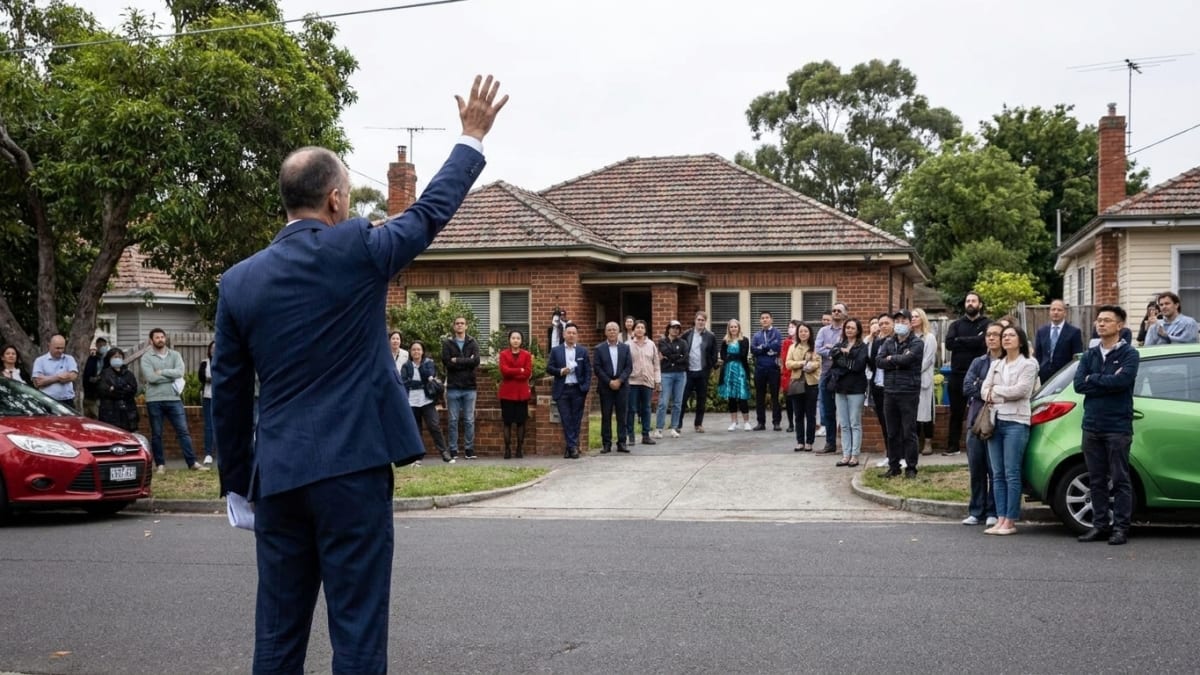
Melbourne led all capitals by volume, with 585 homes taken to auction and a preliminary clearance rate of 56.2%.[1] Melbourne's auction market is large enough that its clearance rate moves the national figure meaningfully.
The Melbourne Institute flagged a sobering shift in the underlying mood. The Institute said fewer consumers expect dwelling price gains to continue, marking the first time since March 2023 that there was not an outright majority of consumers expecting prices to rise.[2] A rising clearance rate alongside falling price expectations is not a contradiction; it is a signal that sellers are adjusting.
Why clearance rates can lift while prices keep falling
Auction clearance rates measure the share of properties that sell at auction in a given week. A higher rate reflects either a pick-up in buyer activity, fewer sellers withdrawing their properties, or both; it does not, on its own, mean prices are rising.[1]
When sellers lower reserves to meet buyers where they actually are, more auctions clear. The clearance rate improves even as the published price indexes keep falling, because the sales are completing at lower prices than sellers originally hoped for.[1] It is price discovery working, painfully, for vendors.
The Melbourne Institute's broader sentiment data reinforces this reading. The Institute said sentiment remains deeply pessimistic, with its index at 83.9 sitting in the bottom 10% of results over the 50-year history of the survey.[2] Buyers returning to auctions are doing so cautiously, not exuberantly.
Rising supply and the shift in auction strategy
The share of auctions relative to new listings has fallen from nearly 45% in November 2025 to just over 30% in June 2026verifiedVerified Source: macrobusiness.com.au, a drop of roughly 15 percentage points in seven months.[1] Sellers and their agents are choosing private treaty over the auction room at a rising rate.
When buyers have more choice and less urgency, the competitive dynamic of a public auction works against vendors. Private treaty gives sellers more control over timing, price negotiation and the ability to quietly accept a lower figure without broadcasting it to the street.[1]
Advertised supply is rising across the major capitals, meaning buyers face less pressure to act quickly.[1] More stock on market lengthens the time sellers have to wait for a buyer, weakening their negotiating position further.
What it means for sellers and buyers right now
For sellers, the uptick in clearance rates signals that committed buyers exist, but at lower price points than reserve guides set six or twelve months ago. Vendors who adjust expectations are selling; those holding out for 2024 peaks are withdrawing or sitting unsold.[1]
For buyers, a clearance rate above 50% means more competition at the auction rail than at any point in the past seven weeks. The broader price trend still favours patient buyers, but the window of minimum competition may be narrowing in high-volume markets like Melbourne.[1]
The Melbourne Institute's consumer sentiment index read 83.9 on its most recent survey, placing it among the most pessimistic readings in the survey's five-decade history.[2]
SOURCES & CITATIONS
- Australia's house price downturn broadens and steepens
- Melbourne Institute Index of Consumer Sentiment
- Auction clearance rates reach a seven-week high as auction volumes decline, Cotality
- Auction clearance rates have climbed, but there's a 'brutal reality' behind the bounce, SBS News
- Auction market rebounds, but rate outlook keeps brokers guessing, Australian Broker
FREQUENTLY ASKED QUESTIONS
Why did the auction clearance rate rise while home values kept falling?
Which city recorded the steepest home value fall to 17 July 2026?
What does the drop in the auction share of new listings mean for buyers?
Gavin O'Malley writes about property and housing. He spends his time at auctions and on building sites, and is more interested in what buyers and builders are actually paying than in what the forecasts say.