
TLDR
Cotality's national Home Value Index fell 0.4% in June 2026, the steepest monthly drop since December 2022, with combined capital-city values down 1.3% over the quarter. Sydney shed 3.2% and Melbourne 2.6% over the same period, as auction clearance rates broke below 50% and capital-city sales volumes fell 16.2% year-on-year. Morgan Stanley is forecasting a cumulative 5-10% national price decline by end-2027, while Commonwealth Bank has revised its 2026 outlook down to flat from a prior 3% growth call. Millions of owner-occupiers and investors are now sitting on mortgages priced against property values that are actively falling.
What Cotality's June data actually showed
Cotality's national Home Value Index dropped 0.4% in June 2026, the largest single-month fall recorded since December 2022.verifiedVerified Source: cotality.com[1] Drawn from Cotality's hedonic measure of dwelling values, that figure is not a rounding error; it signals the correction has gained real momentum.
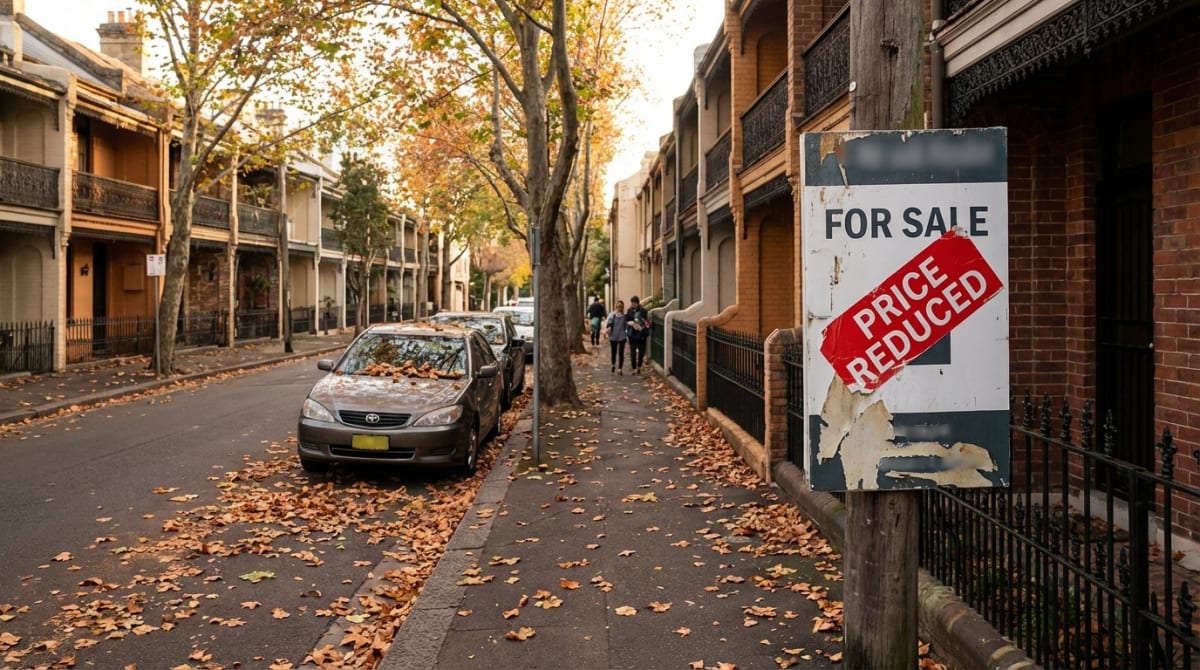
Combined capital-city values fell 1.3% over the June quarter, with Sydney leading the slide at 3.2% and Melbourne close behind at 2.6%.[1] On a median Sydney dwelling value sitting north of $1.1 million, a 3.2% quarterly fall translates to roughly $35,000 gone in ninety days.
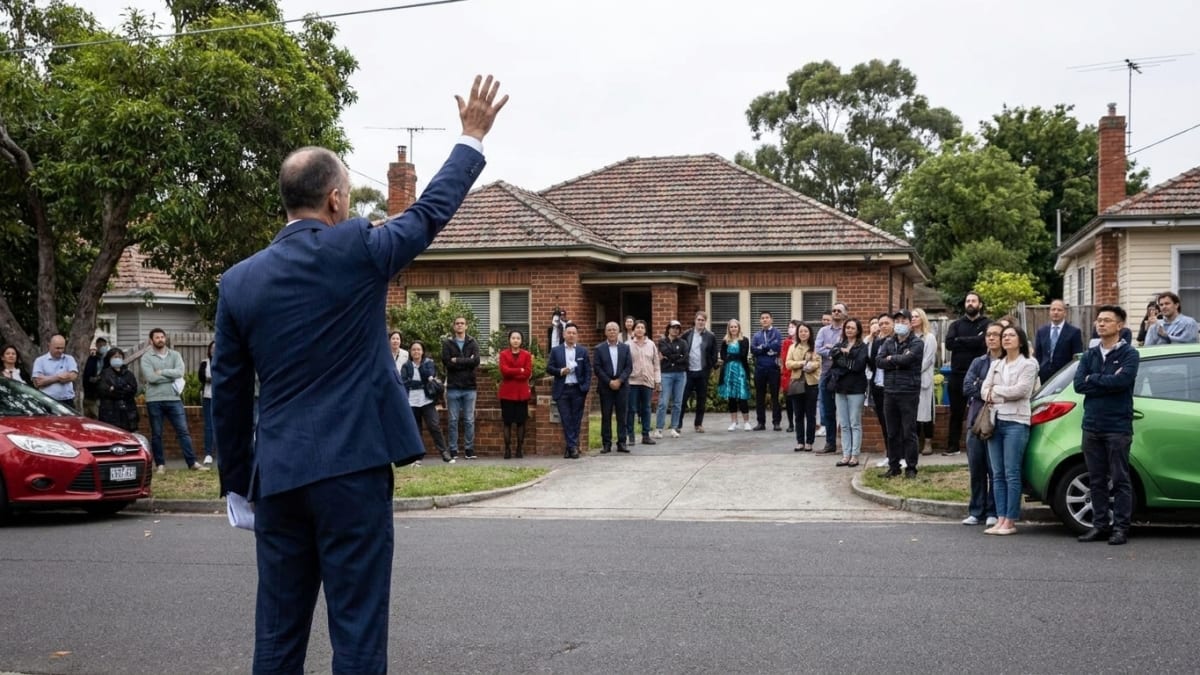
The demand-side picture reinforces the price data. Auction clearance rates fell below 50% in June 2026, and combined capital-city sales volumes dropped 16.2% year-on-year.verifiedVerified Source: cotality.com[1] When fewer than half the homes taken to auction are actually selling, vendors are either pulling listings or meeting the market at prices they would have rejected eighteen months ago.
Why the market turned
Gerard Burg, Head of Research at Cotality, said "rate hikes have significantly increased the challenges of servicing a mortgage across Australia."verifiedVerified Source: cotality.com[2] The Reserve Bank's cash rate peaked at 4.35%, and borrowers who locked in fixed terms two years ago are now rolling onto variable rates that have added hundreds of dollars per month to repayments.
Federal tax reforms have taken investor demand off the boil. Combined with tighter serviceability buffers applied by lenders, the pool of buyers who can qualify for a purchase has shrunk considerably, while new dwelling completions are adding to available stock in several cities at exactly the wrong time for existing owners.
Dr Nicola Powell, Chief Residential Economist at Domain, said "the housing market is no longer moving in lockstep. Higher interest rates are weighing heavily on Sydney and Melbourne, while more affordable segments and mid-tier cities are continuing to hold up."[5] That fragmentation shows up clearly in the regional numbers, with regional dwelling values rising 0.3% in June and 1.1% over the quarter.[1]
What the banks and economists are forecasting through 2027
Commonwealth Bank economists Trent Saunders and Ashwin Clarke said "we now expect national dwelling prices to be flat over 2026, down from a forecast of 3% at Budget and 5% in March."[6] Three forecast downgrades inside one calendar year reflects how quickly conditions have shifted.
Morgan Stanley forecast that Australian home prices could fall between 5% and 10% by end-2027, putting a harder number on what others are still describing in cautious terms.[3] A 10% fall from current levels would represent the most significant national correction since the post-GFC period.
Analysts surveyed by Reuters expect Australian house prices to rise 2.1% in 2027, suggesting the consensus view is that any correction will be contained and followed by modest recovery rather than prolonged decline.[4] The gap between Morgan Stanley's downside scenario and the Reuters consensus reflects genuine disagreement about how long rates stay elevated and how much supply pressure builds.
What it means for buyers, mortgage holders and investors
Anyone who purchased in Sydney or Melbourne in late 2024 or 2025 at peak prices is now carrying negative equity risk. A 3.2% quarterly fall in Sydney means buyers who entered with a 10% deposit earlier this year are already eating into their equity buffer, before accounting for stamp duty and purchase costs.
Mortgage holders on variable rates are absorbing both rate pressure and falling asset values simultaneously. Investors face the added complication that rental yield growth, while still positive in many markets, is not moving fast enough to offset the capital loss trajectory, and federal tax reform changes to investor incentives mean the calculus that drove speculative buying in previous cycles no longer holds in the same way.
Owner-occupiers who are not planning to sell have more insulation from the paper losses, but refinancing at higher valuations becomes harder as values fall. Lenders are applying stricter loan-to-value assessments on applications, so equity you thought you had may not be available to draw on.
When does the correction bottom out?
Rate relief is not arriving soon. The Reserve Bank's peak cash rate of 4.35% is expected to remain in place into mid-2027 at the earliest, meaning the primary driver of the correction stays live for at least another twelve months. Until borrowing capacity expands, demand-side pressure will keep clearance rates depressed and price discovery biased downward.
Domain's Dr Nicola Powell said the market fragmentation will persist while rate differentials between cities and segments remain wide.[5] Mid-tier cities and regional markets with lower median values have more room to absorb rate pressure without triggering the same buyer retreat seen in Sydney and Melbourne.
Gerard Burg at Cotality said demand headwinds are building rather than easing, a characterisation consistent with the June auction data.[2] Commonwealth Bank's revised flat 2026 forecast and Morgan Stanley's 5-10% cumulative decline scenario by end-2027 bracket the range of outcomes that buyers, sellers and mortgage holders need to plan around heading into the second half of 2026.
KEY TAKEAWAYS
SOURCES & CITATIONS
- Housing market downturn deepens as demand headwinds build, Cotality
- Monthly Housing Chart Pack, June 2026, Cotality
- Australian banks get reality check on mortgage change, Investing.com
- Australia housing poll, Reuters
- Forecast FY27: interest rate pressure drives price falls in Sydney and Melbourne, Domain
- Housing market faces multiple headwinds as price outlook downgraded, Commonwealth Bank
FREQUENTLY ASKED QUESTIONS