

TLDR
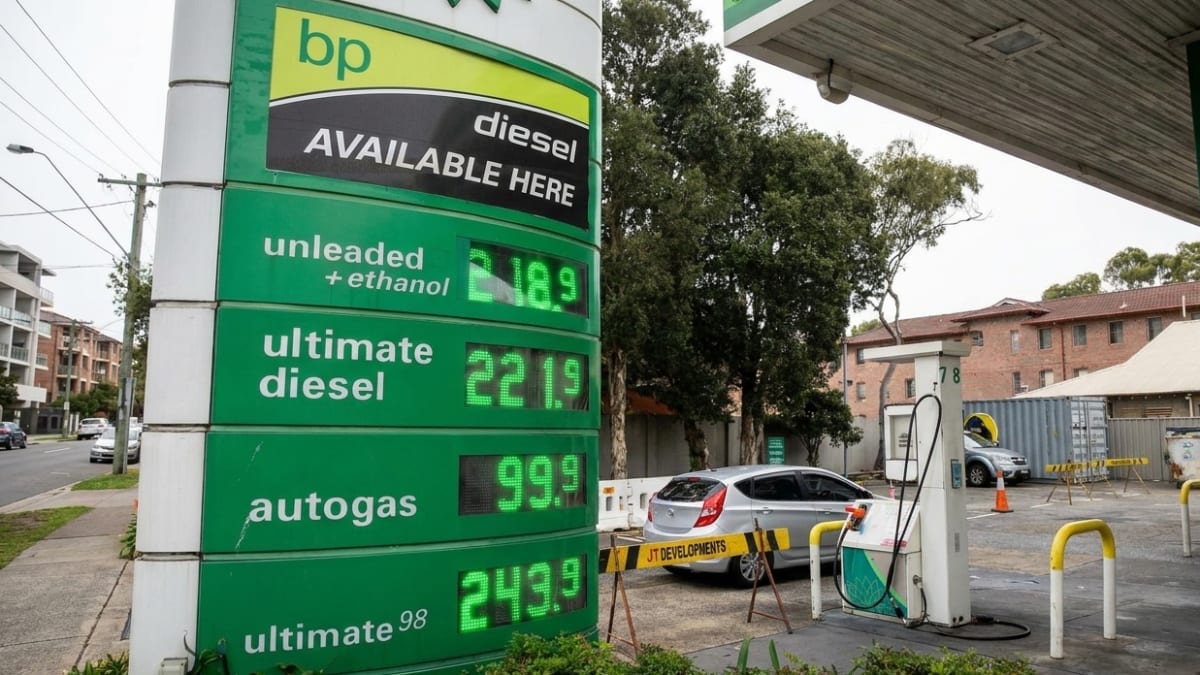
Petrol and diesel are about to cost more again: the remaining 16-cent-a-litre fuel excise discount expires at midnight on 2 August, closing out a relief package the Albanese government introduced in April to cushion consumers during the Iran-war oil spike. Wholesale terminal gate prices already jumped 15.1 cents a litre for petrol and 14.9 cents for diesel on 1 July when the first partial restoration took effect, according to the ACCC. The full excise restoration is expected to push average unleaded prices toward $2.20 a litre in the capital cities, with the rise taking up to 10 days to fully filter through to retail pumps. A 55-litre tank fill will cost roughly $8.80 more once the excise is entirely passed on, and RACQ's principal economist is urging motorists to fill up before the price cycle resets.
KEY TAKEAWAYS
The clock runs out on cheaper fuel
The number every driver needs to know this week is 16. That is the cents per litre returning to the price of petrol and diesel at midnight on 2 August, when the Albanese government's second and final fuel excise relief measure expires without replacement. The Treasury Laws Amendment (Fuel Excise Relief No. 2) Bill 2026, introduced on 22 June, extended the cut by 16 cents a litre from 1 July to 2 August at a cost of roughly $400 million.[2] There is no Bill No. 3 in the pipeline.
The original package, announced in the 12 May Budget, cost $2.9 billion and cut the excise by a full 32 cents a litre while reducing the Heavy Vehicle Road User Charge to zero for three months from 1 April to 30 June 2026.[1] The wind-down was deliberate: the 32-cent cut lapsed on 30 June, relief was halved to 16 cents for July, and now the last rung disappears.
What the ACCC data already tells us
Motorists do not need to wait until 2 August to see what a partial excise restoration looks like at the pump. The ACCC's weekly monitoring report from 3 July documents exactly what happened when the first step took effect: average wholesale terminal gate prices rose 15.1 cents a litre for petrol and 14.9 cents a litre for diesel on 1 July compared with 30 June, directly reflecting the partial restoration of the excise.[3] The pass-through was near-complete and rapid at the wholesale level.
At retail, the lag is longer. Inventory turnover and restocking mean wholesale price changes take time to reach the bowser, and industry observers expect the full 16-cent retail rise to be visible within 10 days of the 2 August deadline.[3] On a 55-litre fill that is roughly $8.80 added to the cost of every tank.
RACQ: fill up now
Dr Ian Jeffreys, RACQ's Principal Economic and Affordability Specialist, had been watching the excise mechanics closely when prices in Queensland hit new highs earlier this year. "Today's new high of 219.9 cents per litre includes the temporary 32-cent fuel excise cut which is currently due to finish at the end of June. Without it, prices would be sitting at around 251 cents per litre."[4]
RACQ's advice ahead of the August deadline is direct: Dr Jeffreys is urging motorists to fill up before other stations join the hike and reinstate the price cycle.[4] Petrol is already sitting above $1.90 a litre across every capital city, and a return toward $2.20 would put prices at levels many Australian households have not absorbed since the worst of the 2022 supply shock.
Chalmers shuts the door on an extension
Treasurer Jim Chalmers closed off any prospect of a third excise relief measure. "Australians shouldn't expect us to be able to afford to extend that petrol price relief," Chalmers said at a press conference in Canberra.[5] The government spent $2.9 billion on the initial package and a further $400 million on the July extension, and Treasury is not prepared to add to that commitment.
The political cost is not trivial. With household budgets still under pressure from elevated mortgage rates and grocery prices, a visible pump price spike in early August lands at an uncomfortable moment. Opposition senator Jane Hume has pointed to the expiry as evidence the Albanese government is adding to cost-of-living pressure rather than relieving it, framing the end of the discount as a deliberate tax increase on working families.
The global backdrop: Hormuz and import dependence
The excise cut was never designed in a vacuum. Middle East conflict disrupted shipping through the Strait of Hormuz and drove global oil prices sharply higher in early 2026, and Australia's vulnerability was acute: roughly 90 per cent of the refined fuel used in Australia is imported, leaving domestic retail prices almost fully exposed to international spot markets.[1] The government introduced the excise cut specifically to buffer consumers at the bowser while those pressures were at their sharpest.
Crude prices have eased from their early-2026 peak but remain elevated by historical standards, with Brent tracking near US$90 a barrel. The 16-cent excise restoration lands on top of an already-high base wholesale price, without the geopolitical relief that would make it easier for consumers to absorb.
ACCC watching closely
The ACCC is not a passive observer this time. The regulator now monitors weekly retail fuel prices across capital cities and more than 190 regional locations, with enhanced enforcement powers and penalties designed to ensure that wholesale cost changes are passed on fairly in both directions.[3] The same surveillance mechanism that confirmed wholesale prices rose on 1 July will be tracking whether retailers pass the full 16-cent excise restoration through to consumers promptly and completely after 2 August.
Australia's fuel excise is a wholesale tax indexed twice yearly by CPI under the Excise Tariff Act 1921 and collected at the point of production or import, sitting at roughly 50 cents a litre before the 2026 temporary reductions.[3] When the relief is fully unwound from 3 August, the excise component returns to that pre-cut level.
SOURCES & CITATIONS
- Strengthening Australia's Fuel Resilience, Treasurer Chalmers media release
- New Legislation: Fuel Excise Relief No. 2, Treasurer Chalmers media release
- ACCC Weekly Fuel Price Monitoring Report, 3 July 2026
- Fuel Price Hikes Return, RACQ
- Press Conference Canberra, Treasurer Chalmers transcript
- ABC News: Drivers brace for petrol price hikes as fuel excise cut comes to an end
- Guardian Australia: Petrol prices on track to top $2 a litre as fuel excise relief ends
FREQUENTLY ASKED QUESTIONS
When exactly does the fuel excise relief end?
How much more will a full tank cost after the excise returns?
How long will it take for pump prices to reflect the change?
Will the government extend the relief again?
Why was the excise cut introduced in the first place?
Rosa Henriquez writes about the cost of living and consumer affairs. She reports from the household end of the economy, where the numbers turn into groceries and bills.