TLDR
Demis Hassabis has handed day-to-day control of Google DeepMind to CTO Koray Kavukcuoglu, becoming chairman and Alphabet chief scientist. Four of Google's most senior AI researchers departed the same week to co-found Discovery Loop. DeepMind's talent retention ratio has collapsed to 1.7, against Anthropic's 8.3.
The handover
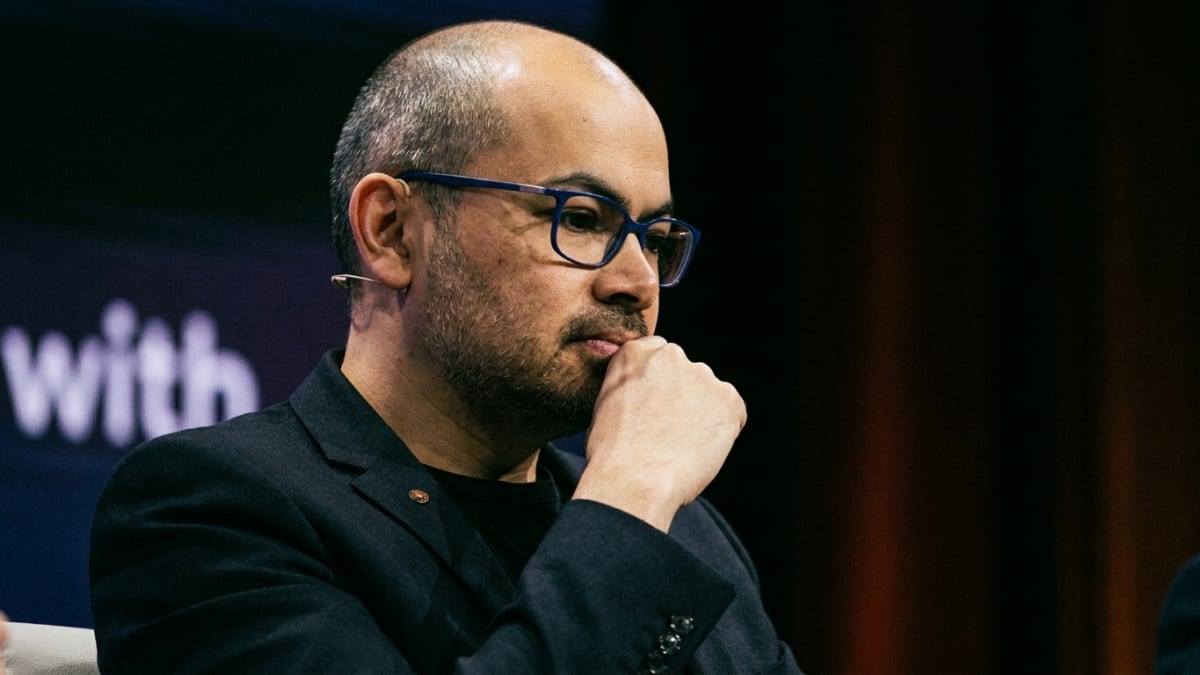
Demis Hassabis formally stepped back from running Google DeepMind on 5 August, appointed chairman of Google DeepMind and chief scientist of Alphabet, ending more than a decade of direct operational control.[1] Koray Kavukcuoglu, previously the lab's chief technology officer, was elevated to Senior Vice President, reporting directly to Alphabet chief executive Sundar Pichai and taking on responsibility for Gemini model development.[1]
Hassabis framed the move as an expansion rather than a retreat. "In my new role, I will continue to work closely with Sundar on strategic and global AGI matters, and to advise Koray, Josh, and the GDM leads, from our awesome new London Platform 37 offices," Hassabis said. The new structure positions him as a link between Alphabet's commercial AI ambitions and its longer-horizon research agenda, rather than the person managing either day to day.
Four departures, one new company
The reshuffle landed in the same week that four of Google's most decorated AI scientists announced they were leaving together. Jeff Dean, Sanjay Ghemawat, Oriol Vinyals and Quoc Le departed Google to co-found Discovery Loop, a public benefit corporation whose said mission is to automate scientific discovery, with Google itself named as a founding investor.[1] Dean and Ghemawat are among the architects of Google's foundational infrastructure; Vinyals and Le were co-technical leads on Gemini.
That Gemini connection has immediate consequences. The lab's flagship next-generation model, Gemini 3.5 Pro, missed its expected June launch, and both researchers most directly responsible for its technical direction are now outside the building. Kavukcuoglu inherits that delivery problem from his first day in the expanded role.
What the talent numbers actually say
Zeki Data, which tracks senior AI researcher movement globally and powers the Stanford AI Index, reported that Google DeepMind employed 74 researchers in 2026 and its arrivals-to-departures ratio had fallen from 4.7 in 2024 to 1.7, compared with Anthropic's ratio of 8.3.[2] In plain terms, for every researcher arriving at DeepMind, 0.59 are leaving; at Anthropic, the dynamic runs the other direction at nearly five to one.
A ratio of 1.7 is not a crisis on its own. Dropping there from 4.7 in a single year, while simultaneously losing the four scientists who departed this week, is a pattern that points to where the gravitational centre of frontier AI research is shifting. Alphabet shares dropped roughly 4 per cent across the week the changes were announced.
Where Hassabis goes next
Hassabis has been direct about where his attention is heading. "I've always believed the No.1 application of AI should be to improve human health. That work started with AlphaFold, and now at Isomorphic Labs with our mission to reimagine drug discovery and one day solve all disease!" he said.[3] Isomorphic Labs, the Alphabet-backed biomedical AI spinout that grew from AlphaFold, is where he intends to concentrate his scientific energy in the period ahead.
AlphaFold's protein-folding predictions earned a share of the 2024 Nobel Prize in Chemistry, and Hassabis has consistently described biological AI as the domain with the highest long-run stakes. Stepping away from quarterly Gemini release pressure frees him to work on timelines measured in years rather than product cycles.
What Kavukcuoglu is walking into
Kavukcuoglu takes the SVP role at an awkward moment: Gemini 3.5 Pro is delayed, the two researchers who co-led its technical development have left, and Zeki Data's talent flow numbers put DeepMind at a structural disadvantage to its main rival for the researchers who build frontier models.[2] Kavukcuoglu also reports directly to Pichai, signalling that Alphabet's unified AI strategy now runs through one line of command rather than through Hassabis as an intermediary.
Alphabet's bet is that concentrating commercial model delivery under Kavukcuoglu, while freeing Hassabis to operate as a roving scientific authority across the whole group, resolves a structural tension that has existed since DeepMind was folded into Google's product stack. DeepMind's arrivals-to-departures ratio of 1.7, down from 4.7 in a single year, is the measure that will say whether that restructure holds.[2]
KEY TAKEAWAYS
SOURCES & CITATIONS
FREQUENTLY ASKED QUESTIONS
Who is now running Google DeepMind day to day?
What is Discovery Loop?
How bad is DeepMind's talent retention compared with rivals?
What is Isomorphic Labs and what is Hassabis's role there?
Jonas Valenti writes about search and how businesses get discovered. He has spent years watching what makes a company visible online, and is unsentimental about tactics that no longer work.