TLDR
Brisbane-raised Bobby Gallagher built a ute-sized nuclear microreactor in the United States while a federal ban on nuclear power stays in place at home. His Unity reactor reached criticality at Idaho National Laboratory on 30 June 2026, with a full-power test scheduled for 2027.
KEY TAKEAWAYS
Reactor built abroad while ban holds at home
Brisbane-raised Bobby Gallagher, co-founder and chief executive of Deployable Energy, built his Unity Nuclear Battery in the United States. In Australia, Commonwealth law prohibits the construction or operation of a nuclear power plant and prevents the Australian Radiation Protection and Nuclear Safety Act regulator from issuing a licence for one.[1] Gallagher said there was no reason Australia could not have a commercial power reactor system.[2]
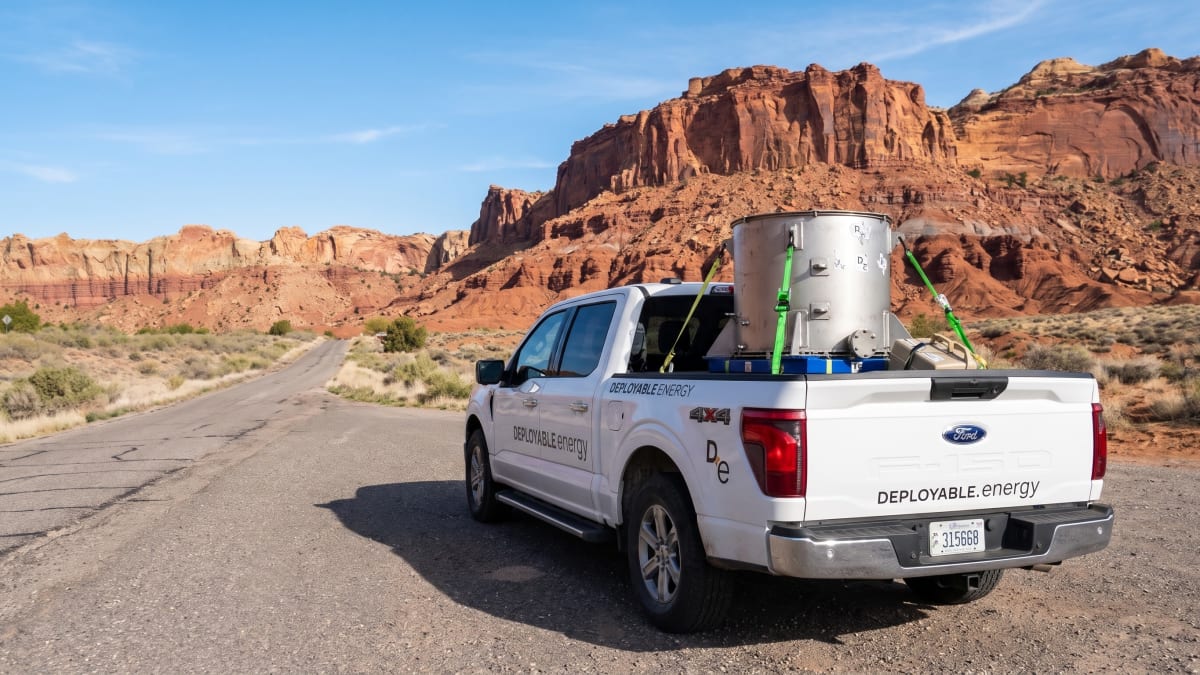
Unity is a light-water-moderated, helium-cooled transportable microreactor sized to fit on the back of a standard ute.[3] Deployable Energy says the unit can deliver 3.5 megawatts of thermal power and serve up to 1,000 homes for five years before requiring replacement.[4]
Criticality reached, full-power test set for 2027
The Unity demonstration reactor completed a zero-power fuelled criticality demonstration at Idaho National Laboratory on 30 June 2026, making it the third US Department of Energy-authorised advanced reactor to reach criticality before a 4 July deadline set by the Trump administration.[5] Criticality means the reactor sustained a controlled nuclear chain reaction; it does not constitute a full-power electricity demonstration.[4]
Idaho National Laboratory selected Deployable Energy for a full-power test in its DOME testbed facility, scheduled for 2027.[3] That program will examine system performance, controls, safety and operational procedures. The ABC reported the criticality milestone was reached in 155 days, and testing at the laboratory continues in preparation for the 2027 demonstration.[4]
Deployable Energy is targeting production of 1,000 Unity units a year from a Texas manufacturing facility by 2030.[2] Gallagher has said Australia risks becoming a buyer rather than a developer of nuclear technology if the moratorium continues.[2]
Political fault lines inside Australia
Federal LNP member for Flynn Colin Boyce argued Australia should have all energy options available and said the ban had discouraged Australians from pursuing nuclear disciplines.[2] Will Shackel, founder of Nuclear for Australia, said a "huge anti-nuclear disinformation push" at the last election had harmed the public debate.[2]
Federal Energy Minister Chris Bowen has labelled nuclear power in Australia a pipe dream.[2] Emma Smith, coordinator of the Gladstone Conservation Council, said nuclear was not the right solution for central Queensland and that immediate energy needs should be met with renewables.[2]
Calum Harvey-Scholes, head of research at Rewiring Australia, said gaining community acceptance for nuclear would be difficult and argued batteries were already delivering the reliability once questioned in wind and solar.[2] A House Select Committee interim report from February 2025 heard that setting up a nuclear industry in Australia would face substantial regulatory, workforce, supply-chain and construction hurdles.[6]
That inquiry lapsed when the House of Representatives was dissolved on 28 March 2025.[7] The Unity full-power test at Idaho National Laboratory remains scheduled for 2027.[3]
SOURCES & CITATIONS
- Australian Radiation Protection and Nuclear Safety Act 1998
- Australian-made nuclear microreactor, ABC News
- Deployable Energy selected to test its nuclear battery at DOME, Idaho National Laboratory
- Deployable Energy official website
- US Department of Energy meets President Trump's goal, delivers third advanced reactor
- Interim report, Chapter 2: Timeframes for nuclear power generation in Australia
- House Select Committee on Nuclear Energy, inquiry page
FREQUENTLY ASKED QUESTIONS