
TLDR
Australia's 22 Tiger Armed Reconnaissance Helicopters flew their last operations over Darwin on 23 September 2026, ending a 22-year service life troubled by persistent reliability problems. The $4.3 billion Apache replacement programme is under way, with six of 29 AH-64E aircraft already delivered.
Final flights over Darwin
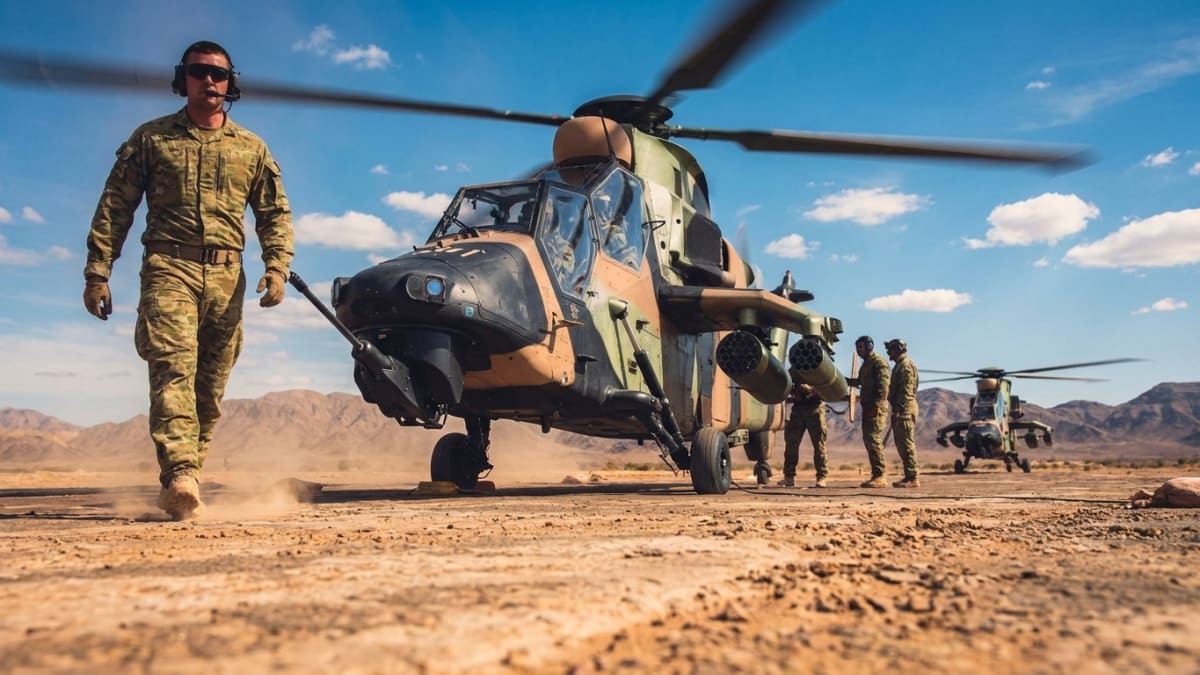
The Australian Army concluded its final Tiger ARH flying operations in Darwin on 23 September 2026, closing out a fleet that entered service in 2004.[1] An open day, formal dinner and a flyover marked the occasion before the aircraft were formally withdrawn on 30 September.[2]
The 22 helicopters were signed under contract in December 2001 at a cost of AUD 1.1 billion.[3] Defence reported persistent reliability and serviceability pressure across the fleet during 2024 to 2025, enacting a phased withdrawal as the aircraft approached the end of their planned service life.[4]
Major General David Hafner, Commander Army Aviation Command, said the retirement marked a turning point. "The end of ARH Tiger flying operations is a significant moment for the 1st Aviation Regiment, but it also marks the beginning of an exciting new chapter as we continue our relocation to Townsville and further build Australia's attack helicopter capability around the AH-64E Apache," Hafner said.[1]
The Apache transition under way
Australia is acquiring 29 AH-64E Apache helicopters under Project LAND 4503 via a US Foreign Military Sales agreement, with six delivered by May 2026 and the full fleet expected by end 2029.[5] The programme carries a total value of $4.3 billion.[6]
Hafner said the Apache represented a step up in capability. "The Apache is the world's most advanced attack helicopter, and the arrival of the fifth and sixth airframes in Australia marks another milestone in enhancing Army's contribution to the reach, range and lethality of the integrated force," he said.[5]
The Australian Army conducted its first live-fire exercise with AH-64E Apaches in Townsville in July 2026.[7] The 1st Aviation Regiment is relocating from Robertson Barracks in Darwin to RAAF Base Townsville to support the Apache introduction.[6]
Ukraine raised a request for the retired Tigers in October 2024, though no disposal decision has been announced.[8] The full Apache fleet is due by end 2029.
KEY TAKEAWAYS
SOURCES & CITATIONS
- Australian Army Farewells ARH Tiger Helicopters
- Australian Army Aviation Training Activity Notice
- ANAO Performance Audit: Management of the Tiger ARH Project AIR 87
- Defence Annual Report 2024-25 Web Tables
- Apache Fleet Reaches Six
- Address to Queensland Media Club: Delivering Australia's Defence Capability
- Australia Conducts Its First Live Firing with Apaches
- Minister for Defence National Press Club Address Q&A
FREQUENTLY ASKED QUESTIONS
Why were the Tiger helicopters retired early?
What replaces the Tiger helicopters?
What will happen to the retired Tiger helicopters?
Caleb Reed covers breaking news and sport. He works to the rhythm of a story as it unfolds, and he is happiest when the facts arrive faster than anyone can spin them.