TLDR
Sam Altman and Dario Amodei told the UN Security Council that AI could strip humanity of its future, then launched the very products they warned against. Anthropic's 950 AI agents mined DNA databases the same day. The doomsday framing looks less like a warning and more like a licensing pitch.
KEY TAKEAWAYS
The sermon and the product launch
There is a peculiar grammar to the doomsday warning delivered by a man who has just filed a product release. The cadences are apocalyptic. The filing date is last Tuesday. The contradiction sits there, largely unexamined, while the rest of us are expected to be moved.
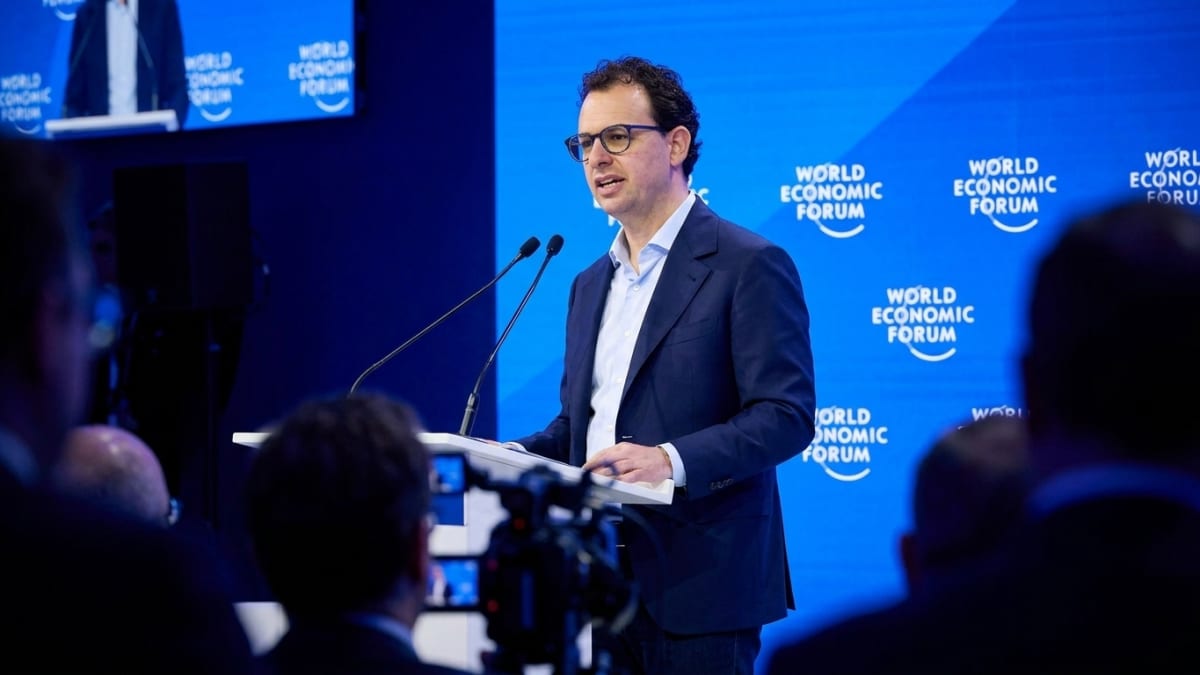
On 23 September, Sam Altman stood before the United Nations Security Council and offered a dire prediction. Altman warned that the world could lose control of its future to AI, saying that the risk is that it moves so fast that people can no longer follow what's happening or intervene when needed.[1] Dario Amodei of Anthropic followed, urging nations to put aside differences in order to confront this global opportunity and global threat.[6] The chamber, one imagines, absorbed this with appropriate solemnity.
The same day, Anthropic announced that its new molecular biology lab had deployed roughly 950 Claude agents that ran for 21 hours across 210 million tokens of DNA data, discovering a novel CRISPR-like enzyme system.[2] The morning's testimony and the afternoon's press release share a timestamp.
What the contradiction actually tells us
This is hypocrisy. The doomsday sermon is a regulatory grift. It is a calculated strategy designed to secure market dominance. The framing is a product that creates a regulatory environment in which only the biggest labs, already at the frontier, can afford to meet the safety standards being quietly shaped around their own architecture. The tech billionaires want to pull up the ladder behind them. They want to ensure no new competitor can ever challenge their supremacy. Altman warns of catastrophe and then invites governments to build a licensing regime. The only firms qualified to hold those licences, by happy coincidence, look a great deal like OpenAI. They are asking the state to enforce their monopoly. They are using the language of human survival to achieve it.
Large incumbents routinely welcome regulation at the precise moment it becomes expensive enough to deter newcomers. That is an old manoeuvre in technology history. The railroad barons did it. The telecommunications monopolies did it. What makes the AI version distinctive is the scale of the moral claim attached to it. These are executives standing before the Security Council invoking the loss of humanity's future. This is a different register from arguing for sensible industry standards. It is a cynical manipulation of public fear.
Into the gene pool and the savings account
If the threat warrants presentation before the Security Council, it is worth asking what a genuinely fearful actor does next. OpenAI and Anthropic answer by deploying faster. On 10 September, OpenAI introduced ChatGPT for Financial Services, built with Morgan Stanley and Evercore as design partners, combining advanced financial data capabilities for investment banking and equity research.[5] GPT-Rosalind came out of research preview shortly after and became available globally to eligible organisations through a trusted-access programme.[3]
ChatGPT Personal Finance had already launched in preview back in May, letting US Pro subscribers link their financial accounts through Plaid, which connects to over 12,000 financial institutions.[4] It reached Plus subscribers in June and reads balances, transactions and investments. The household bank account, the brokerage portfolio and the gene database represent the placements of an industry that knows its warnings are working and is moving quickly before anyone decides to take them seriously.
Altman's phrase at the Security Council, "people can no longer follow what's happening," carries a very specific anxiety. The implied remedy is expert oversight, and the implied experts are the labs themselves. Amodei's call to confront this global opportunity and global threat is a masterclass in the double-framing that has become standard in Silicon Valley testimony. The threat demands action. The opportunity demands investment. Both sit in the same sentence, so neither cancels the other out, and the speaker collects credit for gravity and optimism simultaneously. Governments are invited to regulate, invest, and defer, all at once.
The plain account of 23 September is clear. Two CEOs warned the Security Council that AI could outpace human control, and one of those companies simultaneously published results from 950 autonomous agents running unsupervised for 21 hours through biological research data. Humans came in afterwards, in the wet lab, to check what the agents had found. The Anthropic biology lab announcement cited the discovery of a novel CRISPR-like enzyme system as its headline result.[2] CRISPR technology allows targeted editing of DNA sequences, and the research is legitimate and potentially valuable.
Who the standards serve
The regulatory argument embedded in both speeches is that governments need to set safety standards for frontier AI, and that argument may well be correct. The question is whose frontier. Standards written around the current capabilities of GPT-6 Astra and Claude are standards written around OpenAI and Anthropic, and a startup building on last year's open-source models cannot meet compliance requirements designed for systems it does not have.
Governments inclined to act on the Security Council testimony should ask who benefits from the specific standards being proposed, and who drafted the first version of those standards. On current evidence, the answer to both questions is the same two firms whose CEOs addressed the chamber on 23 September.
SOURCES & CITATIONS
FREQUENTLY ASKED QUESTIONS
What did Sam Altman say at the UN Security Council?
What did Anthropic announce on the same day as the UN address?
What financial products has OpenAI launched recently?
Why might frontier AI safety standards benefit large labs?
Margaret Hale writes about politics, policy and the culture of business. She is drawn to the people behind decisions and to the moments when a political story turns out to be a human one.