
TLDR
Lindsay Clancy's own lawyers concede she strangled her three children, aged five, three and eight months, while her husband was out buying medicine and dinner. More than 400 people still stood outside her trial in pink shirts reading Believe, and 33,100 donors have put $1.1 million into a fund for her parents before the jury has found anything. Nobody has ever gathered like that for a father in the dock, and the largest study of who kills children found mothers do it more often. The crowd's shirts named a cause and its speakers praised the defence lawyer, and not one of them named Cora, Dawson or Callan.
Picture that crowd for a father
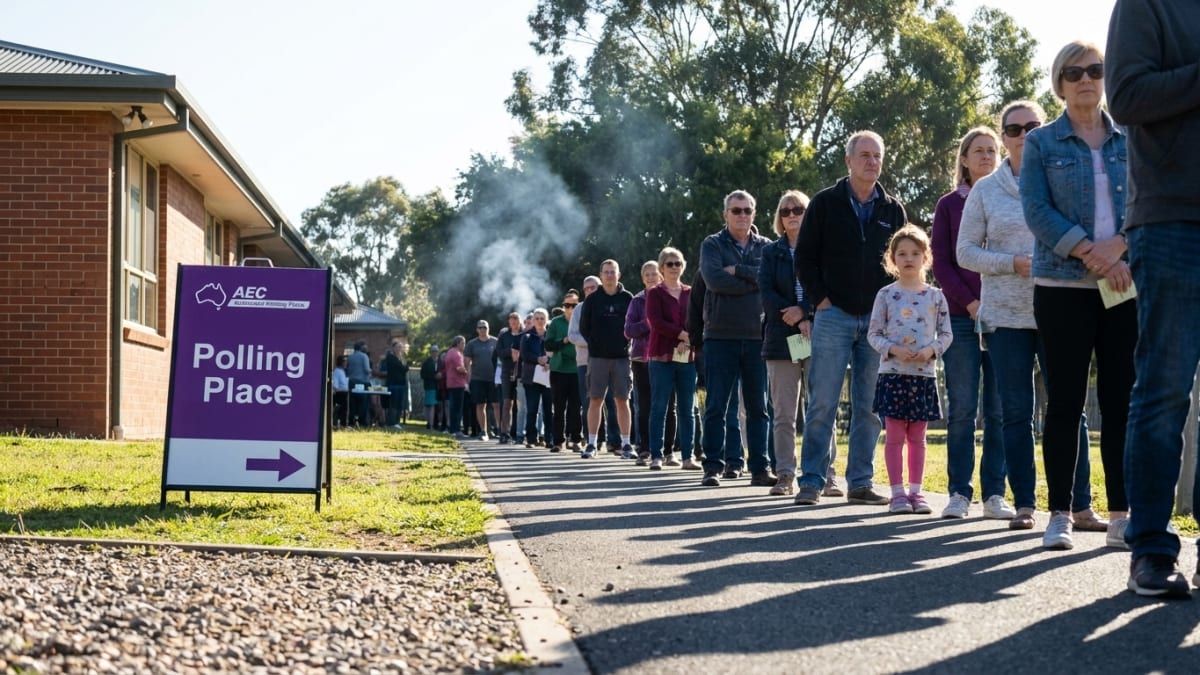
Try a thought experiment. A father in Massachusetts sends his wife out for medicine and dinner, and while she is gone he strangles their three children with exercise bands. Cora is five, Dawson is three and Callan is eight months old. His lawyers deny none of it, and argue only that he was too ill to be responsible.[3] Now picture more than 400 people travelling from several states to stand on the courthouse lawn in matching pink shirts that say Believe.[8][10]
You cannot picture it, because it has never happened and it never will. That crowd was real, though, and it gathered outside Plymouth Superior Court on 20 August for Lindsay Clancy, whose own lawyers concede she killed her three children in exactly that way.[16][3] What those people chose to wear, say and pay for reveals more about how we have been trained to think about mothers and fathers than any verdict will.
What the shirts said, and what they left out
The shirts read Believe, She Needed Help and Peace For Lindsay, and the signs read They failed her and She's not alone.[16][9][10] The flyers told people not to shout or protest, because "our silence is our support".[10] Not one shirt, sign or flyer that any reporter recorded carried the names Cora, Dawson or Callan.
The organiser was Renee Kimball, 40, who drove down from Maine and had never met the family.[8][11] She said that for three years the case had seemed "pretty cut and dry", and then the trial started and everything changed.[8] From the middle of the circle she told the crowd it should not take the lives of Cora, Callan and Dawson "and nearly Lindsay" for psychiatrists to hear their patients. The defence lawyer, Kevin Reddington, she said, "has Lindsay's fight, he's her voice and our voice".[8]
Listen to the people who came. April Vincent, a 52-year-old paralegal from Rhode Island, said women are "dismissed, neglected and ignored when we speak up" and that "we're scared because nobody takes us seriously".[16] Dina Warchao, 59, from Waltham, wanted to "give a shoutout to attorney Kevin Reddington because he is shining a light".[8] When Reddington pulled into the car park the crowd cheered, and someone asked him how it felt to be the voice of all women.[8]
Read those quotes again and count the children in them. Three children are dead, their mother is on trial for killing them, and the grievance a crowd of adults brought to the courthouse door was about themselves. Kimball said it plainly two days into the trial: it had "become about more than the charges".[10]

The money followed the same instinct. The GoFundMe set up for Clancy's retired parents had taken $1,109,819 from 33,100 donations by 1 September.[1] Every dollar arrived before the jury reached a finding, because the finding was never the point. Those donors had already decided which side of this story they were on. By Kimball's own account the movement now has events in more than 18 states and plans in Britain, South Africa and the Netherlands.[8]
The choice, in the prosecutor's words
Here is what the jury actually heard. Prosecutor Jennifer Sprague told them that "those kids were keeping her from ending her misery, and so she had to remove the protective factor". Then she said the line the crowd on the lawn never mentions: "It was a choice."[14] Reddington answered with character. "This young lady did nothing wrong in her life. She was a nurse, a daughter, a wife, and a darn good mother."[15] Nothing in his closing disputed what she did. The entire defence rests on the McHoul standard, which asks whether she could appreciate the wrongfulness of her conduct at the time.[3][7]
That is a question for the 12 people who sat through every hour of evidence, and they are struggling with it. The jury of nine women and three men told the judge it was deadlocked after 23 hours and was sent back to keep trying.[19][7] A panel that is three-quarters women, and heard every witness, cannot agree on what a crowd on a lawn settled from a distance in an afternoon.
Now do it for a man
Christopher Watts killed his pregnant wife and his two daughters in Colorado in 2018 and is serving life without parole. Nobody drove seven hours to stand on a lawn for him and nobody printed Believe on a shirt. The thought is absurd, and the absurdity is the point. When a father kills his children we ask what kind of monster he is. When a mother does it we ask who failed her. The question comes so automatically that a crowd can stand outside a murder trial in pink and believe with total sincerity that it is there for mental health.
The research says the reflex is backwards. A 25-year review of every filicide in Finland was published in the Journal of the American Academy of Psychiatry and the Law in 2010. It found mothers were responsible for 59 per cent of cases and fathers for 39 per cent.[4] It is one country and one study, and it still shows that the crime we instinctively file under male monstrosity is committed more often by women. Our sympathy runs in the opposite direction to the numbers.
How a diagnosis became a permission slip
Postpartum psychosis exists and it is rare, striking one or two women in every thousand who give birth.[16] Andrea Yates killed her five children in Texas in 2001 and was found not guilty by reason of insanity at her retrial in 2006.[5] Betsy Schwartz of the Mental Health Association of Greater Houston said that verdict showed how far public understanding of mental illness, and postpartum depression in particular, had come.[5] Paul Appelbaum, then chair of the American Psychiatric Association's council on psychiatry and the law, thought the debate around her first trial had probably shaped the second verdict.[6]
That was 20 years ago and the recognition has kept widening. What began as a hard-won acceptance that some mothers are gravely ill has become a script recited before anyone has opened a medical file. The slogans on the Plymouth lawn are that script word for word. The script has a flaw that should trouble anyone who takes psychiatry seriously: it settles the psychiatric question by the sex of the defendant before a single doctor takes the stand.
A USA Today columnist put the alternative to the mothers of TikTok in eight words: Lindsay Clancy isn't a motherhood martyr, she's a killer.[12] That is her verdict to own, and the jury will reach its own. But the crowd never engaged with a word of it, because the shirts had instructed people to believe rather than to argue.
The man who buried three children
Patrick Clancy lost Cora, Dawson and Callan that night. Four days later he asked the world to forgive his wife. "I want to ask all of you that you find it deep within yourselves to forgive Lindsay, as I have," he wrote.[13] He and his sisters later founded the Heard Foundation in the children's names to fund perinatal mental health care.[17] His grace is extraordinary and it is his to give. It does not transfer to 33,100 strangers with a credit card, and it does not licence a crowd to turn his children's trial into a rally about its own feelings. A man who buried three children has earned the right to forgive, and nobody on that lawn has.
Remember whose names were missing
One Boston columnist wrote last week that Cora, Dawson and Callan "were three individual children whose lives were taken".[18] Any system calling itself victim-centred, the column went on, has to start by remembering who the victims are. Cora was five, Dawson was three and Callan was eight months old, and not one of them was named on a single shirt.
The jury will do its job and its answer will be the law's answer. The lawn has already given the culture's answer, and it is the wrong one. Four hundred people looked at three dead children and a mother whose own lawyers say she killed them, and decided that the person who needed their support was her. Until we can honestly picture that crowd for a father, we should stop pretending the pink shirts were about mental health.
KEY TAKEAWAYS
SOURCES & CITATIONS
- The Musgrove Family Fund, GoFundMe campaign for Lindsay Clancy's parents
- Commonwealth of Massachusetts v. Lindsay M. Clancy, Grand Jury Indictment, September 15, 2023
- Commonwealth v. Lindsay Clancy Case Overview, last updated August 30, 2026
- Maternal and paternal filicides: a retrospective review of filicides in Finland (J Am Acad Psychiatry Law 2010;38(2):229-38)
- Yates is not guilty by reason of insanity, Washington Post, July 27, 2006
- Psychiatric News commentary on Yates retrial verdict, Paul Appelbaum, 2006
- Jury in Lindsay Clancy trial allowed to go home after deliberating for 23 hours, The Guardian, September 1, 2026
- Hundreds of pink-clad supporters gather at courthouse ahead of Lindsay Clancy trial, The Boston Globe, August 20, 2026
- Women in pink rally in support of Lindsay Clancy at her trial for killing her 3 children, Associated Press, August 20, 2026
- Hundreds demonstrate outside Lindsay Clancy trial: 'She's not alone', Boston Herald, August 20, 2026
- Why hundreds showed up to support murder trial defendant Lindsay Clancy, NPR, August 23, 2026
- Lindsay Clancy isn't a motherhood martyr. She's a killer, USA Today opinion, August 27, 2026
- Husband asks for forgiveness for wife charged in children's deaths, ABC7, January 2023
- Lindsay Clancy trial finishes closing arguments; jury now deliberates, NBC News, August 27, 2026
- Lindsay Clancy trial: full closing arguments from both sides, ABC7 New York, August 27, 2026
- Women rally in support of Lindsay Clancy: 'Nobody takes us seriously', The Guardian / AP, August 20, 2026
- Our story, the Heard Foundation
- Myers: Don't forget the real victims in Clancy case, Boston Herald, August 26, 2026
- Lindsay Clancy trial jury unable to reach unanimous decision, CNN live updates, September 1, 2026
FREQUENTLY ASKED QUESTIONS