

TLDR
Jacinta Allan stepped aside as Victorian premier on 28 July 2026, saying the cost of fighting for her position so close to the November election was too high for Labor to bear. A Roy Morgan poll conducted in late April had placed Liberal leader Jess Wilson ahead of Allan 53 to 42 on the Better Premier measure, reflecting the approval slide that drove caucus pressure. Deputy premier Ben Carroll declared he would contest the Labor leadership and received Allan's unqualified support. The next Victorian state election is scheduled for 28 November 2026, leaving any new leader roughly four months to consolidate before voters decide.
KEY TAKEAWAYS
The decision and why Allan made it
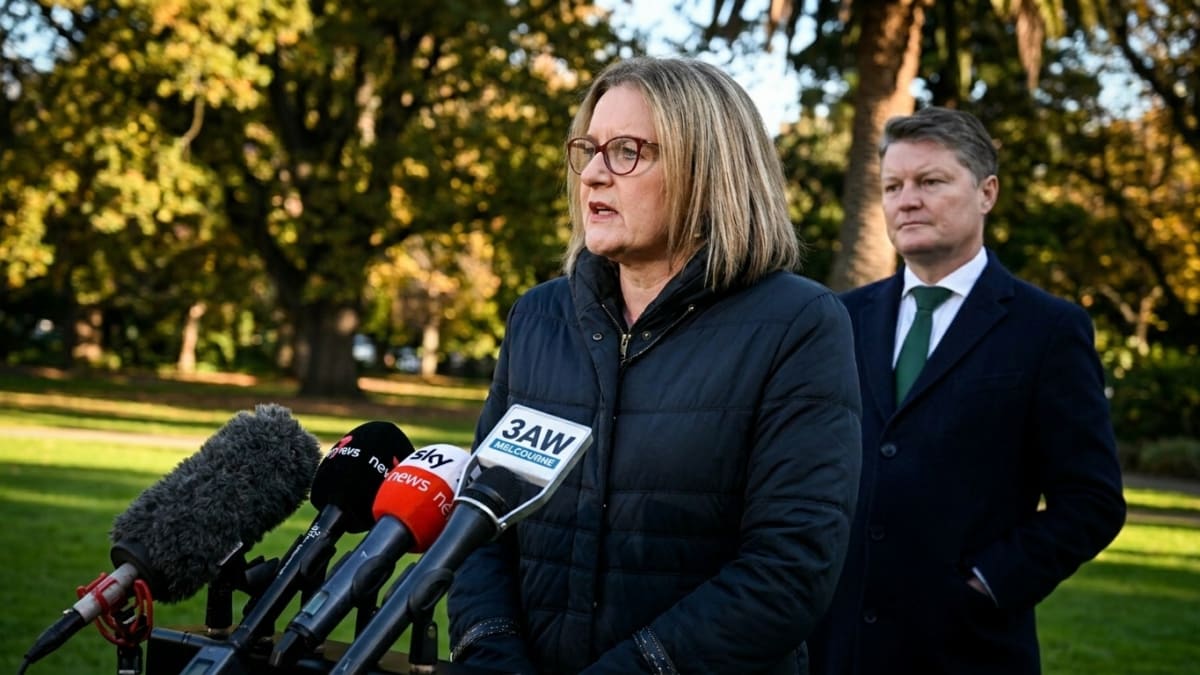
Jacinta Allan pulled the pin on 28 July 2026, addressing caucus colleagues and the Victorian public in the same breath. "I have made the difficult decision to step aside as leader of the Labor Party and Premier of Victoria," Allan said.verifiedVerified Source: premier.vic.gov.au[1] The announcement came one day after colleagues delivered the blunt news that she no longer held the room.
Allan framed the exit around the party's electoral interests, not her own. "But doing so this close to an election takes up valuable resources, including the most precious one of all, time," she said.[1] Allan said she would shortly chair a caucus meeting to elect her successor.[1]
The numbers that made her position untenable
A Roy Morgan poll conducted 22 to 24 April 2026 found 53% of Victorian electors preferred Opposition Leader Jess Wilson as Better Premier, against 42% for Allan.verifiedVerified Source: roymorgan.com[3] That eleven-point deficit, against a Liberal leader who had not yet taken the party into an election, crystallised the internal case for change.
Labor had also trailed in broader voting-intention polls as support for the Liberal-Nationals and One Nation climbed. With the state election fixed for 28 November 2026, caucus members calculated that time spent relitigating Allan's leadership was time not spent on the campaign.[4]
Carroll steps forward
Ben Carroll, the deputy premier, moved quickly. A statement released on 28 July confirmed that colleagues had approached Carroll the previous day and told him Allan no longer held caucus support.[2] Carroll declared he would contest the Labor leadership ballot.
Allan left no ambiguity about where she stood. Should Carroll emerge as the next Labor leader and premier, he would have her congratulations and unqualified support, she said.[1] Public backing from an outgoing leader carries weight in a caucus that had just delivered a brutal verdict on her tenure.
Allan's record: what 1,036 days delivered
Allan stepped down after 1,036 days in the job, during which the government removed 92 level crossings and advanced the West Gate Tunnel, North East Link, Suburban Rail Loop and Metro Tunnel under the Big Build infrastructure programme.verifiedVerified Source: premier.vic.gov.au[1] Her government also delivered 121 new schools and 12 new hospitals.
On cost-of-living, the Allan government introduced free public transport measures and rebates on car registration. Tightened bail laws and the establishment of a Violence Reduction Unit were central planks of its law-and-order response. The infrastructure legacy is real; whether voters credit Labor for it is the question the new leader must now answer.
What a leadership change means for Victoria's finances
Victoria carries a substantial debt load accumulated through the Big Build years and pandemic recovery spending. Any incoming premier inherits that balance sheet alongside the political liability it creates for Labor. The leadership transition does not alter the state's fiscal position, but it resets the political frame around it.
Carroll, if elected, will need to establish credibility on economic management quickly. Treasurer Tim Pallas has navigated the state's finances through that period, and the relationship between a new premier and the existing Treasury team will be one of the first signals the market and the public read.
Four months to election day
The Victorian state election is scheduled for Saturday, 28 November 2026.[4] That gives any new Labor leader roughly four months to build name recognition with voters who may know little about them, define a campaign agenda and close Jess Wilson's polling advantage on the Better Premier measure.
Victoria has changed premiers mid-term before and gone on to win elections. The risk for Labor is that a leadership change so close to polling day reads as desperation rather than renewal. Ben Carroll's caucus ballot result will signal whether the party is unified or merely managing an orderly exit for Allan, who was first elected to the Victorian parliament in 2000.
SOURCES & CITATIONS
FREQUENTLY ASKED QUESTIONS
Why did Jacinta Allan resign as Victorian premier?
Who is likely to replace Jacinta Allan as premier?
When is the next Victorian state election?
What did the opinion polls show about Allan's position?
Margaret Hale writes about politics, policy and the culture of business. She is drawn to the people behind decisions and to the moments when a political story turns out to be a human one.


