
TLDR
The rotation of US and UK nuclear-powered submarines through HMAS Stirling in Western Australia will wrap up in 2032, Defence Industry Minister Pat Conroy confirmed. Rotations are due to begin as early as 2027 under the AUKUS partnership, giving Australia five years to build the workforce and technical knowledge it needs to operate its own fleet. Conroy said the government settled on acquiring three in-service Virginia-class boats in late 2022, preferring them over new builds because they arrive already six years into their 33-year life cycle and past the costly early running period. Around 500 direct jobs will be sustained across the rotation period, with the programme designed to leave Australia sovereign-ready to own and operate its first Virginia-class submarines from the early 2030s.
KEY TAKEAWAYS
Five years to get ready
There is a clock running at HMAS Stirling, and it stops in 2032. Defence Industry Minister Pat Conroy confirmed that is the year the Submarine Rotational Force, West will wind up, leaving Australia to operate its own nuclear-powered fleet without allied hand-holding. For taxpayers and workers in Western Australia, that deadline is not an abstraction; it is the date by which the country must have built the skills, the infrastructure and the institutional knowledge to sustain one of the most complex weapons platforms ever built.
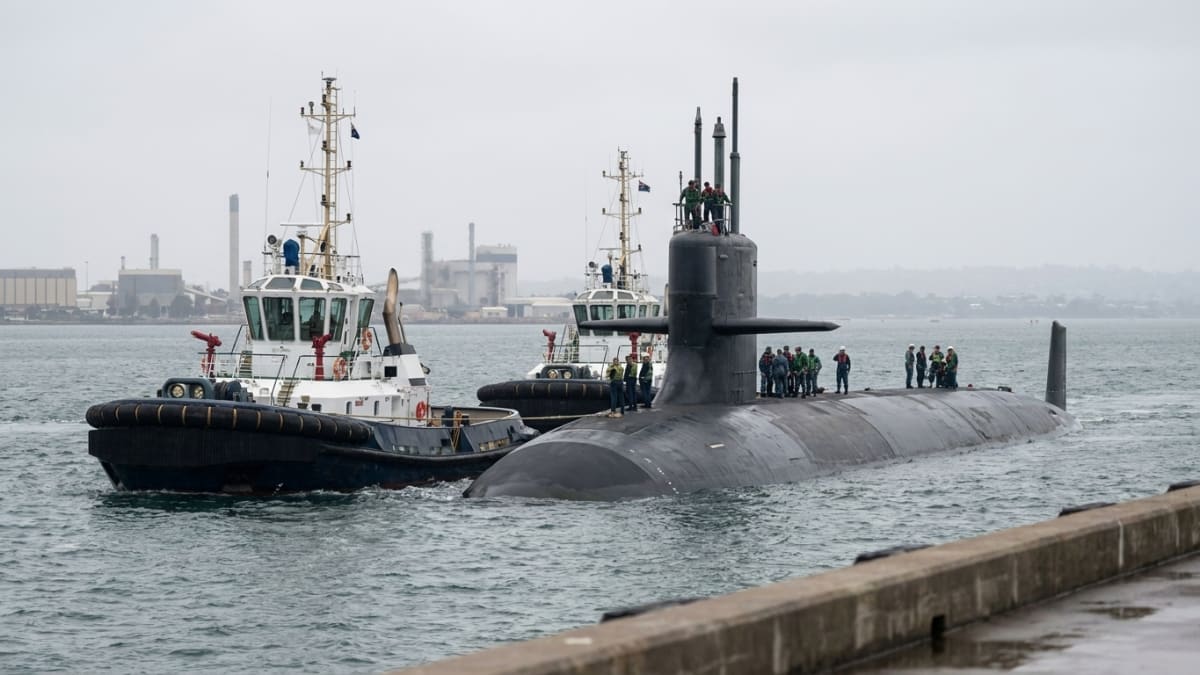
UK and US nuclear-powered submarines will rotate through HMAS Stirling from as early as 2027, giving Australia a five-year window to absorb what cannot be learned in a classroom.[1] The programme operates under the US, Australian Force Posture Agreement and does not constitute permanent basing, a distinction the government has been careful to hold given the diplomatic weight such a designation would carry.[1]
Why in-service boats, not new ones
Australia is not buying new Virginia-class submarines. It is buying three that are already in service, and that choice is the most practically interesting decision embedded in the AUKUS optimal pathway. Conroy pushed back on the word "used", but the logic is straightforward and hard to argue with once said.
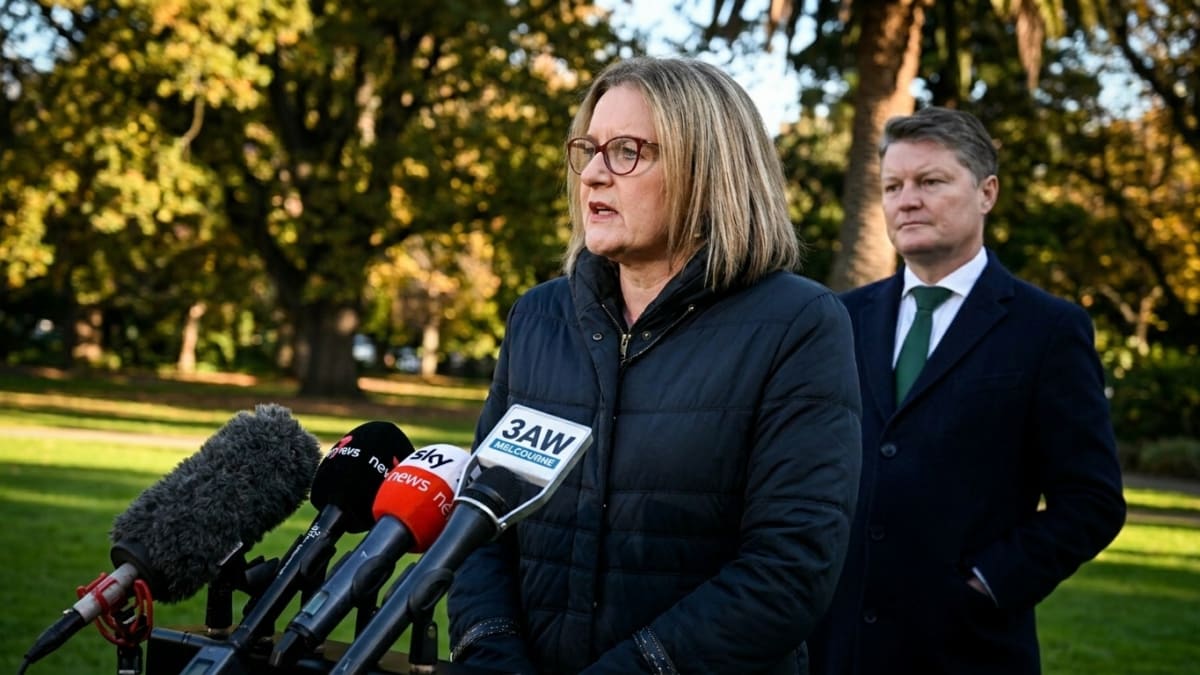
"Acquiring three in-service submarines, I think that's a more appropriate term than used, was our preference when we developed this approach in late 2022. So, this is a better arrangement for Australia." Conroy said.[3] The preference was shaped by a clear-eyed view of where risk sits in a platform's life; new submarines are expensive and unpredictable in their early years, crews are learning and maintenance costs spike.
Conroy said Australia will receive the boats six years after commissioning, past the costly early running period and at peak operational maturity. "By getting them six years in after the first step-up level maintenance, we'll avoid the really expensive, risky running period for any new platform and we'll get them at their peak capability, which is when they're most mature." he said.[3] On a 33-year life cycle, six years in is the sweet spot: past infancy, well short of the maintenance-heavy back end.
What SRF-West actually involves
The Submarine Rotational Force, West is not a homeporting arrangement and it is not a lease of Australian territory to a foreign navy. Allied submarines visit, operate and are maintained at Henderson, with Australian personnel working alongside US and UK crews throughout. The point is proximity and practice; you cannot learn to regulate, maintain and crew a nuclear-powered submarine by reading about it.
The rotations are designed to develop Australian skills to operate, maintain and regulate conventionally armed, nuclear-powered submarines, the specific combination of words that defines what Australia is actually building toward.[1] The submarines carry conventional weapons; the propulsion is nuclear. That distinction matters for international non-proliferation obligations, and Australia has been methodical about framing it correctly at every stage of the AUKUS process.
500 jobs and a workforce built from scratch
The rotation period will sustain approximately 500 direct jobs across 2027 to 2032, anchored at HMAS Stirling and the surrounding Henderson industrial precinct in Western Australia.[2] Those are not make-work positions; they are the nucleus of a sovereign nuclear-submarine workforce that does not currently exist in any meaningful form in Australia.
The workforce challenge is arguably the hardest part of the whole programme. Infrastructure can be built to a schedule and submarines can be acquired on a negotiated timeline, but producing a generation of Australians capable of operating and sustaining nuclear-powered boats takes longer, and mistakes are not recoverable in the way a construction delay is. SRF-West is the mechanism for compressing that learning curve into a defined window.
Western Australia was confirmed as the home for Australia's first nuclear-powered submarines in 2023, chosen partly for its existing naval infrastructure and partly for its strategic geography in the Indo-Pacific.[2] The Henderson precinct south of Fremantle already supports the Collins-class submarine fleet and will underpin the transition to SSNs.
What happens after 2032
When SRF-West concludes, the intention is that Australia has graduated: sovereign-ready to own, operate and sustain its own Virginia-class boats without the rotational training wheels.[1] The Collins class, which has underpinned Australia's submarine capability since the 1990s, will be retiring around that period, creating a capability gap the Virginia-class acquisition is explicitly designed to close.
The sequencing is tight by design. Collins retirements, the SRF-West wind-up and the arrival of the first Australian-owned Virginia-class submarines are meant to overlap rather than leave a gap. Whether that sequencing holds will depend on US shipbuilding capacity, the pace of Australian workforce development and the political durability of the AUKUS arrangement across multiple election cycles in three countries.
Conroy framed the in-service acquisition decision as the right one for managing that risk. Getting boats at peak maturity, on a known maintenance schedule, with a clear remaining service life, is a more predictable proposition than waiting for new builds from a US industrial base already under pressure to meet its own Navy's requirements. The 2032 end-date for SRF-West is the government's marker that it expects to be ready; the next five years will show whether that confidence is warranted.
SOURCES & CITATIONS
FREQUENTLY ASKED QUESTIONS
What is Submarine Rotational Force, West and where will it operate?
Why did Australia choose in-service Virginia-class submarines instead of new ones?
How many jobs will the submarine rotations create in Western Australia?
What happens when SRF-West ends in 2032?
Nadia Petrova writes about geopolitics, defence and foreign affairs. She is interested in how decisions made far away arrive on Australian shores.