
TLDR
Donald Trump declared the second Iran ceasefire 'over' at the NATO summit in Ankara on 8 July 2026, ordered fresh strikes and branded Iran's leaders liars. Two ceasefires have now collapsed since the United States launched Operation Epic Fury on 28 February 2026, with the Qatar-brokered June accord lasting barely ten days. Brent crude futures jumped sharply on the news, ASX 200 futures fell, and Australian motorists face upward pressure at the petrol pump as the Strait of Hormuz flashpoint deepens.
A summit announcement that changed the calculus
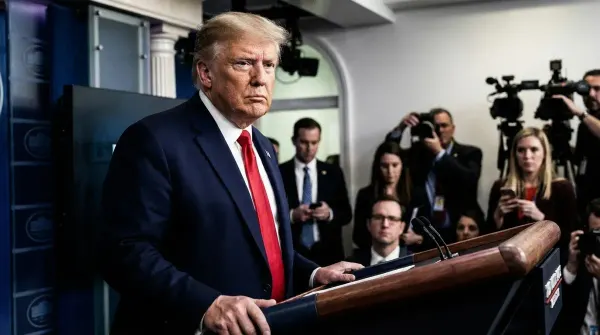
At the NATO summit in Ankara on 8 July 2026, Donald Trump declared the second ceasefire with Iran 'over', branded Tehran's leaders liars and ordered a fresh round of strikes. The United States and Iran had agreed to cease attacks under a Qatar-mediated Memorandum of Understanding on 28 June 2026, with indirect talks convened in Doha just two days later.verifiedVerified Source: dppa.un.org[5] That accord lasted barely ten days before it joined its predecessor in collapse.
Two ceasefires agreed, two ceasefires broken. What began on 28 February 2026 as a targeted American military campaign has become a sustained contest over the terms on which the Gulf and its oil supply function.
From Operation Epic Fury to the first truce
The United States commenced combat operations against the Islamic Republic of Iran on 28 February 2026, invoking its inherent right of self-defence.verifiedVerified Source: digitallibrary.un.org[1] Operation Epic Fury directed U.S. Central Command to destroy Iran's ballistic missile, drone and naval capabilities. Over 38 days, American forces flew more than 10,200 air sorties and struck over 13,000 targets, degrading Iran's defence industrial base by more than 85 per cent.[3]
Secretary of War Pete Hegseth said Trump had shown unparalleled courage and resolve across Iran policy, from the strike on Qasem Soleimani through the termination of the Obama Iran deal to Operation Midnight Hammer and the military outcome achieved in Operation Epic Fury. Hegseth said Iran had sought the ceasefire and Trump had forged the moment.[3]
Trump ordered the ceasefire on 7 April 2026.[2] Tehran formally agreed on 8 April, suspending attacks and reopening the Strait of Hormuz, the waterway through which roughly a fifth of the world's traded oil moves.[3]
How the June truce broke down: Hormuz tanker attacks and the blockade
The first ceasefire did not last the month. On 7 May 2026, U.S. forces struck two Iranian oil tankers near the Port of Jask and the Strait of Hormuz, acting in self-defence against renewed missile and drone attacks.[4] Tehran condemned the strikes as violations of the April truce, and the Gulf was once again an active theatre.
Admiral Brad Cooper, Commander of U.S. Central Command, said U.S. forces in the Middle East remain committed to full enforcement of the blockade of vessels entering or leaving Iran.verifiedVerified Source: centcom.mil[6] That blockade, maintained in parallel with ceasefire negotiations, formed the central tension Qatari mediators spent weeks attempting to bridge.
Qatar's diplomatic effort produced the Memorandum of Understanding signed on 28 June 2026, and indirect talks opened in Doha on 30 June.[5] Eight days later, Trump was at the podium in Ankara.
Two ceasefires, two collapses: the negotiating record in full
The chronology is compressed. Operation Epic Fury began 28 February 2026. The first ceasefire was ordered 7 April and agreed 8 April, covering 38 days of combat. It lasted 29 days before the Jask tanker strikes on 7 May reignited the conflict.[4] The second ceasefire was signed 28 June and declared finished 8 July, a lifespan of ten days.
Each collapse carried its own character. The first broke on a specific military action: the tanker strikes near Jask that Iran framed as deliberate provocation.[4] The second ended with a public declaration from a NATO summit podium, branding a counterparty's leaders liars in a multilateral forum. That is not the grammar of a pause; it reads as a statement of terminal intent.
What the Hormuz flashpoint means for global oil prices
The Strait of Hormuz occupies a singular position in global energy supply. Any sustained interruption, or even a credible threat of one, moves the price of crude faster than almost any other geopolitical event. The collapse of the June ceasefire drove Brent crude futures sharply higher as markets priced in renewed risk to tanker traffic and Iranian export flows.
The U.S. blockade, which Admiral Cooper said is fully enforced, adds pressure beyond the immediate military exchanges. Vessels attempting to enter or leave Iranian ports risk interdiction, constraining Iranian oil exports independently of whatever ceasefire state officially pertains. The combination of active hostilities and a maintained blockade means the Hormuz premium in crude pricing is unlikely to dissipate while Trump's 8 July declaration stands.
Australian exposure: ASX and petrol pump prices
Australia imports refined fuel and is exposed to global crude benchmarks through both the petrol pump and equity markets. ASX 200 futures fell on risk-off sentiment following the Ankara announcement, consistent with the response to previous flashpoints in the current crisis.
At the pump, the transmission is less immediate but no less real. Australian petrol prices track Singapore benchmark prices, which in turn track Brent. A sustained elevation in Brent crude, driven by continued uncertainty over Hormuz transit, will feed through to retail forecourts over weeks rather than days. Operation Epic Fury began on 28 February 2026; by 8 July, Australian motorists were absorbing the downstream consequences of a conflict now in its fifth month.
KEY TAKEAWAYS
SOURCES & CITATIONS
- UN Digital Library, U.S. communication on combat operations against Iran, 10 March 2026
- White House, Statement of Administration Policy, SJR163, 13 May 2026
- White House, Peace Through Strength: Operation Epic Fury ceasefire announcement, 8 April 2026
- UN Digital Library, Security Council document S/2026/392, 8 May 2026
- UN DPPA, UN calls for maximum restraint to preserve ceasefire between the United States and Iran, 2 July 2026
- U.S. Central Command, US disables 2 more vessels violating blockade in Gulf of Oman
FREQUENTLY ASKED QUESTIONS
What is Operation Epic Fury?
Why did the first Iran ceasefire collapse?
What was the Qatar-mediated ceasefire?
How does the Iran conflict affect Australian petrol prices?
Important
This article contains commentary on commodity prices and equity market movements. This information is general in nature and does not constitute financial advice. Before making any investment decision, consult a licensed financial adviser. Past market movements do not guarantee future results.