
TLDR
Google's Pixel Watch 5 uses AI to monitor multi-week metabolic shifts via heart rate, skin temperature and motion sensors, with no blood draw required. The feature carries no FDA clearance and is not a diagnostic tool. It ships 20 August from US$399.
What Google announced
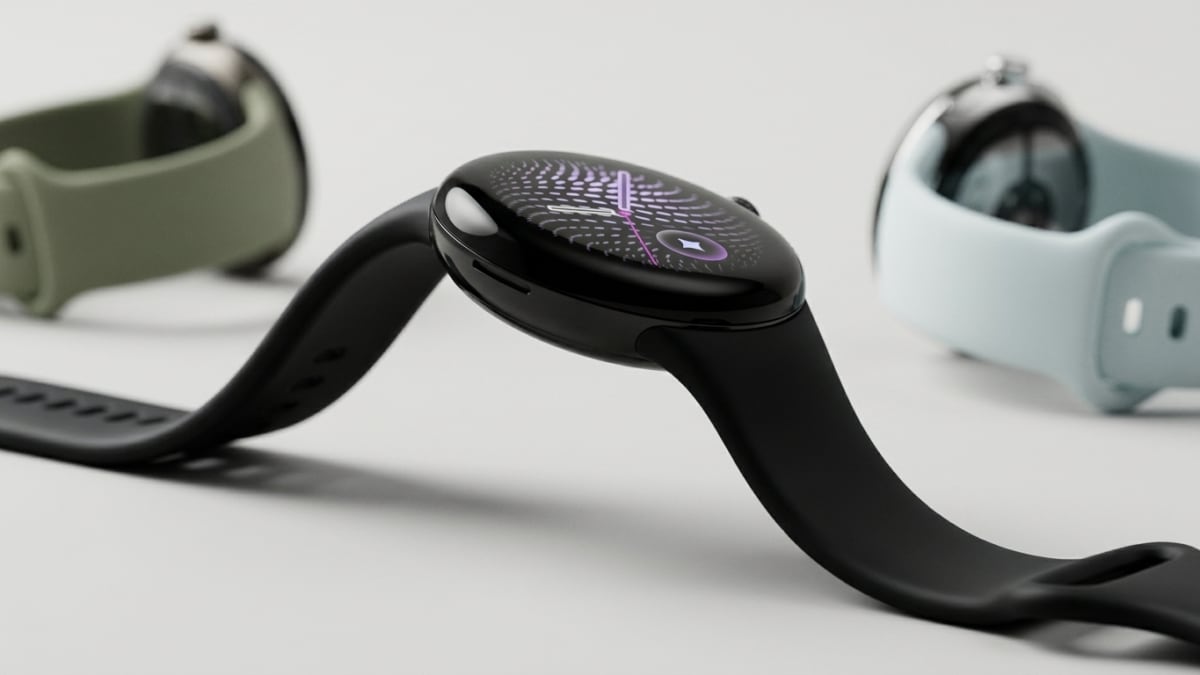
Google is shipping a wearable feature that attempts to track insulin resistance without a needle, a lab requisition or a finger-prick device. The Pixel Watch 5, launching 20 August 2026 from US$399, is the first device to carry Insulin Resistance Trends, an AI-driven capability Google says "analyzes multi-week physiological data to track shifts in your metabolic health without requiring a single drop of blood."[1] That is a large claim for a consumer device containing no blood chemistry sensor of any kind.
The announcement positions metabolic health as the next frontier for wrist-worn technology, moving well beyond step counts and resting heart rate into territory that until now belonged to clinical pathology. Whether the feature delivers on that positioning depends heavily on what the sensors can actually detect and what the AI model does with that data.
What the sensors measure and what they do not
Insulin Resistance Trends uses AI to analyse heart rate, skin temperature, accelerometer and barometer readings, and does not measure or display blood glucose at any point.[1] The system works longitudinally, averaging these signals across multiple weeks to detect shifts away from a user's individual baseline rather than delivering a single-point reading. That distinction matters: the feature is not attempting to substitute for a continuous glucose monitor or a fasting insulin blood draw.
Google Research has published work linking wearable sensor data to routine blood biomarkers, with the methodology relying on large datasets that connect sensor signals to clinical measurements taken separately.[3] The model learns what a person's sensor profile looks like when insulin resistance is elevated, then flags when a user's own readings begin to shift in that direction. It is pattern recognition across time, not biochemistry.
The regulatory picture
The U.S. Food and Drug Administration has been explicit on this territory. "The FDA has not authorized, cleared, or approved any smartwatch or smart ring that is intended to measure or estimate blood glucose values on its own," the agency said in a formal safety communication.[4] Google's feature does not claim to measure glucose, which keeps it outside the specific scope of that warning, but the broader regulatory caution about consumer wearables entering clinical territory remains live.
Google Research states directly that its insulin resistance models and IR Agent are not medical devices and have not been cleared, approved or reviewed by the FDA or any regulatory agency.[3] Users drawn to the feature may be living with pre-diabetes, managing family history or acting on metabolic health concerns, and the gap between a trend signal and a clinical assessment is not semantic. Acting on wearable trend data without medical supervision carries real risk.
What the feature can and cannot tell you
Insulin resistance is a recognised precursor to type 2 diabetes, which gives trend data in this space genuine clinical relevance if the underlying model is accurate.[3] Detecting a shift in metabolic baseline weeks before a user notices symptoms, and prompting a conversation with a GP or a review of diet and activity, has real value. The feature is designed to surface those multi-week patterns and encourage earlier lifestyle intervention, not to deliver a diagnosis.
What it cannot do is replace a fasting blood test, a continuous glucose monitor or a clinical assessment. Any shift flagged by the feature is a statistical correlation drawn from population-level training data, applied to an individual user's wrist-based signals. Users should treat an alert as a prompt to seek medical advice, not as a finding.
The rollout and what comes next
The Pixel Watch 5 carries the feature at launch on 20 August, with the broader rollout arriving in September 2026 across the Pixel Watch 3, Pixel Watch 4 and the new Fitbit Air via software update.[2] That staged release means a large installed base of existing Pixel Watch users will gain access to the capability without buying new hardware, which is notable given the metabolic health framing is Google's most significant health pitch for the platform.
Metabolic health monitoring through passive, non-invasive sensors is the space every major platform wants to occupy. Apple, Samsung and Fitbit have all gestured toward it; Google is now shipping something. Whether regulators move to classify trend-based metabolic features as medical devices will shape how the industry develops, and the Pixel Watch 5 goes on sale 20 August 2026 from US$399.
KEY TAKEAWAYS
SOURCES & CITATIONS
FREQUENTLY ASKED QUESTIONS
Does the Pixel Watch 5 measure blood glucose?
Has the feature been approved by the FDA?
Which devices will receive Insulin Resistance Trends?
Why does insulin resistance matter?
Jonas Valenti writes about search and how businesses get discovered. He has spent years watching what makes a company visible online, and is unsentimental about tactics that no longer work.