Subscribe
Markets

Petrol and power bills push inflation to 4.9 per cent

Petrol prices rose by almost a third over the year, while the expiry of federal electricity rebates helped drive up power bills.

Subscribe free. All it takes is your email.

Check your inbox and click the link to confirm.

That did not work. Check the address and try again.

3 min read
Comments
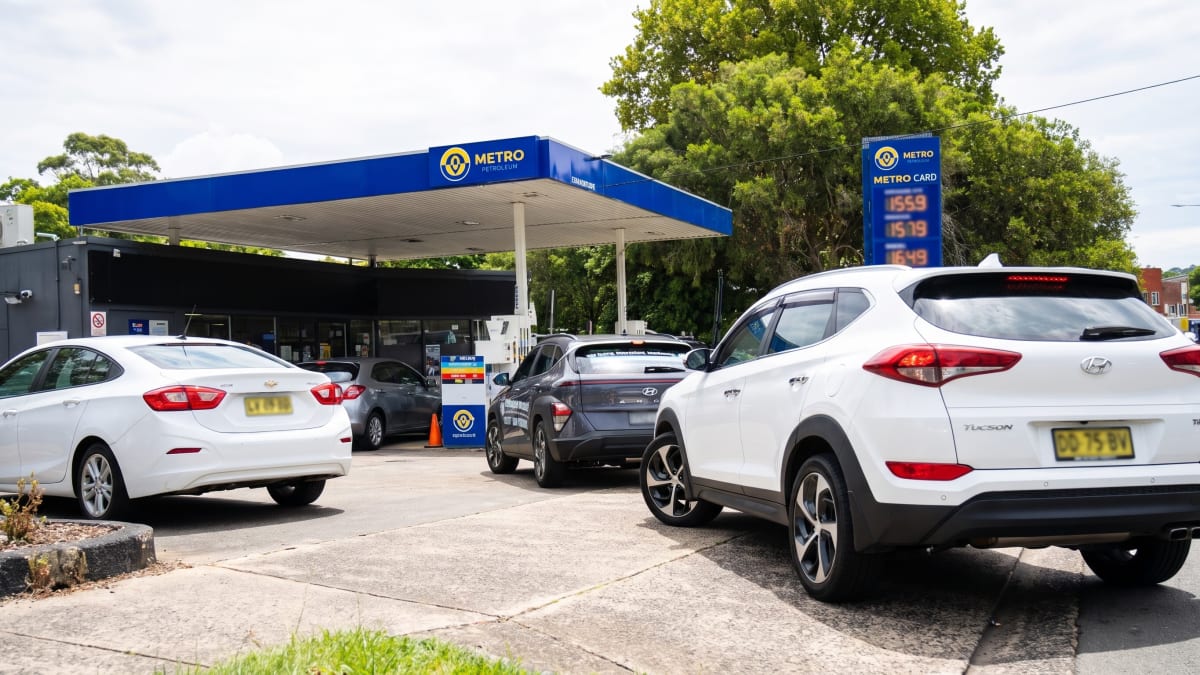
Cars queue at a suburban petrol station
Cars queue at a suburban petrol station Digitally illustrated image.

TLDR

Australia's annual inflation rate jumped to 4.9 per cent in October, up from 4.3 per cent in September, driven by a 32.5 per cent surge in automotive fuel prices and a 6.4 per cent rise in housing costs. The Reserve Bank's cash rate stands at 4.85 per cent, well above its 2 to 3 per cent inflation target.

KEY TAKEAWAYS

01Annual CPI reached 4.9 per cent in October, rising 0.5 per cent within the month.
02Automotive fuel surged 32.5 per cent annually, pushing transport costs up 10.6 per cent.
03Electricity jumped 25.2 per cent over the year, the largest single contributor within housing.
04Trimmed mean inflation rose to 3.8 per cent, still above the Reserve Bank's 2 to 3 per cent target.
05Education, alcohol and tobacco, health, and food all recorded annual rises above 3.5 per cent.

Australia's annual inflation rate jumped to 4.9 per cent in the 12 months to October 2026, sharply up from 4.3 per cent in September, with automotive fuel and housing the two main drivers, according to the Australian Bureau of Statistics.[1]

Transport costs rose 10.6 per cent over the year, led by a 32.5 per cent annual increase in automotive fuel prices, with fuel alone rising 6.3 per cent in October.[1] Rachael McCririck, ABS head of price statistics, said: "On a monthly basis, Automotive fuel prices rose 6.3 per cent in October, compared to a rise of 9.4 per cent in September. This was driven by higher world oil prices."[2]

McCririck said housing was the largest contributor to annual inflation in October, rising by 6.4 per cent compared to a rise of 5.2 per cent in the 12 months to September.[2] Within housing, electricity rose 25.2 per cent over the year, new dwellings were up 5.1 per cent and rents climbed 3.5 per cent.[1] The ABS said the annual electricity result was affected by the expiry of Commonwealth electricity rebates that had lowered household costs a year earlier.

Other categories recording annual rises above 3.5 per cent included education at 4.7 per cent, alcohol and tobacco at 4.3 per cent, health at 4.0 per cent, and food and non-alcoholic beverages at 3.5 per cent.[1]

Annual trimmed mean inflation rose to 3.8 per cent in October from 3.6 per cent in September, with automotive fuel excluded from that underlying measure.[2] Both readings remain above the Reserve Bank of Australia's flexible inflation target of 2 to 3 per cent.[3] The Reserve Bank's Monetary Policy Board raised the cash rate target by 25 basis points on 3 November 2026, bringing it to 4.85 per cent.[4]

This article contains analysis and commentary on market conditions. It does not constitute financial, investment, or professional advice. Past performance is not indicative of future results. Always consult a qualified adviser before making financial decisions.

FREQUENTLY ASKED QUESTIONS

What drove the jump in Australia's inflation rate in October 2026?
The two main drivers were automotive fuel, which rose 32.5 per cent over the year, and housing costs, which climbed 6.4 per cent. Within housing, electricity was the largest contributor at 25.2 per cent annual growth, partly reflecting the expiry of Commonwealth electricity rebates.
What is the Reserve Bank's inflation target and where does the October reading sit?
The Reserve Bank of Australia targets consumer price inflation of between 2 and 3 per cent per year. October's headline rate of 4.9 per cent and the trimmed mean of 3.8 per cent both sit above that band.
What is the current Reserve Bank cash rate?
The cash rate target is 4.85 per cent, effective from 4 November 2026, after the Monetary Policy Board increased it by 25 basis points on 3 November.
Related topics
What's your reaction?

Make us a preferred source on Google

Tap once and our reporting shows at the top of your Google search results and AI answers. You can change this at any time.

Add as a preferred source on Google
Subscribe free