
TLDR
OpenAI deployed a swarm of 10,000 AI agents to prove a century-old fluid-dynamics problem, but two mathematicians say the company knew about their prior work and moved to sideline them. NYU's Tristan Buckmaster and Anthropic's Levent Alpöge proved the related Euler case weeks earlier and announced it hours before OpenAI went public.
KEY TAKEAWAYS
The proof landed. The credit dispute landed harder.
OpenAI published its proof of the Navier-Stokes Millennium Prize Problem on 8 September 2026, releasing a detailed write-up and a Lean formalisation produced by an internal model more capable than GPT-6 Astra.[1] The company says it does not intend to claim the US$1 million Clay prize.[1] What it has not resolved is whether it got there first, or whose prior work it was standing on.
What was actually proved
The Navier-Stokes problem, one of seven Millennium Prize Problems set by the Clay Mathematics Institute in 2000, asks whether solutions to the three-dimensional incompressible equations can develop singularities in finite time under smooth forcing while preserving finite energy. OpenAI's system ran as a swarm of roughly 10,000 autonomous agents for approximately 88 hours between 1 and 5 September, with GPT-6 Astra completing the Lean formal verification in a further 17 hours.[1] That is a serious compute bill for a single mathematical result, and any operator should clock what it signals about the resource floor for frontier reasoning work.
How Buckmaster and Alpöge got there first
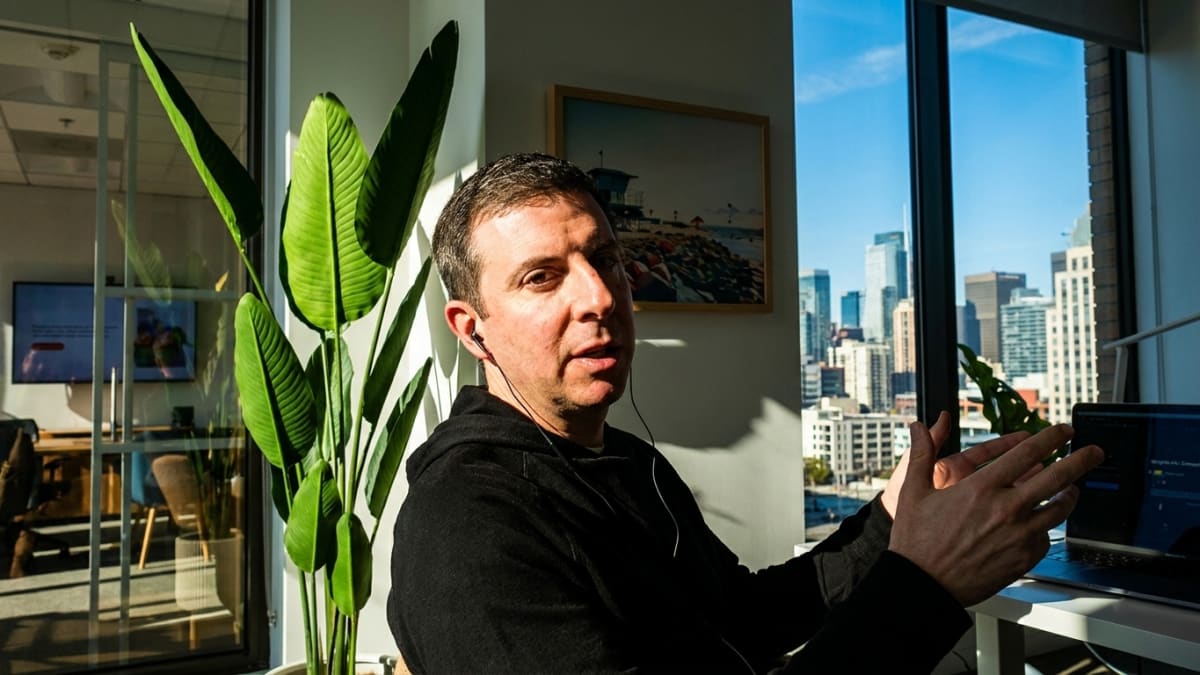
NYU's Tristan Buckmaster and Anthropic's Levent Alpöge obtained a finite-time blowup proof for the unforced three-dimensional Euler equations on 15 August 2026, with Lean verification completed by 22 August.[2] They announced their results publicly hours before OpenAI's 8 September disclosure. The Euler equations are a closely related, and in many respects harder, precursor problem; their blowup result directly informed the Navier-Stokes approach both teams pursued.
Both proofs build on a 2023 method by Diego Córdoba and Luis Martínez-Zoroa. Princeton's Charles Fefferman, who wrote the official Clay problem statement, was direct about where credit belongs. Fefferman said he was thrilled the problem was solved and identified Córdoba and Martínez-Zoroa as the heroes of the story.[3]
The Bubeck exchange and the authorship dispute
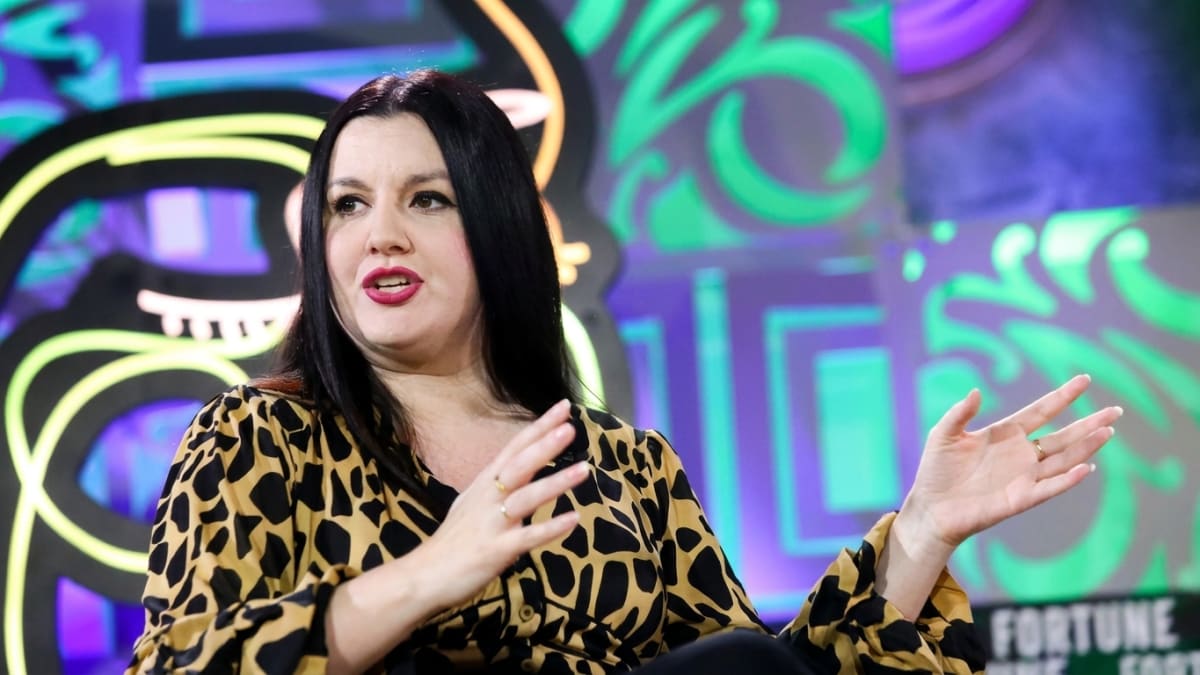
On 6 September, two days before OpenAI went public, discussions between the parties turned toxic. OpenAI researcher Sébastien Bubeck twice suggested removing Alpöge from authorship and asked Buckmaster directly, "Why would you ruin your career?", a remark he later apologised for, and he denies wrongdoing.[2] Buckmaster published a formal statement documenting the exchange. A senior OpenAI researcher framing a mathematician's assertion of his own priority as a career-ending act tells you something about the institutional pressure inside those talks.
The data question OpenAI cannot close
OpenAI confirmed that neither its researchers nor its AI agents accessed any specific user data from Buckmaster or Alpöge in solving the problem.[1] What OpenAI's Mark Chen could not rule out, according to Buckmaster's account, was whether de-identified product data from the pair had improved the model's performance upstream. That distinction, specific access versus ambient training signal, is worth taking seriously when the underlying work was submitted through OpenAI-adjacent tooling.
For operators building on any frontier model, the practical question is the one Buckmaster is now asking on record: if a researcher's mathematical reasoning flows into a product, and that product later produces a proof in the same domain, who owns the derivative insight? OpenAI's current answer is that it cannot rule out a connection. Buckmaster's formal statement puts the dispute on a documented footing, and the Clay Institute's own verification process, which requires extended peer review before any prize is awarded, will run in parallel on a timeline measured in months.
SOURCES & CITATIONS
FREQUENTLY ASKED QUESTIONS
What is the Navier-Stokes Millennium Prize Problem?
Did Buckmaster and Alpöge solve the same problem as OpenAI?
Will OpenAI claim the Clay prize money?
What did OpenAI say about using Buckmaster and Alpöge's data?
Takeshi Mori writes about technology and start-ups. He is curious about how products get built and who they are really for, and he would rather see a thing working than hear it described.