TLDR
Barn temperatures above 40 °C cut cow milk yields by up to 10% across Emilia-Romagna in July 2026, directly threatening Parmigiano Reggiano's €3.96 billion annual production chain. EU protected designation of origin rules lock the entire supply chain inside five defined Italian provinces, blocking any geographic workaround. Warehouses storing more than 500,000 aging wheels worth over €300 million saw energy bills surge 30% as operators fought to hold temperatures steady. Australian dairy producers face a parallel squeeze, with record January 2026 heat in South Australia already forcing herd reductions and emergency water transport.
KEY TAKEAWAYS
What the heat is doing to cows and milk supply
Barn temperatures cracked 40 °C across Emilia-Romagna during July 2026 heatwaves, and the cows felt it straight away. Yields dropped by up to 10% when temperatures inside sheds exceeded that threshold, squeezing the raw milk supply that feeds one of Europe's most tightly regulated food chains.verifiedVerified Source: reuters.com[1]
Nicola Bertinelli, President of the Parmigiano Reggiano Consortium, was blunt about the compounding pressure. "Extreme heat impacts milk's quality and quantity," Bertinelli said, adding that the rainfall deficit was equally damaging: "If it doesn't rain, grass doesn't grow, hay cannot be produced and it's impossible to obtain the milk needed to make the cheese."verifiedVerified Source: reuters.com[1]
Why PDO rules leave producers nowhere to move
EU protected designation of origin rules require that every litre of milk used in Parmigiano Reggiano be produced, processed and aged entirely within a defined zone spanning five provinces in northern ItalyverifiedVerified Source: backend.parmigianoreggiano.com, covering parts of Emilia-Romagna and a slice of Lombardy.[4] That single constraint removes every obvious escape route: herds cannot be relocated to cooler ground, outside milk cannot be sourced, and feed rules tied to local forage cannot be waived.
The PDO specification also mandates that cows be fed only local forage, tying the cheese's quality directly to the same pastures drying out in the heat.[4] Bertinelli's rain comment is not rhetorical: without local hay, the production chain stalls at its very first step.
The cost of keeping 500,000 wheels cool
Downstream from the farms, warehouses are absorbing costs of their own. More than 500,000 wheels of aging Parmigiano Reggiano, collectively worth over €300 million, are stored across two climate-controlled facilities in Reggio Emilia and Modena, run by the Magazzini Generali delle Tagliate.[1]
Giancarlo Ravanetti, Director of Magazzini Generali delle Tagliate, said the strain on infrastructure was measurable and immediate. "During this year's peak heatwaves, our daily energy consumption rose by about 30%," Ravanetti said.[1] A single percentage-point rise in ambient warehouse temperature risks accelerating the aging chemistry that gives each wheel its certified character, so the energy spend is non-negotiable.
What farmers are spending to stay viable
Dairy farmers inside the PDO zone are investing in barn cooling systems, including industrial fans, water misters and upgraded ventilation, to hold heat stress below the threshold where yields collapse. Climate models project northern Italy will experience more frequent and intense heatwaves, meaning these are capital investments against a baseline that keeps shifting upward.
The Parmigiano Reggiano Consortium recorded €3.96 billion in consumption revenue in 2025 and produced over 4.19 million wheels, with more than half of total marketed volume exported.[2] That export dependency amplifies the stakes: a sustained yield decline does not just squeeze domestic margins, it threatens supply commitments across dozens of international markets at once.
The Australian dairy parallel
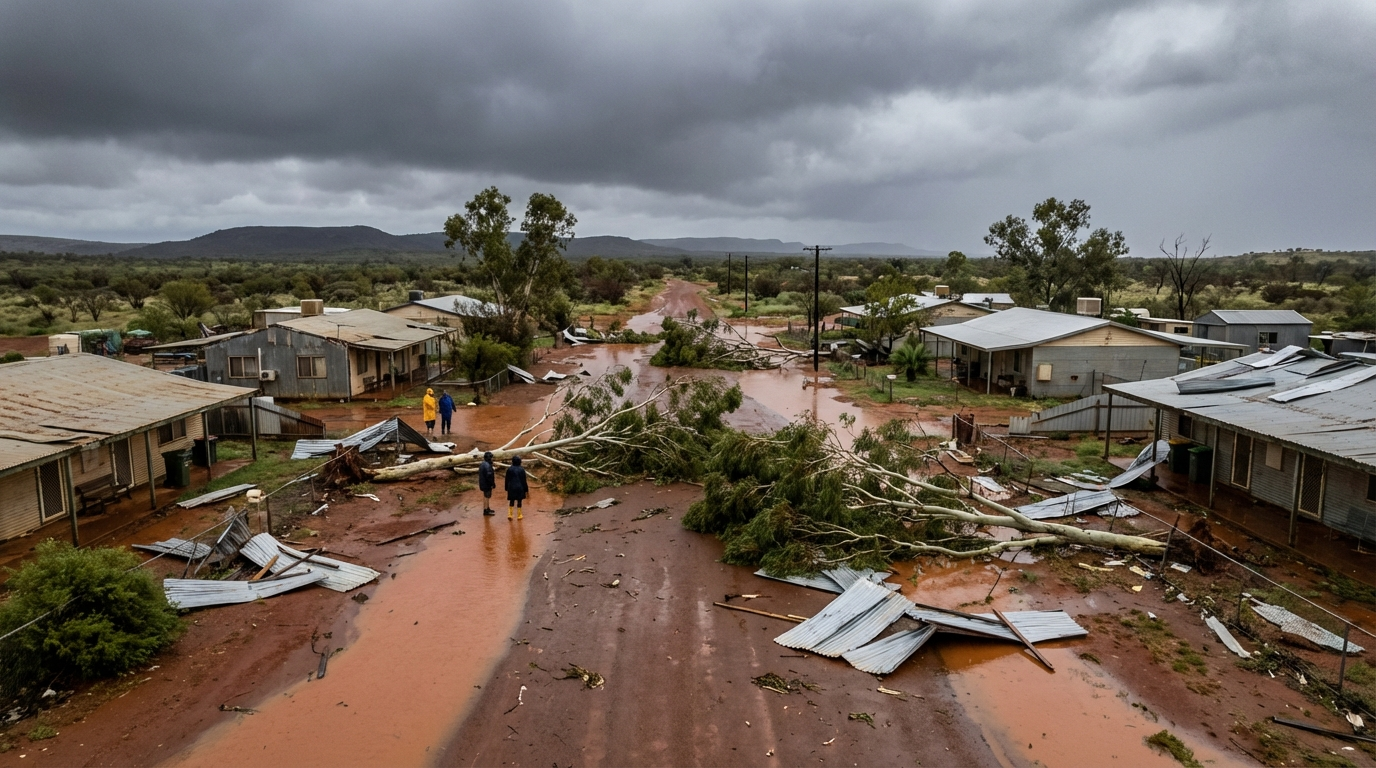
The pressure is not confined to Italy. Record-breaking heatwaves struck Southeast South Australia in January 2026, exacerbating livestock water shortages and prompting farmers to reduce herd sizes and cart water to properties that could no longer sustain supply from existing sources.[3]
Australian dairy producers are deploying the same adaptation toolkit as their Italian counterparts: cooling investments, irrigation upgrades and sourcing alternative feed when local forage fails. Australian farmers are not locked inside a geographic PDO boundary, giving them at least some flexibility to adjust supply chains that Italian producers simply do not have.[3]
Dairy Australia's February 2026 weekly hay report flagged the January heat event as a material production risk across South Australian herds, with water cartage costs and emergency feed procurement already registering on farm-level balance sheets before the end of the first month of the year.[3]
SOURCES & CITATIONS
FREQUENTLY ASKED QUESTIONS
Why can't Parmigiano Reggiano producers source milk from cooler regions?
How much does extreme heat actually reduce milk output?
What is the scale of the Parmigiano Reggiano industry?
Are Australian dairy farmers facing the same heat pressures?
Caleb Reed covers breaking news and sport. He works to the rhythm of a story as it unfolds, and he is happiest when the facts arrive faster than anyone can spin them.