
TLDR
Paris police locked down Place de la République and Les Halles overnight after riots on 17 October, with curfews for minors following in Lille, Nice and northern cities. President Macron refused Interior Minister Laurent Nunez's resignation, keeping him in charge of the security response.
Paris zones locked down as curfew orders spread
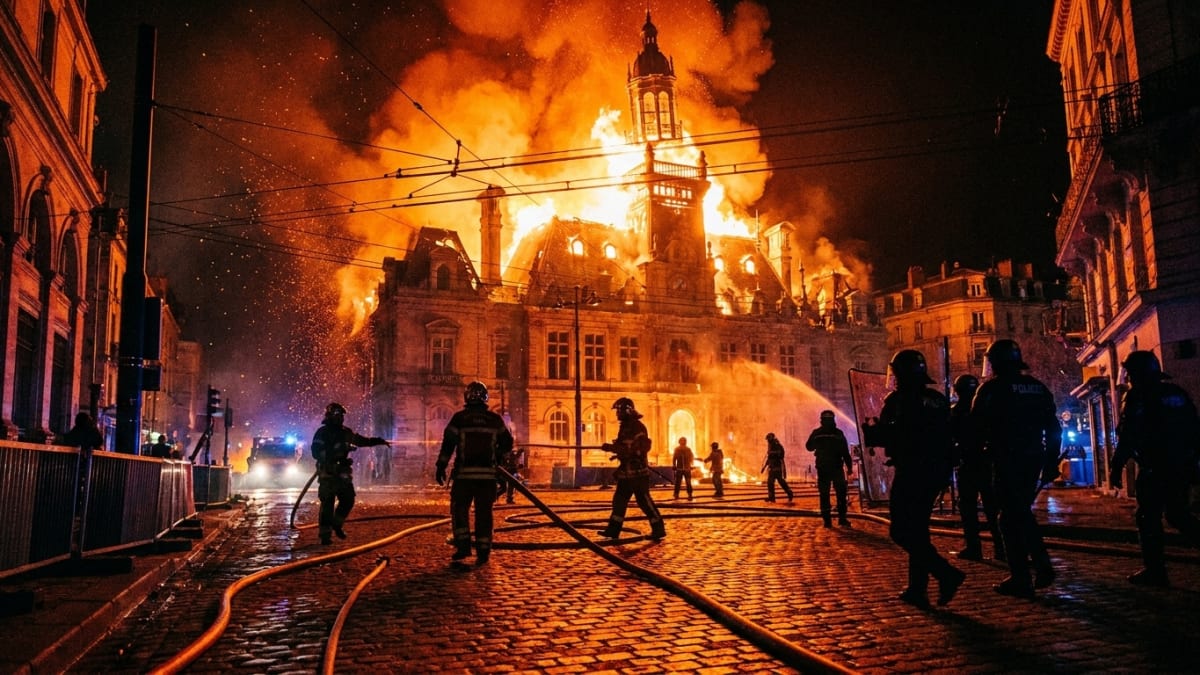
Paris police imposed an overnight curfew from 11pm Monday to 6am Tuesday, banning anyone from entering or remaining at Place de la République and the Les Halles district, and banned gatherings from 8pm, to protect "people and property from the violence and looting".[1] Both sites were focal points of the 17 October riots, when demonstrators clashing with security forces caused widespread property damage and looting across Paris.
Prime Minister Sébastien Lecornu directed prefects to trigger a series of partial, highly localised curfews across affected areas, telling reporters he had asked prefects to trigger a number of curfews that would be partial and could be very localised.[2]
Lecornu calls survival without deaths a miracle
Speaking on 19 October, Lecornu acknowledged the severity of Saturday's disturbances. "Despite scenes of severe violence and extensive property damage, no one was killed, and that is a miracle," he said.[3]
The riots began as protests over rising living costs before escalating into clashes with police, the vandalising of public buildings and looting.
Minors restricted in Lille, Nice and northern cities
Lille and several other northern cities introduced curfews restricting under-18s after Saturday's unrest, aiming to prevent further youth involvement in overnight disturbances.[4] Nice followed with its own curfew on minors for the same purpose.[4]
Macron keeps Nunez in command
Interior Minister Laurent Nunez offered his resignation on Sunday, and President Emmanuel Macron refused it, citing the need for continuous command of security forces.[5]
Unrest spreads across Europe
The unrest that began in France has spread to six countries, with the cost of living the most common grievance, the ABC reported.[6] In Madrid, protests began after 87-year-old Maricarmen Abascal was evicted from her home of 70 years by an investment firm; she died in hospital two weeks later. Spain is heading for snap elections on 29 November.[6]
KEY TAKEAWAYS
SOURCES & CITATIONS
- AP News: France riots and curfew measures
- French Government: Prime Minister Lecornu statement
- French PM urges curfews in some areas after riots, AAP
- Al Jazeera: Macron declines minister's resignation after violent protests
- Euronews FR: Macron refuse la démission de Nunez
- Why protests are spreading across Europe, ABC News
FREQUENTLY ASKED QUESTIONS