
TLDR
Parliament passed a 30 per cent minimum tax on discretionary trust income by 26 November, and becomes law on Royal Assent. About 848,000 trusts face a binding decision by 1 July 2028: pay the new rate, lock in fixed distributions, or restructure. CPA Australia puts the advice bill alone at up to $2.8 billion.
What passed and when
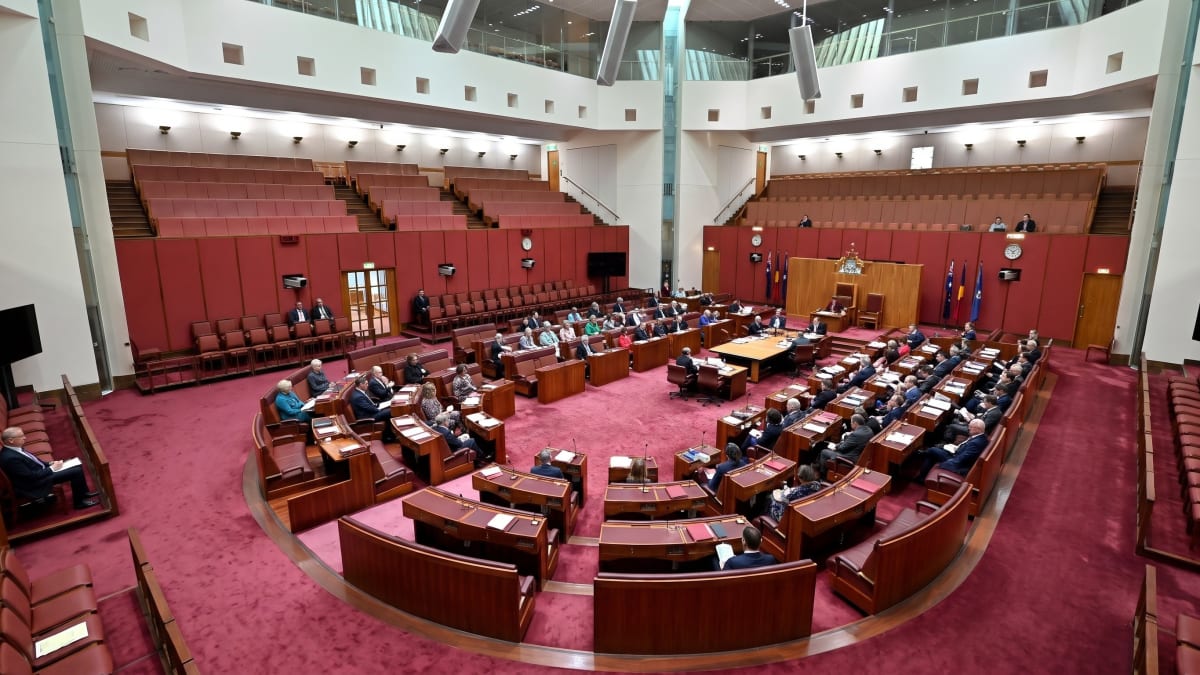
The Senate passed the Income Tax Rates Amendment (Minimum Tax on Discretionary Trusts) Bill 2026 on 25 November. The companion Treasury Laws Amendment (Tax Reform No. 3) Bill was amended in the Senate and returned to the House, which agreed to those amendments on 26 November.[1] The package has cleared Parliament and becomes law on Royal Assent.
Treasurer Jim Chalmers said the reforms were "all about making the tax system fairer by better aligning the tax rate on trust income with tax rates paid by workers, and will help fund income tax cuts for workers."[2] Treasury says more than 90 per cent of small businesses will not be affected, and the measure excludes primary-production income, fixed trusts, widely held trusts, complying superannuation funds, special disability trusts, deceased estates and charitable trusts.[2]
Greens support for the package followed a government agreement to remove the fuel-excise advantage for private-jet owners and to provide additional enforcement funding covering trusts and non-DGR charities.[5]
Three choices for family businesses and farms
The Council of Small Business Organisations Australia identifies three paths for affected trustees: pay the new minimum tax, undertake a restructure, or make a binding election that fixes the beneficiaries' distribution shares and removes the flexibility that defines a discretionary trust.[3] Skye Cappuccio, chief executive of COSBOA, said the government was "leaving affected businesses with three bad choices: pay more tax, undertake a costly restructure, or lock themselves into fixed distributions and lose the flexibility they rely on."
Catherine Sayer, chief executive of the Family Business Association, said the cumulative burden on operating family firms was severe. "First comes a higher tax bill. Then the fees to work out what to do about it. Then the cost of restructuring, with stamp duty on top. And if the family takes the election the government offers and gets one year wrong, they pay a penalty tax rate."[6]
Sayer said the overall effect amounted to "death by a thousand cuts for a family that runs a trading business through a trust."[6] COSBOA and the Family Business Association say the trusts most exposed are operating family firms that use the structure for succession planning and variable income arrangements as ownership changes over time.
| Date | What happens |
|---|---|
| 25 November 2026 | Senate passes the minimum tax bill |
| 26 November 2026 | House agrees to Senate amendments |
| 1 July 2027 | Commonwealth rollover relief for restructures begins |
| 1 July 2028 | 30 per cent minimum tax applies to trustees |
| 30 June 2030 | Rollover relief ends |
Double-tax risk for bucket companies and the rollover-relief window
CPA Australia's submission to Treasury warns that corporate beneficiaries will not receive the trustee-level minimum-tax offset, and models cumulative tax on $100 of trust income distributed to a company at 55 to 60 per cent while the income stays in the company, rising to between 68.2 and 69.71 per cent if later paid as a dividend to a shareholder on the top marginal rate.[4]
CPA Australia estimates the professional advice bill for the 848,561 trusts that lodged returns in the ATO's 2023-24 statistics at $2.0 billion to $2.8 billion, before any restructuring, implementation or state stamp-duty costs are counted.[4]
Treasury's proposed transition provides expanded Commonwealth rollover relief for three years from 1 July 2027 for businesses that restructure out of discretionary trusts, covering the federal tax consequences of the move.[2] That relief does not, by its own terms, remove possible state or territory stamp-duty liabilities, leaving the full cost of restructuring dependent on each jurisdiction's duty regime. Royal Assent will start the formal countdown to the 1 July 2028 commencement date.
KEY TAKEAWAYS
SOURCES & CITATIONS
- Hansard, House of Representatives, 26 November 2026
- Treasurer Jim Chalmers, Consultation on discretionary trusts reform implementation
- COSBOA, Small business holds its breath as Senate faces critical final sitting week
- CPA Australia submission, Minimum tax on discretionary trusts
- Australian Greens media release, Greens secure tax hit on jetsetting billionaires
- Family Business Association media release, Trust changes damaging for operating small and family businesses
FREQUENTLY ASKED QUESTIONS