
TLDR
OpenAI is quietly testing a new 'Agent' campaign type inside its Ads Manager that replaces the destination website with a live, advertiser-configured AI conversation. Advertisers can supply product feeds, Model Context Protocol tool access and lead-capture forms, meaning a single ad click can qualify, sell and capture a lead without the user ever leaving ChatGPT. The option is visible only to select advertisers, and e-commerce analyst Juozas Kaziukenas was first to publicly flag it on LinkedIn. Pricing and a general rollout date remain undisclosed, and OpenAI has not confirmed when the format will reach all accounts.
KEY TAKEAWAYS
The click no longer goes anywhere
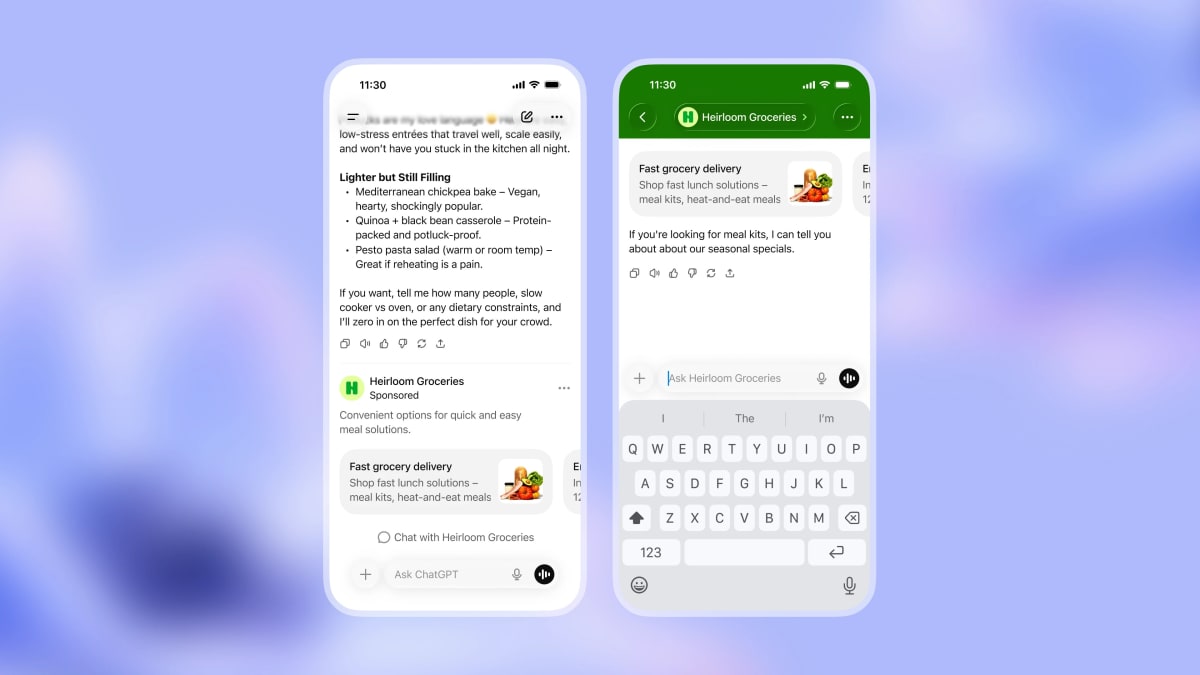
Every digital ad format built since the 1990s rests on the same assumption: click, land, convert. OpenAI is now testing something that breaks that chain. A new campaign type labelled 'Agent' has appeared inside the ChatGPT Ads Manager for select advertisers, and instead of routing the user to a brand's website, it drops them into a live AI conversation that the advertiser has configured in advance.
E-commerce analyst Juozas Kaziukenas posted his findings on LinkedIn after spotting the option in the platform. The format was not visible across all advertiser accounts at the time of reporting, and OpenAI has not issued a public announcement about the Agent campaign type or its availability.
How the agent is built
OpenAI uses dedicated web crawlers, including one identified as OAI-AdsBot, to validate advertiser landing pages and gather site data, with advertisers instructed to permit those crawlers via their robots.txt files.[3] That crawled data feeds the agent's base knowledge of the advertiser's product or service. From there, the setup pulls in merchant product feeds, Model Context Protocol tool integrations and embedded lead-capture forms, giving the agent the means to answer product questions, check inventory and collect a prospect's details without the user opening a new tab.
OpenAI added support for merchant product feeds to its Ads Manager Beta on 2 June 2026, enabling automatic creation of catalogue-based ads at scale.[6] Those feeds, which originated in ChatGPT's Instant Checkout pilot, are now the same data layer the Agent format draws on to populate product-specific conversations. An advertiser selling twelve variants of a running shoe can configure one agent that handles all of them dynamically, rather than building twelve separate landing pages.
What changes for the advertiser
A traditional click-through campaign measures success by what happens on the advertiser's own domain: page views, add-to-cart events, form submissions. When the conversation stays inside ChatGPT, those on-site signals disappear, and advertisers would instead rely on OpenAI's own measurement infrastructure.
The existing Ads Manager Beta already supports conversion measurement via both an OpenAI Pixel and a Conversions API, alongside cost-per-click and cost-per-mille bidding.[2] Whether those tools extend cleanly to Agent-format outcomes, where a lead is captured inside a chat thread rather than on a landing page, has not been clarified by OpenAI. Brand-safety controls for the conversational environment also remain publicly unaddressed.
For performance marketers accustomed to split-testing landing pages and controlling every pixel of the post-click experience, surrendering that environment to an AI intermediary is a real concession. The upside, in theory, is a more fluid purchase path: a user who asks a follow-up question mid-consideration no longer has to navigate away, wait for a page to load and re-establish context. The agent holds the thread.
What remains unknown
OpenAI has not publicly disclosed pricing for the Agent campaign type, nor a timeline for broader rollout.[5] The format's appearance in select accounts without announcement follows a pattern OpenAI has used across its ads rollout: surface the feature quietly, gather data, then communicate publicly once scope and pricing are settled.
At least three open questions will determine how seriously the industry takes the format. First, how does OpenAI define and report a conversion when it occurs inside a chat session? Second, what guardrails exist to prevent the agent from making claims the advertiser did not authorise? Third, how is the agent conversation labelled to the user as a sponsored interaction, given OpenAI's existing commitment to clearly marking ads?
On that last point, OpenAI's head of business Fidji Simo said: "Ads do not influence the answers ChatGPT gives you. Answers are optimized based on what's most helpful to you. Ads are always separate and clearly labeled."[4] Simo also said the company keeps user conversations private from advertisers and does not sell user data to them.[4] Whether those principles translate intact to a format where the entire post-click experience is an AI conversation configured by the advertiser, drawing on the advertiser's product data and designed to capture the advertiser's leads, is a question OpenAI has not yet answered in public.
Timeline: ChatGPT advertising from announcement to agent
OpenAI first signalled its advertising intentions in January 2026, when the company said it would begin testing ads in the United States for logged-in adults on its Free and Go tiers.[4] The initial format was a sponsored text placement positioned at the bottom of ChatGPT answers, clearly separated from the organic response, with paid subscribers excluded.
On 5 May 2026, OpenAI opened a self-serve Ads Manager in beta for US advertisers, removing any minimum spend requirement and giving smaller brands access to both CPC and CPM buying.[1] On 2 June, merchant product feeds arrived in the platform, extending it into territory previously occupied by Google Shopping and Meta Advantage catalogues.[6] The Agent campaign type, now visible to select advertisers, is the next step in that progression: from text placement, to self-serve buying, to catalogue feeds, to a fully conversational post-click environment.
That progression spans five months from first announcement to an agentic ad format. Bushletter could not independently verify all claims about the Agent format's capabilities beyond what Kaziukenas reported and what OpenAI's own support documentation describes. OpenAI has not confirmed when the format will reach all accounts.
SOURCES & CITATIONS
- New ways to buy ChatGPT ads
- Ads in ChatGPT: the basics
- Advertiser guidance for allowing OpenAI web crawlers
- Our approach to advertising and expanding access
- OpenAI Ads Manager help article
- Juozas Kaziukenas on LinkedIn: OpenAI product feeds in Ads Manager
- Search Engine Roundtable: ChatGPT Ads Business Agent conversation campaign type
- Search Engine Land: OpenAI appears to be building chatbot-native ads that launch AI agents
FREQUENTLY ASKED QUESTIONS
What is the ChatGPT Agent ad format?
How does OpenAI gather data to build the ad agent?
Is the Agent ad format available to all advertisers?
Does ChatGPT share user conversation data with advertisers?
When did ChatGPT's self-serve advertising platform launch?
Dominic Ashworth writes about marketing, media and brands. He is fascinated by how attention is won and lost, and by the mastheads and campaigns that manage to hold it.