
TLDR
Apple's June quarter revenue rose 16 per cent to $109.42 billion, the strongest result the company has ever reported for that period, with net profit up 27 per cent to $29.79 billion. iPhone, Mac and Services all hit June-quarter records, though a two-percentage-point tariff refund flattered the 50.1 per cent gross margin. The stock fell despite the result after guidance pointed to rising memory chip costs driven by AI infrastructure demand, a supply crunch Tim Cook described as a once-in-a-century pricing event. The quarter doubles as Cook's final earnings call before John Ternus takes over as chief executive on 1 September 2026.
KEY TAKEAWAYS
Record numbers, falling stock
Total net sales came in at $109.42 billion, up 16 per cent on the same period a year earlier, and net income of $29.79 billion was up 27 per cent from $23.43 billion.verifiedVerified Source: apple.com[1] By any measure those are exceptional numbers for a June quarter. The market's reaction was to sell the stock.
Guidance for the following quarter pointed to rising input costs, specifically in memory chips, and that signal was enough to overpower a clean beat on every headline metric. The income statement, flattered by a one-off tariff refund, did not tell the same story the guidance did.
Where the growth came from
iPhone revenue set a June-quarter record at $54.25 billion, up from $44.58 billion a year earlier, while Mac reached $10.35 billion, growing from $8.05 billion.verifiedVerified Source: apple.com[1] Both segments posted double-digit percentage gains, which is not the norm for mature hardware lines in a single quarter. The performance suggests AI-branded software updates bundled into recent product cycles are moving units.
Services continued its drift toward becoming the engine of Apple's margin story, with revenue rising to $30.74 billion from $27.42 billion, again a June-quarter record.[1] High-margin recurring revenue from subscriptions, licensing and the App Store compresses least when component costs move, and that structural advantage matters more than ever given what is happening in the memory market.
Cook described the breadth of the result as unusual. Cook said: "Today, Apple is proud to report our strongest June quarter ever, with double-digit revenue growth across iPhone, Mac and Services, and in every geographic segment."[2] Chief financial officer Kevan Parekh said the quarter set new June-quarter records for both earnings per share and operating cash flow. Parekh said: "We are very pleased with our record business performance during the quarter, which set new June quarter records for both EPS and operating cash flow."[2]
The tariff refund that flatters the margin
One number deserves more scrutiny than it received in the headline figures: the gross margin of 50.1 per cent.[2] Apple confirmed that approximately two percentage points of that margin came from tariff refunds, not from underlying operating performance. Strip those refunds out and the margin sits closer to 48 per cent on a clean basis.
Diluted earnings per share of $2.02 included a favourable impact of $0.11 from those same tariff refunds, meaning roughly five cents in every dollar of per-share earnings came from a one-time policy benefit rather than product economics.verifiedVerified Source: apple.com[2] That $0.11 boost is not nothing, but it is also not repeatable in the same form. Investors who track where Apple's margin structurally sits, rather than where it lands in any given quarter, will have noticed.
The memory chip squeeze Cook called a 100-year flood
The cost pressure Apple flagged for coming quarters traces directly to the global build-out of artificial intelligence infrastructure. Data centres running large language models and AI workloads consume memory chips at a scale the industry had not priced into long-run supply contracts, pushing component costs higher for every manufacturer that puts DRAM or NAND flash into a product.
Cook described the situation in terms that signalled this is not a passing disruption, comparing it to a once-in-a-century pricing event that restructures industry economics for years rather than quarters. Mac and iPad pricing has already been adjusted upward to absorb some of the cost. iPhone pricing is expected to follow, which is the figure that matters most given that the handset accounts for roughly half of Apple's total revenue.[1]
The sectorwide dimension of this squeeze is visible beyond Apple's own disclosures. Micron Technology, the world's largest US-based memory chip maker, reported record fiscal third-quarter revenue of $41.46 billion in June 2026 and attributed the strength explicitly to AI-driven memory demand, underlining that supply tightness is structural rather than cyclical.[3] Micron posting records on the back of AI demand at the same moment Apple is warning about memory cost inflation puts both companies on opposite sides of the same transaction.
Cook's tenure in context
Tim Cook became Apple's chief executive in August 2011, inheriting a company that was already the most valuable in the United States but had never tested whether its product culture could survive without Steve Jobs. Apple went from a company defined by a single product cycle to one generating more than $109 billion in revenue in a single June quarter. The Services segment, which barely existed as a reported line in 2011, now brings in more quarterly revenue than most technology companies generate in a year.
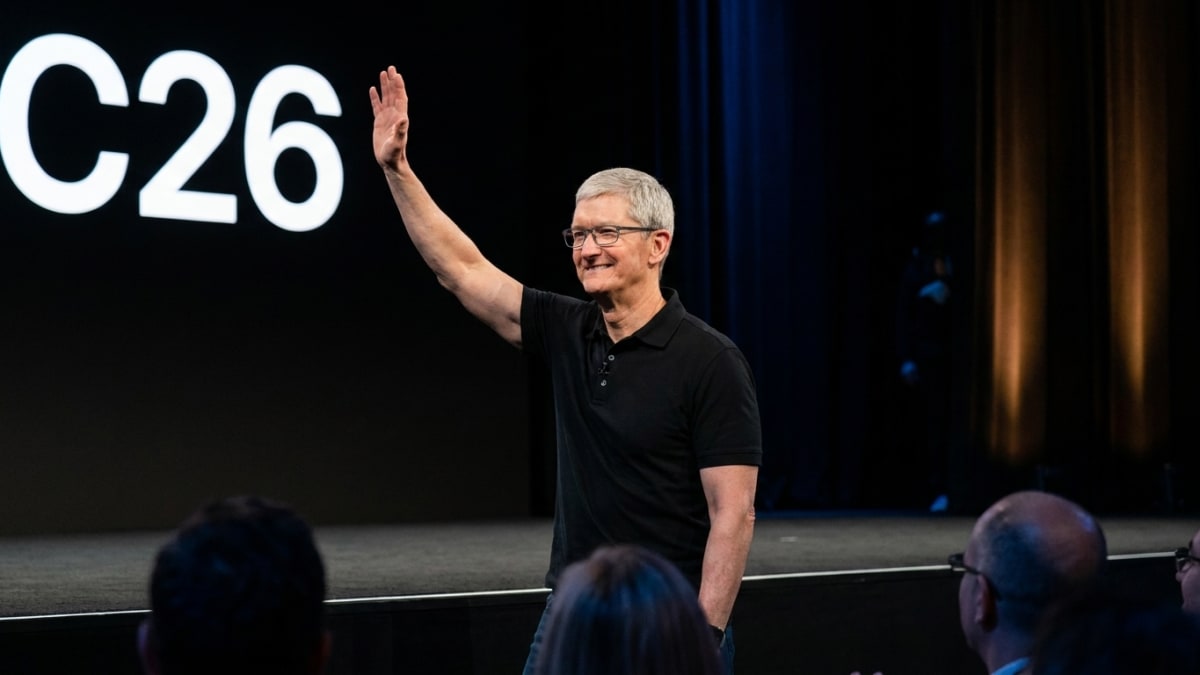
On 20 April 2026, Apple announced that Cook would move to executive chairman on 1 September 2026, with John Ternus, the company's senior vice president of Hardware Engineering, stepping up as chief executive.[4] Cook will remain available to the board on strategic matters. The July earnings call was, by timing, his final one in the chief executive role, and the numbers he delivered were the strongest June-quarter result the company has ever reported.
The more complicated legacy question is what the memory cost warning signals about the near-term environment Ternus inherits. A hardware business heading into a period of structurally higher component costs, with a new chief executive who has spent his career on the engineering side, faces a different set of decisions than the decade of relative input-cost stability Cook presided over.
What Ternus inherits and what the guidance signals
The practical read from the guidance is that Apple expects component cost headwinds to persist into the December quarter and possibly beyond. Price increases on Mac and iPad have already been absorbed without apparent demand destruction, which gives Apple some confidence that its installed base will wear further increases. Whether the same tolerance extends to iPhones, where competition from Android manufacturers is more price-sensitive, remains open.
The board declared a cash dividend of $0.27 per share, payable 13 August 2026 to shareholders of record on 10 August 2026, signalling that capital return commitments remain intact regardless of the cost environment ahead.[2] That continuity reflects a balance sheet that can sustain the commitment even through a margin-compression quarter.
Ternus takes the role at a moment when the hardware engineering decisions he spent his career making are directly shaping Apple's cost structure. The memory chip problem is, at its core, an engineering procurement and product design problem as much as a macroeconomic one, and Ternus's first earnings call is due in late October 2026.
SOURCES & CITATIONS
- Apple FY26 Q3 Consolidated Financial Statements
- Apple Reports Third Quarter Results
- Micron Technology FY26 Q3 Earnings Press Release (SEC filing)
- Tim Cook to become Apple executive chairman, John Ternus to become Apple CEO
- Tim Cook's last quarter as Apple CEO: record iPhone sales, stock still falls, Fortune/AP
- Apple earnings takeaways: weak forecast, supply concerns overshadow sales beat, CNBC
- Tim Cook's last earnings call: strong iPhone sales, but memory costs loom large, Ars Technica
FREQUENTLY ASKED QUESTIONS
What were Apple's June quarter 2026 revenue and profit figures?
Why did Apple's stock fall despite record results?
What is the tariff refund impact on Apple's margin?
Who is replacing Tim Cook as Apple CEO?
Why are memory chip prices rising and how does it affect Apple?
Nathan Cross writes about big technology companies and the economics of a generation coming up behind them. He is interested in scale, and in who pays for it.