TLDR
Polls are open across Victoria today, with 4.73 million enrolled voters deciding whether Labor holds government after 12 years or hands power to Jess Wilson's Coalition. Nearly half of all votes were cast before polling day opened, and formal lower-house results are not expected until 9 to 15 December.
Who is on the ballot and what each side needs
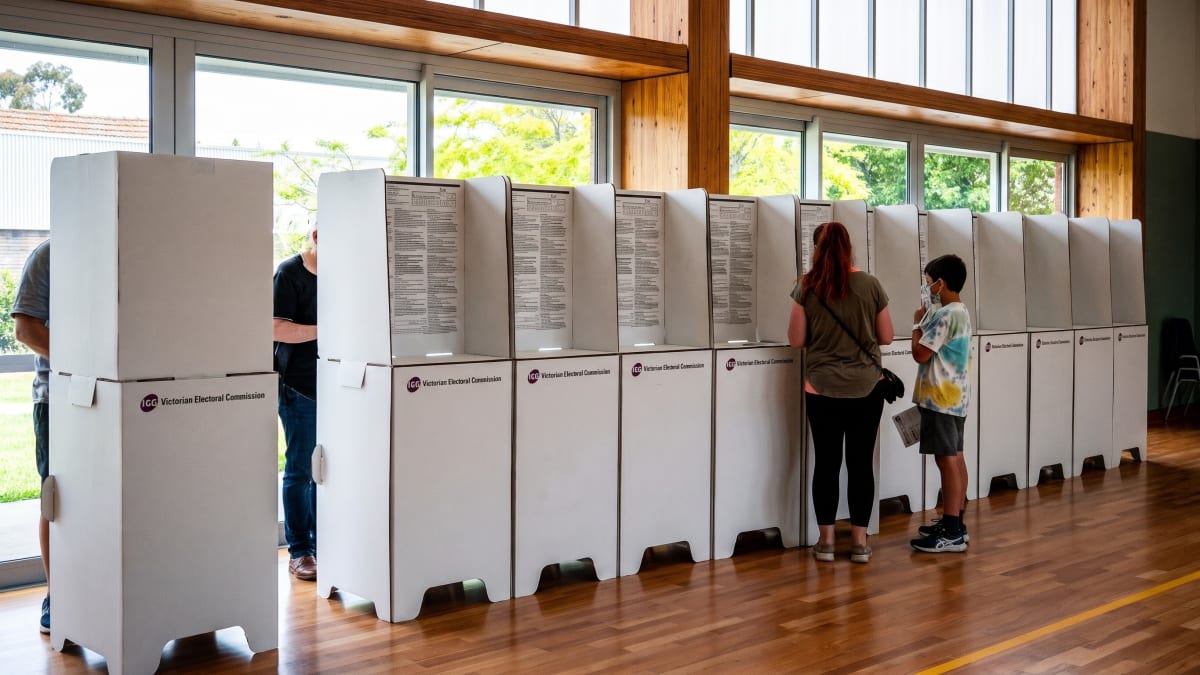
Voting centres opened at 8am across Victoria on Saturday and close at 6pm, with 4,726,925 enrolled electors deciding whether Labor holds government for a fourth consecutive term or whether the Coalition, led by Opposition Leader Jess Wilson, can win the dozen-plus lower-house seats needed to form government.[1] Every enrolled voter receives separate lower-house and upper-house ballot papers at any Victorian voting centre.
Premier Ben Carroll is leading Labor into the election after Jacinta Allan resigned as party leader in July 2026, with Carroll becoming the state's 50th premier.[4] Wilson told her campaign launch the alternative to Labor was "a fresh start with lower costs, reduced crime and a government that works", the ABC reported. Carroll warned voters of what he described as a Liberal-One Nation government that will cut hospitals, cut schools and cut frontline services.[4]
One Nation, backed on the campaign trail by Pauline Hanson, and the Greens under Ellen Sandell are also contesting key districts and upper-house regions.
Almost half voted before polling day
Victorian Electoral Commission figures through Thursday recorded 1,933,598 early votes and 310,808 returned postal votes, a combined 2,244,406 ballots, roughly 47 per cent of the enrolled roll before a single polling-day vote was cast.[3] The VEC notes returned postal figures are subject to scrutiny and may differ from formal counts.
| Measure | Figure |
|---|---|
| Enrolled electors | 4,726,925 |
| Early votes to Thursday 26 November | 1,933,598 |
| Postal votes returned to Thursday 26 November | 310,808 |
| Voting centres open | 8am to 6pm |
| Lower house results declared | 9 to 15 December |
| Upper house results declared | 16 to 18 December |
Debt, levies and household costs at the centre
Victoria's 2026-27 budget forecasts general-government net debt of $175.6 billion this financial year, rising to $199.3 billion by 2029-30, with debt peaking at 24.9 per cent of gross state product.[5] Wilson has anchored her argument for spending restraint and asset sales on those figures, including a proposed lease of Melbourne's Eastern and Western sewage treatment plants.
Free kinder hours have emerged as a clear dividing line: Labor proposes expanding the entitlement from 15 to 30 hours per week, while the Coalition says it would retain 15 hours rather than proceed with the extension.
The emergency services levy has also become a direct household issue. The Emergency Services and Volunteers Fund, which replaced the Fire Services Property Levy on 1 July 2025, carries a fixed residential charge of $139 this year plus variable charges based on property value and classification.[6] The Coalition has pledged to abolish the levy entirely.
Crime and the Big Build royal commission
Crime remained prominent throughout the campaign after a year in which home invasions, car thefts and youth offending featured heavily in political debate. Wilson promised to hire 3,000 extra police and to introduce adult crime, adult time laws for 25 serious offences, the ABC reported.
The Royal Commission into the Integrity of Major Public and Civil Infrastructure Construction Projects in Victoria, established on 20 August 2026, is examining corruption, criminal conduct and serious misconduct connected with major construction projects.[7] The commission's final report is due by 20 August 2027 unless extended, and no final findings have been delivered.
When results will come
The VEC begins counting primary votes and indicative two-candidate-preferred tallies after polls close at 6pm, but postal votes, absent votes, declaration votes, rechecks and full preference distributions mean formal lower-house seat declarations are not expected until 9 to 15 December.[8] Upper-house declarations are expected to follow from 16 to 18 December.
KEY TAKEAWAYS
SOURCES & CITATIONS
- VEC, 2026 State Election
- VEC, Electoral Roll Statistics
- VEC, Voting Statistics
- Office of the Premier, Statement Premier 170
- Victoria 2026-27 Budget, Sustaining Victoria's Economic Growth
- SRO, Emergency Services and Volunteers Fund Current Rates
- Royal Commission into Integrity of Major Public and Civil Infrastructure Construction Projects
- VEC, How Votes Are Counted
FREQUENTLY ASKED QUESTIONS