

TLDR
Three passenger ferries sank or caught fire across Vanuatu, the Philippines and Indonesia within seven days, killing or leaving missing more than 200 people. Overloading, ignored weather warnings and ageing vessels recur as causes across all three disasters.
KEY TAKEAWAYS
The three disasters at a glance
There is a pattern to these announcements that becomes almost unbearable once you notice it. A vessel departs. Weather warnings exist. The sea asserts itself. Then comes the arithmetic of the missing, revised upward over successive days, each revision a small bureaucratic acknowledgment that the water is still keeping its count.
Within seven days in September 2026, that arithmetic played out three times across the Pacific and Southeast Asia, with the tolls taken together exceeding 200 dead or missing.
The passenger ferry MV Matui sank between Espiritu Santo and Ambae in Vanuatu on 11 September 2026, taking on water around 10:00 am local time.[1] Of the 52 people aboard, 13 were rescued alive and two bodies recovered; 37 remained missing as of the evening of 13 September.[1]
In the Philippines, a fire tore through the roll-on/roll-off passenger ferry MV June Aster off Coron, Palawan, on 10 September. The Philippine Coast Guard initially reported five dead, 43 survivors and 86 missing.[3] By 13 September, the death toll had risen to 76, with approximately 10 people still unaccounted for.[5] Thirty-nine of the 43 initial survivors required hospitalisation.[4]
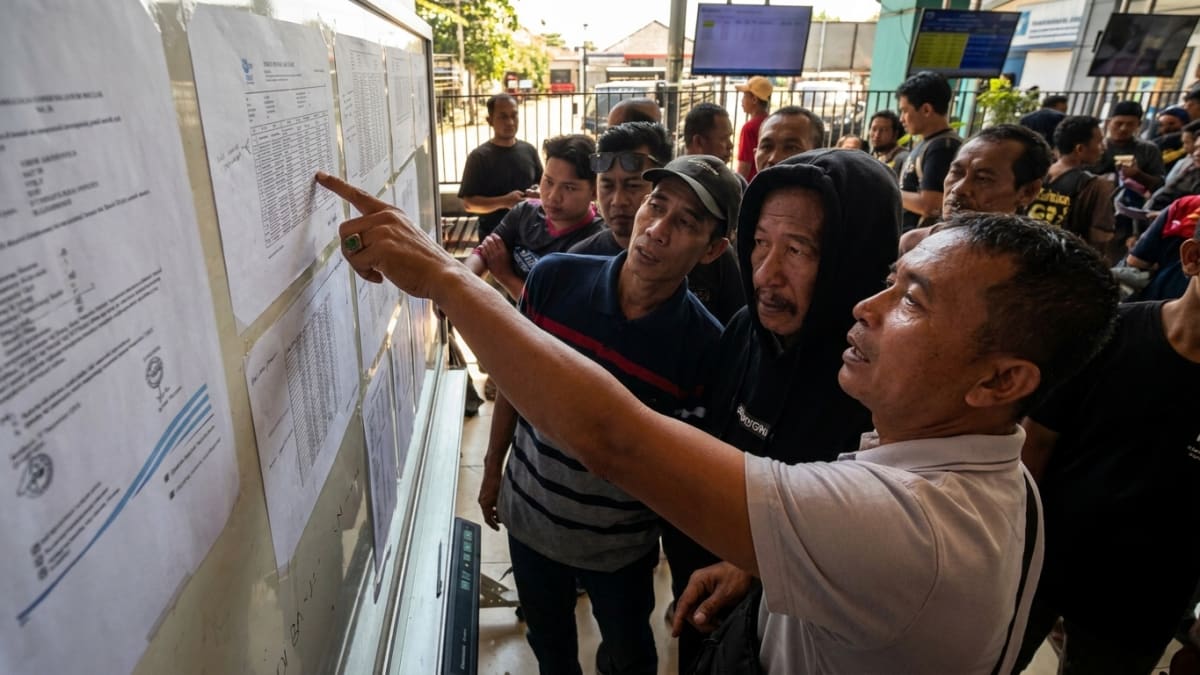
Then, on 13 September, Indonesia's Virgo Transport 8 capsized in the Java Sea. Indonesia's national search and rescue agency, Basarnas, reported the vessel was carrying 243 people, of whom 108 were rescued, six bodies recovered, and 129 remained missing as of 15 September.[6]
Why ferries keep sinking
The Vanuatu Maritime Safety Authority had issued a marine warning on 11 September for southeast to south-southeast winds of 21 to 30 knots and very rough seas up to 3.0 metres over northern waters, urging mariners to consider safety actions and warning that such conditions were hazardous to small vessels.[2] MV Matui sailed anyway.
Basarnas chief Mohammad Syafii said the Virgo Transport 8 began listing in rough seas with waves reaching up to 3 metres before capsizing.[7] The conditions were known. The departure was not reversed.
Overloading and ignored marine warnings recur as factors in inter-island ferry disasters across the Pacific and Southeast Asia, with captains often pressured to carry more passengers than safety limits allow and to sail despite official weather advisories. Many vessels on regional routes are ageing and poorly maintained, while enforcement of maritime safety regulations remains weak across fragmented jurisdictions separated by vast distances.
Maritime safety institutions have identified these failures at length. The gap between identification and correction is, evidently, not closing.
Search operations and what comes next
Search operations for the Virgo Transport 8 were continuing as of 15 September, with 129 people still unaccounted for in the Java Sea.[6] The scale of that single operation dwarfs the other two combined: more people remain missing from that one crossing than boarded MV Matui in Vanuatu.
Australia's Pacific Maritime Safety Program provides technical support, inspector training, search-and-rescue personnel training and funding for emergency beacons and improved safety communications across Pacific island nations. Whether those investments translate into enforcement on any given departure morning is a different question, and the answer this week was written in three sets of casualty figures.
Basarnas had 108 survivors in its count and six bodies recovered by 15 September 2026, with the search for the remaining 129 aboard the Virgo Transport 8 continuing in the Java Sea.[6]
SOURCES & CITATIONS
- MV Matui sinking report, PortNews
- Vanuatu Maritime Safety Authority coastal warning
- Philippine Coast Guard initial MV June Aster report, PNA
- Philippine Coast Guard MV June Aster update, PNA
- Palawan ferry fire death toll rises to 76
- Basarnas Virgo Transport 8 search update
- Virgo Transport 8 capsizing, AP News
FREQUENTLY ASKED QUESTIONS
How many people are still missing from all three ferry disasters?
What caused the three ferry disasters?
What is Basarnas?
Margaret Hale writes about politics, policy and the culture of business. She is drawn to the people behind decisions and to the moments when a political story turns out to be a human one.


