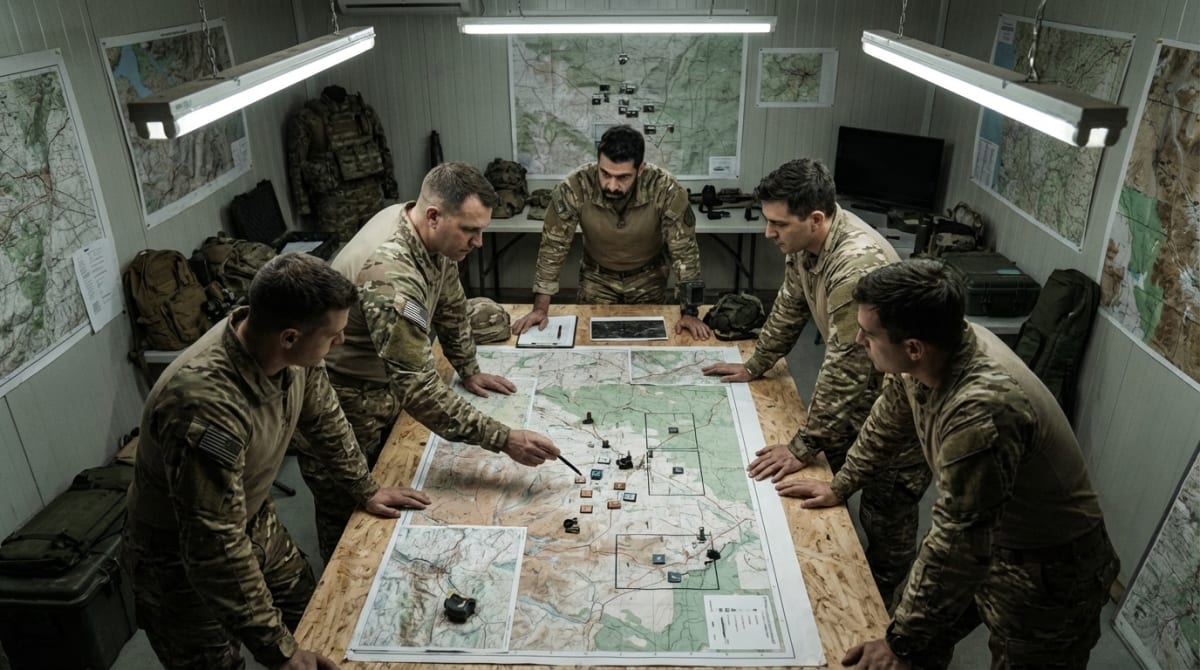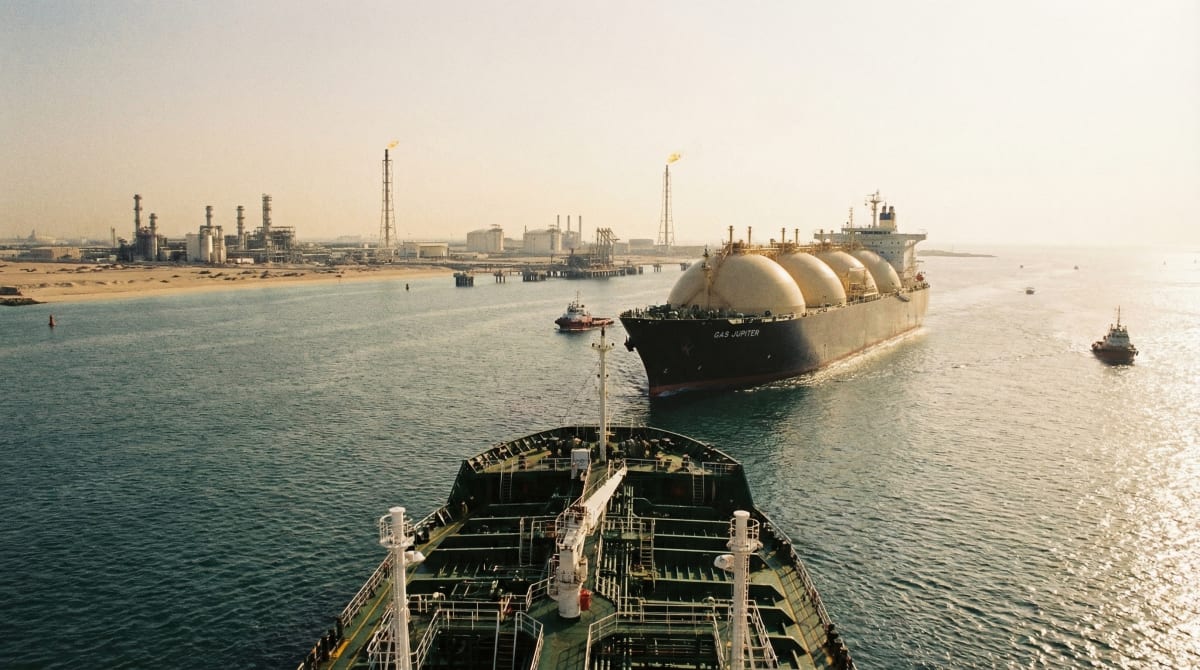
The parallels with Kuwait in August 1990 are imperfect but instructive. When Iraqi forces crossed the border, the immediate concern in London and New York was financial rather than territorial: the Kuwait Investment Authority held stakes in BP, Daimler-Benz, and a portfolio of trophy properties that suddenly faced forced liquidation. Thirty-six years later, a different Gulf state confronts a different crisis, but the same question hangs over Western asset markets: what happens when a sovereign wealth fund needs cash?
TLDR
Capital Economics forecasts Qatar's GDP could contract by 13% in 2026, the steepest decline in the Gulf region, after Iranian attacks destroyed 17% of the nation's LNG export capacity. The crisis may force the Qatar Investment Authority to liquidate holdings in European real estate and banking, with potential ripple effects across Western asset markets.
KEY TAKEAWAYS
Capital Economics published its assessment on Thursday morning, and the headline figure is stark enough to command attention. Qatar's GDP could contract by as much as 13 per cent in 2026. This would represent the largest single-year decline in the Gulf region and a reversal of the growth trajectory that Doha had built its fiscal planning around since the North Field expansion reached full capacity in late 2024.
Qatar's GDP could shrink by up to 13% this year. This is a dramatic reversal from earlier growth forecasts driven by LNG expansion.
— Dr. Andreas Krieg, Capital Economics analyst
The damage and its duration
The Iranian strikes on Wednesday targeted infrastructure at Ras Laffan Industrial City that processes roughly 17 per cent of Qatar's liquefied natural gas output. Industry analysts expect repairs to take between three and five years, depending on the availability of specialised equipment and whether further hostilities disrupt reconstruction efforts. The arithmetic translates to approximately $20 billion in lost annual revenues, a sum that dwarfs the fiscal buffers most nations maintain.
The Qatar Investment Authority manages assets estimated at $475 billion, making it one of the largest sovereign wealth funds globally and giving Doha options that smaller petrostates lack. Holdings include the Shard in London, a 10 per cent stake in Barclays, significant positions in Volkswagen and Credit Suisse's successor entity, and commercial real estate across Manhattan and Frankfurt. The question is whether Doha will draw on these resources to cover the revenue gap, and what that drawdown would mean for the markets where those assets sit.
Gulf-wide contagion remains limited
JPMorgan's regional analysis, circulated to clients on Thursday, projects a more modest impact across the broader Gulf Cooperation Council. The combined GDP of the six member states may decline 0.6 per cent in 2026, ending five consecutive years of growth. The disparity between Qatar's 13 per cent contraction and the regional average reflects the concentration of damage: Oman and Saudi Arabia, with their diversified hydrocarbon infrastructure and overland export routes that bypass the Strait of Hormuz, face considerably less disruption.
The geographic distribution of Gulf export capacity matters more now than at any point since the Tanker War of the 1980s. Roughly 20 per cent of global LNG trade passes through the Strait of Hormuz, a waterway that Iran has repeatedly threatened to close during periods of regional tension. The current crisis has not yet involved direct interdiction of shipping, but the proximity of Iranian naval assets to Qatar's export terminals introduces a risk premium that insurers and charterers are already pricing into contracts.
European exposure and energy security
European vulnerability has compounded since the 2022 Russian invasion of Ukraine, when buyers pivoted aggressively toward LNG imports to replace pipeline gas from Gazprom. Qatar emerged as a preferred long-term supplier, with contracts extending into the 2040s signed by utilities in Germany, France, and the Netherlands. Those contracts assumed reliable delivery through the Strait of Hormuz.
European Commission President Ursula von der Leyen addressed the 2026 Nuclear Energy Summit in Brussels on Thursday afternoon, and her remarks carried an edge absent from previous energy security statements. She described the crisis as a stark reminder of the vulnerabilities inherent in relying on distant regions for oil and gas supply. The phrasing suggested a policy recalibration that nuclear and renewable advocates will attempt to accelerate, though the gap between aspiration and grid-scale deployment remains measured in years rather than months.
European gas stockpiles entered March at 48 per cent capacity, below the five-year seasonal average. Replenishment typically accelerates through April and May as heating demand falls, but the Qatari shortfall removes a primary source of supply at the precise moment the market needs it. TTF futures for summer delivery rose 18 per cent in the two sessions following the attack.
Gulf state GDP impact comparison
The variation across the Gulf Cooperation Council reveals how unevenly the crisis distributes its costs. Qatar bears the overwhelming burden, with Capital Economics projecting GDP contraction between 11 and 13 per cent depending on the duration of infrastructure repairs. Bahrain and the UAE face modest declines of 1 to 2 per cent, driven primarily by reduced regional trade flows and higher shipping insurance costs. Oman and Saudi Arabia, by contrast, may record flat or marginally positive growth, their exports routed through the Red Sea and overland pipelines that circumvent the Strait entirely.
- Qatar: -11% to -13% (Capital Economics projection)
- Bahrain: -1.5% to -2%
- UAE: -1% to -1.5%
- Kuwait: -0.5% to -1%
- Oman: 0% to +0.5%
- Saudi Arabia: +0.5% to +1%
The QIA question
Credit rating agencies have maintained their assessments of Qatari sovereign debt, but the statements accompanying those ratings contain new language. Moody's noted that prolonged export interruptions could erode fiscal performance and necessitate drawdowns from sovereign reserves. S&P Global referenced the adequacy of foreign asset buffers while flagging that large-scale divestment could itself become a credit event if executed precipitously.
The practical mechanics of QIA liquidation would unfold across multiple asset classes and jurisdictions. Real estate disposals in London and New York typically require 6 to 18 months from listing to settlement for trophy properties. Banking stakes carry regulatory approval requirements that vary by jurisdiction and ownership threshold. A forced seller operating under revenue pressure would face discounts that accumulate with each successive transaction, as market participants recognise the distressed nature of the sales.
For European and American asset markets, the question is one of magnitude. If Qatar needs to liquidate $30 billion over 24 months, the impact on London commercial property or European banking valuations would be measurable but manageable. If the requirement approaches $100 billion, the repricing effects would extend well beyond the specific assets being sold, as buyers recalibrate expectations for an entire category of sovereign-held Western assets.
What the bond market signals
Qatari sovereign bonds maturing in 2030 traded at a spread of 47 basis points over comparable US Treasuries on Thursday afternoon, up from 28 basis points the previous week. The movement is significant without being disorderly, suggesting that fixed-income investors are pricing heightened risk rather than imminent distress. Five-year credit default swaps on Qatari sovereign debt rose to 85 basis points from 52, a level last seen briefly during the 2017 diplomatic blockade by Saudi Arabia and the UAE.
Qatar weathered the 2017 diplomatic blockade by Saudi Arabia and the UAE without drawing substantially on QIA assets, but that crisis involved political isolation and trade restrictions, not the physical destruction of export infrastructure that Doha faces today. The revenue impact from the current damage is immediate and quantifiable, and the board rooms in Doha face arithmetic.
European utilities with long-term Qatari supply contracts are reviewing force majeure clauses and alternative sourcing arrangements. The contracts typically allow for supply interruptions caused by acts of war, but the duration of the current disruption exceeds the parameters most agreements contemplated. Renegotiation conversations have already begun, according to two industry executives speaking on condition of anonymity.
The next six months will determine whether this crisis remains a severe but contained shock to a single Gulf economy, or whether it metastasises into a broader repricing of sovereign wealth fund assets and European energy security assumptions. The variables include Iranian intentions in the Strait, the pace of Qatari infrastructure reconstruction, and the willingness of Western asset markets to absorb QIA sales without triggering cascading devaluations. Bond traders and institutional investors with exposure to trophy real estate and European banking will be pricing these risks into every transaction through autumn.
SOURCES & CITATIONS
FREQUENTLY ASKED QUESTIONS