TLDR
The Australian Rugby League Commission has signed a $5.3 billion, seven-year broadcast agreement with Nine Entertainment, Foxtel Group and Sky NZ, the largest media rights deal in Australian sporting history. Starting in 2028, the deal delivers a 90 per cent uplift in annual cash to the NRL compared to the current arrangement. Nine retains exclusive free-to-air rights to the Grand Final and State of Origin, while Foxtel and Kayo carry every match across more than 200 international markets via DAZN. The agreement hands the ARLC full control of scheduling and season structure, underpinning expansion plans that include a potential 20-team competition.
KEY TAKEAWAYS
The number and the parties
The Australian Rugby League Commission secured a $5.3 billion media rights agreement with Foxtel Group, Nine Entertainment and Sky NZ on 7 July 2026, the largest broadcast partnership in Australian sporting history.verifiedVerified Source: nrl.com[1] Three broadcasters, one seven-year term, one number that rewrites every benchmark the code has previously set.
The deal takes effect from 2028, when the current arrangement expires, and delivers a 90 per cent uplift in annual cash to the NRL compared to the rights fees the code currently receives.[1]
How the split works: free-to-air, streaming and subscription
Nine Entertainment keeps what it has always coveted most. The network will exclusively broadcast live free-to-air coverage of the NRL Grand Final, the Men's and Women's State of Origin series, simulcast three weekly NRL and NRLW matches, and stream all of it free on 9Now.[2] Those are the fixtures that move mass-market audiences, and Nine locked them in for another seven years.
Foxtel Group covers the rest. Foxtel and Kayo Sports will televise every NRL and NRLW Premiership match including every finals series game, with DAZN distributing that coverage to more than 200 international markets.verifiedVerified Source: nrl.com[1] The subscription and streaming arms of the Foxtel Group carry the full schedule; the international piece through DAZN is the structural expansion play.
Sky NZ rounds out the three-broadcaster structure with a commitment to place more than 130 fixtures on free platforms in New Zealand.[1] NZ audience numbers have tripled over the past five years, making the free-platform commitment a direct response to measurable growth rather than speculative ambition.[1]
What financial certainty to 2034 buys the code
Broadcast rights have always been the NRL's revenue engine, funding club distributions, grassroots programs and high-performance pathways. Each renewal sets a new financial floor. This one raises it by 90 per cent in annual cash terms and stretches certainty out to 2034.
The agreement returns full control of season structure, scheduling and draws to the ARLC and establishes revenue-sharing and marketing arrangements on international rights.verifiedVerified Source: nrl.com[1] Previous arrangements ceded influence over the draw to broadcast partners; the ARLC now owns that lever again.
The financial runway also feeds the code's expansion agenda. The NRL has been exploring a move to a 20-team competition, and a 90 per cent revenue uplift removes the financial constraint that previously made that discussion theoretical rather than practical.[1]
Who said what: executives react
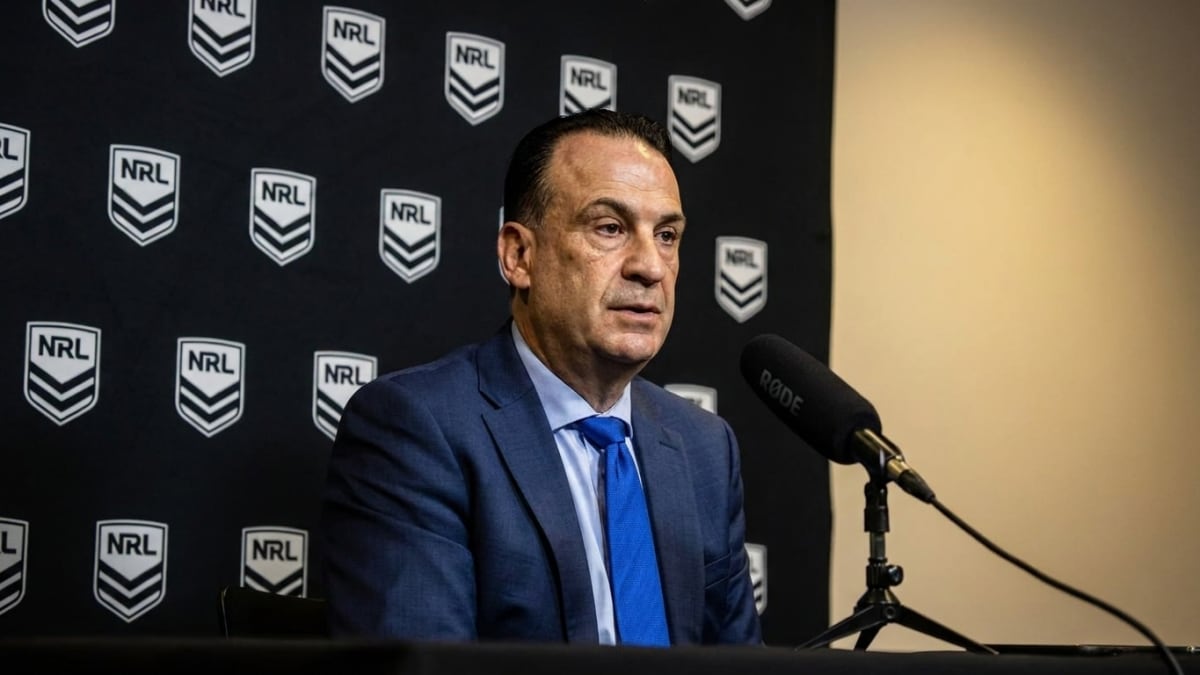
Peter V'landys AM, Chairman of the Australian Rugby League Commission, said the result reflected deliberate work over five years. "Today marks a defining moment for rugby league. The Commission has worked hard in the last five years to make the game more entertaining for our fans, effectively doubling our audience. Our Players and Clubs that made this possible will now be justifiably rewarded," V'landys said.[1]
Andrew Abdo, Chief Executive Officer of the National Rugby League, said the number was the product of years of groundwork. "This agreement reflects the strength of rugby league today and confidence in where the game can go next. It is the result of years of planning, discipline and execution by the Commission as we positioned the game to maximise its value in a rapidly changing media landscape," Abdo said.[1]
Matt Stanton, Chief Executive Officer of Nine Entertainment, framed the deal inside a longer partnership arc. "As our partnership with the NRL enters its fourth decade, this agreement reinforces Nine's long-term strategy of investing in premium live sport and the moments that matter most," Stanton said.[2] Nine's relationship with rugby league predates the current media landscape by several decades, and Stanton's framing leans on that history deliberately.
What the deal means for fans and the competition
Free-to-air viewers retain access to the game's biggest moments. The Grand Final, State of Origin and three matches per week stay on Nine with no paywall, and 9Now adds a free streaming option for audiences who have moved off linear television.[2] Subscription viewers on Foxtel and Kayo get the full schedule, including every finals match.
Club distributions will rise with the revenue uplift, sharpening the financial gap between the NRL and rival codes competing for the same talent pool. The international distribution piece through DAZN across 200-plus markets puts every match in front of a potential global audience for the first time at this scale.[1]
The current rights deal expires at the end of the 2027 season, meaning the new arrangement with Nine Entertainment, Foxtel Group and Sky NZ takes effect from Round 1 of the 2028 NRL Premiership.
SOURCES & CITATIONS
FREQUENTLY ASKED QUESTIONS
How much is the new NRL broadcast deal worth?
When does the new NRL broadcast deal start?
Which broadcaster holds the NRL Grand Final rights?
Can viewers watch every NRL match without a subscription?
Caleb Reed covers breaking news and sport. He works to the rhythm of a story as it unfolds, and he is happiest when the facts arrive faster than anyone can spin them.