
TLDR
Labor is close to a Coalition agreement on its NDIS overhaul, with Minister Mark Butler confirming the reforms will affect families. Children aged eight and under with autism or developmental delay and low-to-moderate needs lose NDIS access from January 2028, shifting to a state-run program. Disability advocates warn the costs do not disappear, they move to families.
Deal close, what Butler said and when
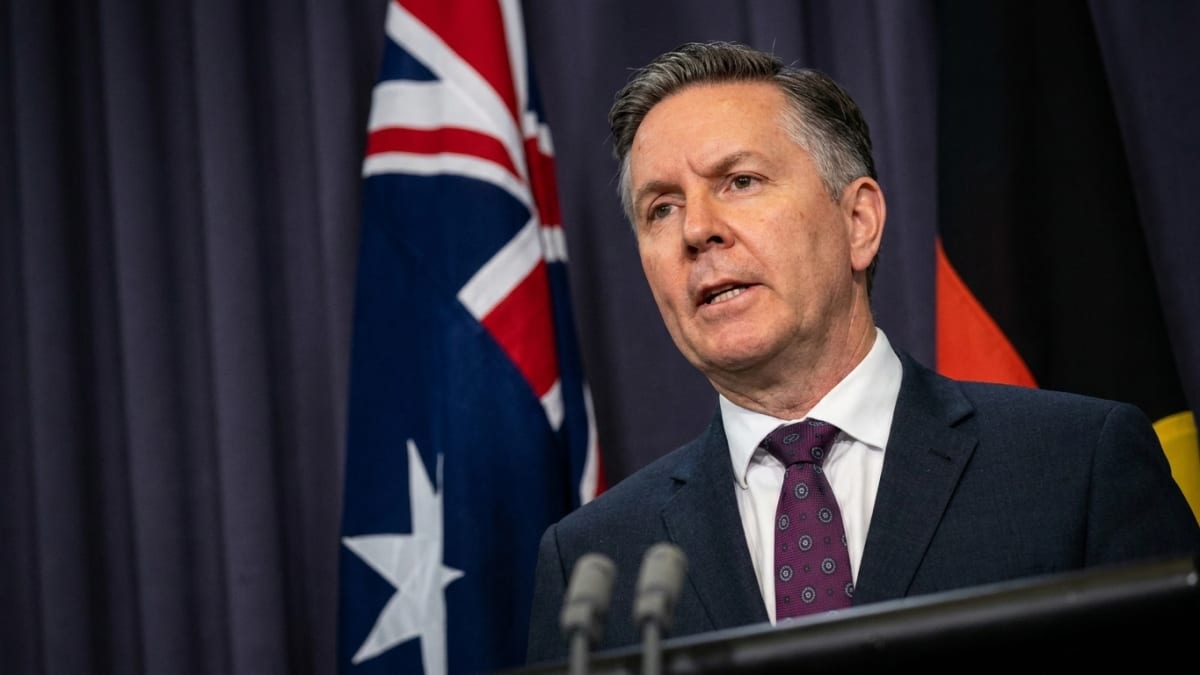
Health and Disability Minister Mark Butler has signalled that a parliamentary deal with the Coalition on the most significant overhaul of the National Disability Insurance Scheme since its founding is within reach. Speaking in April, Butler said he looked forward to engaging with the opposition as parliament resumed, pointing to cross-party recognition that the scheme needs a reset.[8]
"I know across the Parliament, across levels of government there's a recognition that the NDIS is off track and needs a substantial reset. I do look forward to engaging with the opposition particularly as we lead into the resumption of parliament … because I think there is a shared purpose in making sure the NDIS is secured for the future," Butler said.[8]
The Government introduced the National Disability Insurance Scheme Amendment (Securing the NDIS for Future Generations) Bill 2026 in Parliament on 14 May 2026.[1] Butler has framed the legislation as a protection of the scheme's values, calling the NDIS "a statement of our national values" and "a source of pride."[7]
What the reforms actually change
Children aged eight and under with developmental delay or autism and low to moderate support needs will no longer be eligible for the NDIS from 1 January 2028, moving instead to the state-run Thriving Kids program.[2] The change is among the bill's most contested elements, drawing sharp criticism from families and disability organisations who say the distinction between low-to-moderate and high support needs is difficult to apply consistently.
Thriving Kids is designed as an early intervention program delivered through state and territory governments, sitting outside the NDIS architecture. The broader reforms also include clearer eligibility criteria based on functional capacity, capped plan cost growth targets, expanded provider registration requirements, and new ministerial powers to determine what constitutes a supported item.
The package builds on the Albanese Government's Integrity and Safeguarding Bill 2025 and responds in part to the 2023 independent review and the Royal Commission into Violence, Abuse, Neglect and Exploitation of People with Disability, which ran from 2021 to 2024. The commission called for stronger governance and a tighter definition of reasonable and necessary supports.
Who bears the cost, the autism numbers and the scheme's trajectory
The financial logic underpinning the reforms rests on a paradox in the scheme's own data. Participants with autism represented around 40% of all NDIS participants but accounted for only 20% of total annual NDIS spending of $46.35 billion in 2024-25.[5] Autism participants are the scheme's most numerous cohort but among its least costly per head.
Productivity Commission data confirms autism was the most common disability category at 30 June 2025, accounting for 39.9% of all participants.[4] That concentration is what drives the Government's focus on early childhood eligibility. Removing the lower-needs cohort from NDIS rolls reduces participant counts and limits future intake growth, even if it does not directly cut per-participant costs for those who remain.
The trajectory without intervention is stark. Reforms already enacted have pulled annual cost growth back from approximately 23% in 2021-22 to 11% in 2024-25, according to the Government's own impact analysis. The scheme is still projected to support around 900,000 participants at a cost exceeding $71 billion in 2029-30 without further structural change.[3]
State readiness, is $10 billion enough?
The Government's answer to state readiness concerns is a $10 billion foundational supports commitment, agreed in principle by the Commonwealth and all state and territory governments.[3] Thriving Kids represents the first tranche of that investment, intended to absorb children transitioning out of NDIS eligibility from January 2028.
Whether that funding is sufficient to build state-level systems capable of meeting demand within 18 months remains a live question. The NDIS was established in 2013 precisely because state and territory disability programs were patchy, under-resourced and inconsistent. Critics of the transition timetable point out that the $10 billion is spread across all foundational supports, not ring-fenced for early childhood autism intervention alone.
The Office of Impact Analysis, in its June 2026 publication, acknowledged delivery risks associated with the state transition but characterised the $10 billion commitment as a sufficient basis to proceed.[3] Disability advocates dispute that characterisation, arguing the analysis does not account for latent unmet demand that will emerge once families are directed away from the NDIS.
Advocacy backlash, the Senate inquiry record
The most pointed challenge to the Government's framing came from People with Disability Australia. Megan Spindler-Smith, Acting Chief Executive of the organisation, told the Senate Public Hearings that the policy logic of removing support access misunderstands how disability works in practice. "When support is withdrawn, the need does not disappear and neither do the costs," Spindler-Smith said, warning of cost-shifting to families and other service systems.[6]
Children with autism who exit the NDIS do not become neurotypical. They continue to require speech therapy, occupational therapy, behavioural support and educational adjustments. If Thriving Kids cannot provide those services at the same volume and quality, families absorb the difference directly, through out-of-pocket spending, reduced workforce participation by carers, or by waiting for a child's needs to deteriorate to the point where NDIS eligibility is reinstated at higher cost.
People with Disability Australia's Senate submission identified this dynamic as the central risk in the reform package: not that the NDIS becomes unaffordable, but that costs are redistributed rather than reduced, landing on those with the least capacity to bear them. The organisation called for independent monitoring of outcomes for children who transition to Thriving Kids, with a commitment to reinstate NDIS eligibility if the program falls short.[6]
Butler's public statements suggest the Government is willing to negotiate on implementation detail. The eligibility threshold for the under-eights cohort and the transition timeline to January 2028 appear, for now, to be fixed.
KEY TAKEAWAYS
SOURCES & CITATIONS
- Securing the NDIS for Future Generations, NDIS.gov.au
- About the changes to the NDIS, Australian Government Department of Health
- Impact Analysis, Office of Impact Analysis, Department of Prime Minister and Cabinet (9 June 2026 update)
- Report on Government Services, Services for People with Disability, Productivity Commission
- Policy Responses to Rising Autism Diagnoses in Childhood, OECD (March 2026)
- When Support is Withdrawn, the Need Does Not Disappear, People with Disability Australia
- Securing the Future of the NDIS, Minister Butler media release
- Doorstop with Minister Butler, Canberra, 23 April 2026
FREQUENTLY ASKED QUESTIONS
Which children lose NDIS access under the reforms?
What is the Thriving Kids program?
Why is autism at the centre of the NDIS cost debate?
What do disability advocates say about the changes?
Samuel Abiola writes about inequality and social policy. He works close to the research and is interested in what the numbers mean for the people counted in them.