TLDR
MIT CSAIL researchers have shown that at large training scales, removing any single image or every work by a given artist from an AI model's training data typically leaves the model's output unchanged. Published in Nature Communications, the finding introduces 'attribution decay' and directly challenges copyright claims and licensing frameworks built on tracing AI outputs to specific works.
The link between training data and output dissolves at scale
The engineering question at the centre of AI copyright disputes has always been mechanical: can you trace what a model produces back to the specific images it learned from? A paper published in Nature Communications on 18 August 2026 by researchers at MIT's Computer Science and Artificial Intelligence Laboratory answers that question with unusual precision, and the answer complicates almost every legal argument currently in play. At large training scales, the link between what an AI image model learned and what it produces dissolves, a phenomenon the researchers term attribution decay.[1]
The study, titled "Outputs of generative diffusion models are often unattributable," was led by Zheng Dai, a former MIT CSAIL researcher, with MIT Professor David K. Gifford as principal investigator. Schmidt Futures provided financial support.[1] The team built a new architecture specifically to make the test exact rather than estimated, then ran it at scale and measured what happened.
A new architecture that deletes exactly, not approximately
The methodological centrepiece is what the team calls a diffusion ensemble: a model split into components, each trained on a different slice of the data. When a researcher wants to remove a specific image or a whole artist's catalogue, they ablate the corresponding component entirely, with no retraining required.[1] The output is then compared to what the full model would have generated.
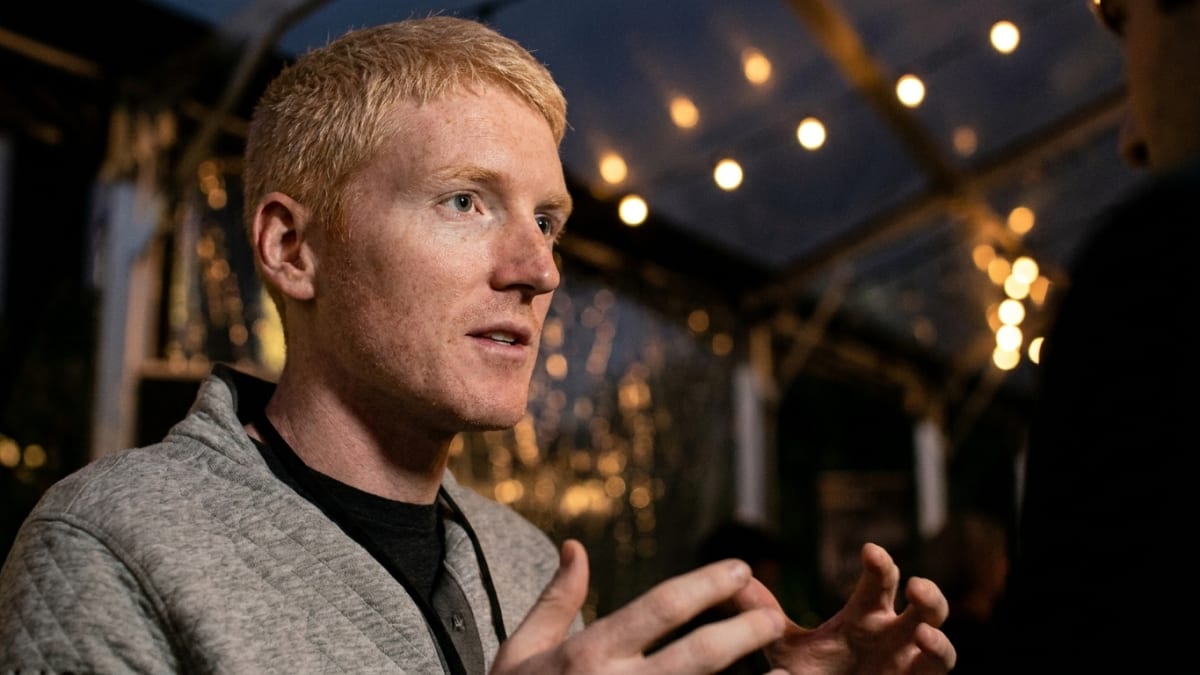
Every prior deletion method was approximate. Gifford was direct about the gap, telling MIT News: "All previous methods were approximate. They really could not absolutely show that deleting individual things did not change the output. This paper introduces the first method that is absolute. You're actually deleting the inputs and deleting all influences of the inputs. This is the first exact method for doing large-scale deletion efficiently and showing that the results don't change."[1]
That exactness is what gives the result its legal weight. Previous deletion tests could be challenged as approximations; the new architecture removes that objection. The deletion is complete, the influence is gone, and still the output does not change.
What the numbers showed
The team trained 24 diffusion ensembles on datasets ranging from 256 to over 160,000 images, drawing from seven public collections including CIFAR-10, CelebA, MetFaces and ArtBench.[1] Attribution was measured using both pixel-level and semantic metrics, asking how much the output shifted when training examples were removed one by one or in groups: every image by one artist, every photograph of one person.
The team found that removing any single image, every image by a given artist, or every photograph of a given person from the training data typically does not appreciably change the generated output.[1] The decay followed an inverse power-law pattern as training set size increased: the larger the dataset, the faster individual contributions vanish into the collective signal.
Zheng Dai, lead author of the study, said: "If you take away a piece of data and the output of the model doesn't change, then that piece of data didn't affect the output. So it doesn't make much sense to attribute the output to that piece of data. And if you then do this one at a time for every other piece of data and find that the output doesn't change for any of them either, then it doesn't make much sense to attribute the output to any one of them."[1] At scale, the model has no traceable authors.
Two readings of the legal consequence
The finding arrives into active litigation and active legislation. Artists and rights holders pressing courts in multiple jurisdictions have argued that large models trained on unlicensed artworks infringe copyright and that outputs can be traced to specific works. The MIT result does not settle those cases, but it changes what can be claimed technically.
One reading weakens individual plaintiff claims. If removing every image an artist ever uploaded to a training set leaves the model's output statistically unchanged, the causal chain required for a copyright infringement finding becomes very difficult to establish. The study, published in Nature Communications on 18 August 2026, names this dissolution of causal traceability "attribution decay" and documents it across datasets up to 160,000 images.[2] Without demonstrable causal influence, the damages argument weakens considerably.
The second reading cuts the other way, and it is the reading AI developers may find less comfortable. If no single work, no single artist's catalogue, and no single individual's photographs can be shown to have shaped what a model produces, then no existing or proposed licensing scheme can accurately describe what rights are actually being acquired. A licence covering specific works in a training set may be licensing something with no measurable effect on the output, which is a problem for any company that has signed blanket licensing deals and pointed to them as evidence of lawful operation.
Australia's review and where this lands
The timing is pointed for Australian policy. The federal government is running an active review of AI and copyright law, and among the proposals under consideration are mandatory transparency requirements, auditing obligations and attribution mechanisms that would allow generative model outputs to be traced to source material.
The MIT result puts a technical floor under those policy ambitions. Mandatory attribution of the kind the review is considering would require that attribution be technically possible. At the scales commercial image models now operate, many orders of magnitude larger than the 160,000-image datasets the MIT team tested, the inverse power-law decay the paper documents suggests attribution becomes progressively less feasible as a technical matter. Policymakers designing disclosure or attribution regimes would be requiring developers to produce information that, according to this research, the models themselves cannot generate in any meaningful sense.
That does not mean regulation is futile. The design question shifts: rather than requiring output-to-source traceability, effective policy may need to focus on training-data disclosure before a model is built, consent and opt-out mechanisms at the data-ingestion stage, or governance frameworks that do not depend on post-hoc attribution at all. The study was published in Nature Communications on 18 August 2026, with support from Schmidt Futures and no commercial or government commissioning body.
KEY TAKEAWAYS
SOURCES & CITATIONS
FREQUENTLY ASKED QUESTIONS
What is attribution decay?
What is the diffusion ensemble method?
Does this mean AI developers cannot be held liable for copyright infringement?
How does this affect Australia's AI and copyright review?
Alex Mercer writes about technology, energy and infrastructure. He likes the physical end of the story: the plants, the grids and the machines that everything else depends on.